January 23, 2026

Securing an event sponsorship is so much more than just asking for money. It's about forging a genuine partnership where everyone wins. Think of it as finding the right brands that align with your mission, crafting offers they can't refuse, and then proving you can deliver real value by connecting them with your audience.

Let's be real—chasing down funding can feel like the most daunting part of planning an event. It's easy to treat it like a chore you have to get through before the "real" work begins. But if that's your mindset, you're missing out on a massive opportunity. Event sponsorship isn't just a transaction; it's a powerful strategic alliance that can supercharge your event's growth while delivering incredible results for your partners.
Today's companies are desperate for authentic ways to connect with dedicated, niche audiences. That’s something a banner ad just can't do. This is where you and your event shine. Even a smaller, highly focused gathering offers a direct line to a specific demographic that brands are eager to reach. So, get rid of the outdated idea that you need a colossal audience to land big sponsors.
The world of sponsorship is bigger and more exciting than ever. Brands are pouring serious money into partnerships that produce real, measurable results. Just look at the numbers. The global sports sponsorship market was valued at around $70.34 billion USD in 2025 and is on track to hit $90.13 billion by 2029.
Across the board, global sponsorship rights fees are expected to reach a staggering $97.5 billion in 2024. You can dig deeper into these trends in this detailed report.
This spending spree signals a huge shift in expectations. Sponsors are done with just having their logo slapped on a banner. They demand a true partnership that delivers tangible outcomes.
Today's sponsors are investors. They aren't just giving you money; they are investing in your audience. Your job is to show them exactly how that investment will pay off through brand alignment, lead generation, and authentic engagement.
To land a sponsor, you have to get inside their head and understand what's driving their decision. This is business, not charity. They're looking to achieve specific goals.
Here's what's usually at the top of their list:
This guide is your complete playbook for navigating this new sponsorship world. We'll walk you through how to stop asking for handouts and start building valuable relationships that last long after the last guest has gone home.
Blasting out generic proposals into the digital void is a fast track to disappointment. I've learned over the years that the real secret to landing great event sponsorships isn't about how many emails you send; it's about precision. The goal is to build a hand-picked list of brands whose mission, audience, and marketing goals are a perfect match for your event.
This focused approach changes everything. Your outreach stops being a cold ask and becomes a warm invitation to a partnership that just makes sense for everyone. When you can clearly explain why their specific brand should partner with your specific event, your success rate goes through the roof. It proves you've done your homework and respect their time and budget.
Before you even start Googling company names, you need to know exactly who you're looking for. Just like you have a persona for your target attendee, you need to build a Sponsor Persona—a clear profile of the perfect company you want to work with.
To get started, ask yourself a few critical questions:
This simple exercise forces you to think strategically. You're not just looking for a company with a checkbook; you're looking for a partner whose story makes sense next to yours.
With your Sponsor Persona guiding you, it’s time to find companies that fit the bill. Forget generic searches like "companies that sponsor events." It's time to get a lot more strategic to uncover high-potential leads. This initial legwork is the foundation for the entire process of how to find corporate sponsorship and will save you a ton of time down the road.
A great place to start is by looking at events that are similar to yours, but not direct competitors. Who's sponsoring them? These companies have already earmarked a budget for event marketing and get the value. That's your low-hanging fruit.
Don’t forget to listen to your own community, too. Your attendees, speakers, and social media followers are a goldmine. They can point you toward brands they already love and use, which gives you a super warm and natural entry point for a conversation.
Real-World Scenario: A local tech conference for startup founders needed new sponsors. Instead of cold-emailing massive tech companies, they looked at which software tools their past attendees were buzzing about on social media. They found a popular project management tool and a small business accounting software, then built a pitch showing exactly how many of their attendees were already potential customers. They landed both as mid-tier sponsors.
To speed things up, exploring the best B2B lead generation tools can be a game-changer. These platforms help you pinpoint the right decision-makers and find their contact info, which gets you from research to outreach much faster.
Now that you have a list of prospects, it's time to see who makes the cut.
Before you invest time in outreach, it's crucial to qualify your prospects. This checklist is a simple but effective way to score each potential sponsor against your ideal persona, helping you filter out the "maybes" and focus your energy on the companies that are a truly great fit.
By running each prospect through this checklist, you can quickly turn a long list of possibilities into a short, prioritized list of high-potential partners. This is where you'll want to focus all your energy.
The days of just slapping "Gold, Silver, Bronze" on a PDF and hoping for the best are long gone. Let's be honest, potential sponsors get dozens of those generic offers. If you want to stand out, you have to stop selling packages and start solving problems for them.
Think of your sponsorship tiers as a story of escalating value. Each level should show a clear path from basic brand visibility to deep, meaningful audience engagement. A sponsor isn't just buying a logo placement; they're buying access to your audience's attention and trust. Frame your packages as the answer to their biggest question: "How will this event help me hit my business goals?" When you do that, the packages practically sell themselves.
Instead of tired old metal names, try naming your tiers based on the outcome they deliver. A "Brand Amplifier" package immediately tells a story, as does a "Lead Generation" or "Community Partner" tier. This simple change helps sponsors instantly see which option aligns with their objectives.
A huge part of making a package feel valuable is including tangible takeaways. Offering effective promo products that sponsors can hand out creates a memorable touchpoint that lasts long after the event wraps. High-quality, desirable swag isn't just an asset; it's a physical reminder of the sponsor's brand in the hands of your attendees.
The entire process, from finding the right companies to getting them on board, is a journey of refinement, not just a numbers game of cold outreach.
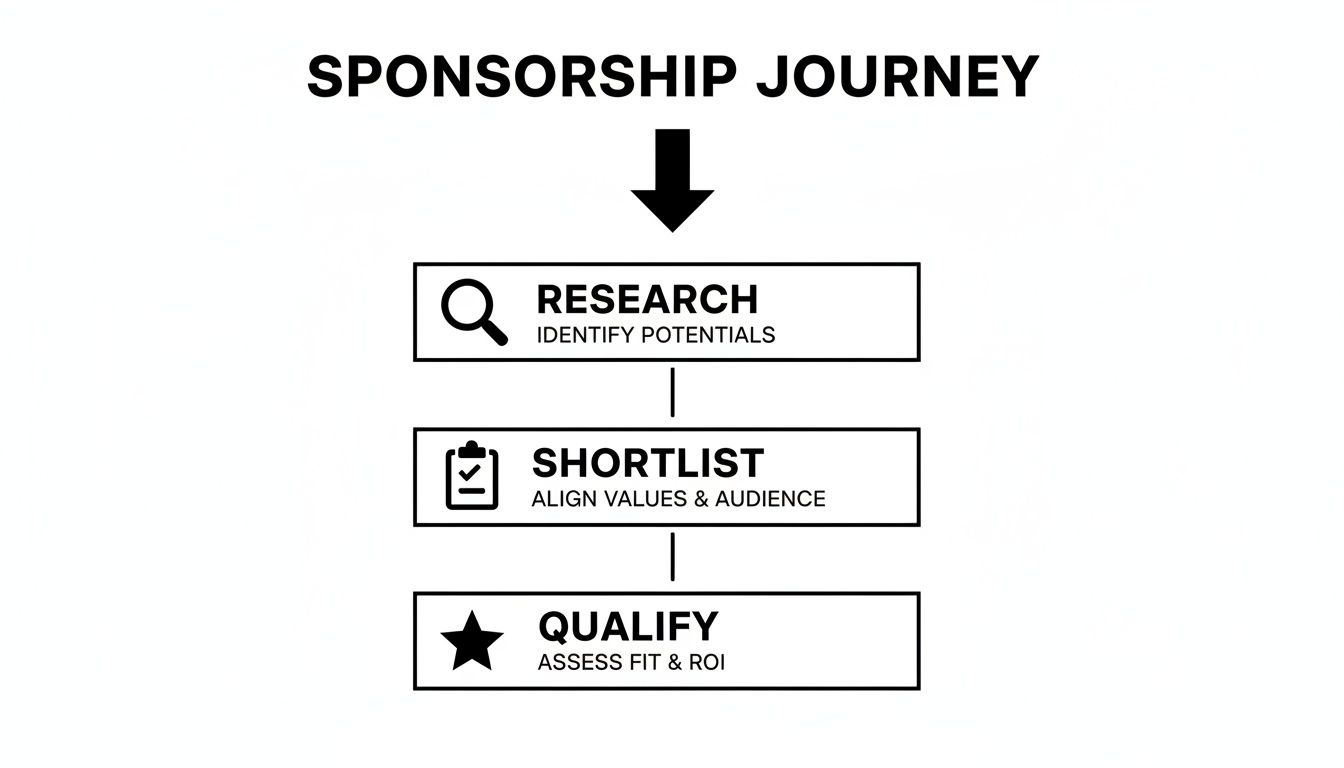
As you can see, successful sponsorship is about building a strong, qualified pipeline from the very beginning.
The secret to a compelling tier structure is a logical and valuable progression. Each level needs to feel like a significant step up from the one before it. Imagine it's a ladder—every rung should offer a more powerful way for a sponsor to connect with your audience.
Here’s a quick look at how you might structure this:
For a deeper dive into structuring these offers, our guide on the https://groupos.com/blog/event-sponsorship-proposal-template is a great starting point you can adapt for your own event.
To make the value progression crystal clear, a table can be incredibly effective. It allows potential sponsors to quickly compare what they get at each investment level.
This side-by-side comparison makes your top-tier packages look much more appealing by clearly outlining the exclusive benefits they unlock.
Your sponsorship packages have to keep up with the times. With the virtual events market projected to hit $236.69 billion in 2025 and 74.5% of planners going hybrid, digital assets are no longer optional—they're essential. They offer something physical events struggle with: precise tracking and laser-focused demographic targeting.
Consider adding these high-value digital assets to your offerings:
By blending physical and digital benefits, you create packages that deliver value before, during, and after the event. This 360-degree approach dramatically increases the perceived ROI for any potential partner.
While tiered packages give you a solid foundation, you’ll always run into sponsors who have specific needs or brilliant ideas that don't fit neatly into a box. That’s where an "a la carte" menu of sponsorship opportunities comes in handy.
This menu allows for flexibility and lets you build custom packages for high-value partners. It shows you're ready to collaborate, not just sell a pre-made product.
Your a la carte list could feature high-impact, exclusive items like:
This flexible approach transforms a simple transaction into a true partnership. It opens the door to bigger, more creative, and ultimately more successful sponsorships for everyone involved.
So you've built your sponsorship packages and have a solid list of prospects. Now comes the moment of truth: the pitch. This is where all that prep work pays off. Forget just firing off an email and hoping for the best. A successful pitch is about starting a genuine conversation and showing a potential sponsor how your event is the perfect solution to their marketing goals—not just another expense.
The goal here is to make a real connection. Sponsors are pros at spotting a copy-and-paste template from a mile away. The secret is to tell a compelling story about your audience, your event's mission, and the concrete, tangible results you can deliver for their brand.
Your first email or call is your one shot to make a great impression. The key is to be concise, confident, and completely focused on what they need, not what you want.
Always start with a little digging. A quick look at their latest press release, a new product they just launched, or even a recent LinkedIn post from their CMO can give you the perfect angle. This simple step immediately sets you apart from the 90% of pitches that are completely generic.
A great pitch isn’t about what you need; it’s about what they can gain. Frame your event as a unique opportunity for them to connect with their ideal customer in a way that a digital ad simply cannot replicate.
Think of your sponsorship deck as your visual storyteller. It needs to be engaging, packed with compelling data, and incredibly easy to skim. Ditch the dense paragraphs and endless slides. Instead, focus on impactful visuals and punchy headlines that get straight to the point.
A deck that actually works will always include these elements:
That initial email is the key to getting your foot in the door. Its only job is to spark enough interest to get a reply. So, keep it short, personalize it, and focus on starting a conversation, not closing the deal on the spot.
Here’s a simple structure I’ve seen work time and time again:
This approach shows you respect their time and positions you as a thoughtful partner, not just another salesperson.
Let's be real: most deals are not closed on the first email. It often takes several touchpoints to even get a response. Having a strategic follow-up plan is critical for staying on their radar without becoming annoying.
I recommend mapping out a simple schedule where each touchpoint adds a little more value.
This structured approach demonstrates persistence and professionalism. And remember, a "no" for this year could easily become a "yes" for the next. Always end every interaction on a positive note. The relationship you're building is just as important as the immediate deal.

Getting that signature on the contract isn’t the finish line; it’s the starting pistol. Landing the "yes" is a huge win, but the real work of turning a one-time sponsor into a long-term partner is just beginning. This is where you shift from pitching promises to executing them flawlessly, building a relationship that all but guarantees a renewal next year.
That first interaction after the agreement is signed sets the tone for everything. A clunky, disorganized onboarding process creates immediate doubt and forces your new sponsor to chase you for information. On the flip side, a smooth, professional, and proactive approach instills confidence and reassures them they made the right call.
Once the ink is dry, your very first move should be to schedule a formal kick-off call. This isn’t just a quick "hello"—it's a strategic meeting to get everyone aligned on goals, timelines, and every single deliverable. The goal is simple: leave the call with both teams on the exact same page, with zero confusion about what happens next.
This is also your chance to hand off the relationship from the sales contact to your activation or logistics manager—the person who will handle the day-to-day execution. It's critical for the sponsor to know exactly who their point of contact is moving forward.
Here’s what you need to cover in that call:
This first call is less about logistics and more about building trust. It's your opportunity to prove you’re organized, professional, and completely committed to their success. A great kick-off transforms a simple transaction into a true collaboration.
Right after the call, create and share a master activation timeline. Think of this as your shared roadmap, detailing every deadline and deliverable from now until you send the post-event report. You don't need fancy software; a shared Google Sheet, Asana, or Trello board works perfectly. The key is making it accessible and crystal clear.
This timeline should list every single asset you owe the sponsor and every asset they owe you, complete with firm deadlines.
For example:
This level of detail eliminates any chance of confusion and prevents those last-minute scrambles we all hate. It shows you respect their time and internal processes, which goes a long way.
As the event gets closer, your execution has to be perfect. Today’s sponsors are more selective than ever. We're seeing huge shifts, with things like social impact sponsorships seeing 21% year-over-year growth, according to a recent global sponsorship trends report. Brands are focusing on fewer, bigger partnerships that offer undeniable returns, which means they demand transparency and proven ROI.
Delivering on your promises is just the price of entry. To turn a sponsor into a raving fan, you have to go above and beyond. Find ways to provide unexpected value—maybe introduce their team to a key speaker or give them a few extra social media shout-outs when their booth is buzzing.
Ultimately, your success will be judged by the results. That's why you have to be ready for the final, crucial step: measuring your event's ROI and presenting a comprehensive report that showcases every single win. That final report isn't just a summary of what happened; it's your best sales tool for locking in next year's renewal.
Jumping into the world of event sponsorship can feel like navigating a maze, but you're not alone. Most event organizers run into the same roadblocks and have the same burning questions when they're starting out.
Let's cut through the noise and get straight to the answers you need. Think of this as a quick-reference guide to help you build a smarter, more effective sponsorship strategy.
The golden rule is to start your outreach 6 to 12 months before your event. This isn't just a suggestion; it's a strategic necessity. Giving yourself this much lead time allows for everything to happen without a last-minute scramble—from finding the right prospects and crafting personalized pitches to negotiating terms and getting contracts signed.
For major flagship events or if you're chasing those big-name, top-tier partners, you should probably push that timeline out to 18 months. Why so early? Big companies often lock in their marketing budgets a year or more in advance. Getting in early ensures you're part of their planning cycle, not an afterthought. Plus, it gives you and your new partner plenty of time to cook up some truly creative and impactful activation ideas together.
Without a doubt, the worst mistake you can make is blasting out a generic, one-size-fits-all proposal. Sponsors can sniff out a copy-paste job from a mile away, and it immediately tells them you haven't put any real thought into their brand. It screams "I'm just playing the numbers game," not "I want to build a real partnership with you."
Do your homework. Your pitch needs to be tailored. It should speak directly to the company's specific marketing goals, their target audience, and even reference their recent campaigns. Show them you understand their world and have a genuine solution for their problems, not just a space to fill.
Pricing is part art, part science—and it’s definitely not just about covering your costs. A solid pricing strategy is built on the value you deliver. You need to look at a few things: the hard, tangible assets (like ad placements and lead lists), the softer, intangible value (like brand association with your event), and the demographics of your audience. It also helps to see what similar events are charging.
Don’t just aim to break even. Price your packages based on the potential return on investment (ROI) you can offer a sponsor. A practical way to do this is to put a dollar value on every single benefit—a dedicated email, a speaking slot, a logo on a t-shirt—and then bundle them into tiers. Each tier should offer a clear and compelling jump in value from the one before it.
When the event is over, sponsors need hard numbers to take back to their team and justify the spend. If you want them to come back next year, you need to deliver a report that clearly proves their investment paid off. The metrics that matter most usually fall into three buckets:
Pulling all this data into a clean, easy-to-read post-event report is the final, crucial step in proving your worth.
Ready to manage your entire event, from ticketing and registration to sponsor activation and reporting, all from one dashboard? GroupOS gives you the tools to deliver undeniable ROI with dedicated sponsor profiles, powerful lead generation features, and deep analytics. Learn more about how GroupOS can streamline your event management and help you forge partnerships that last.