February 11, 2026
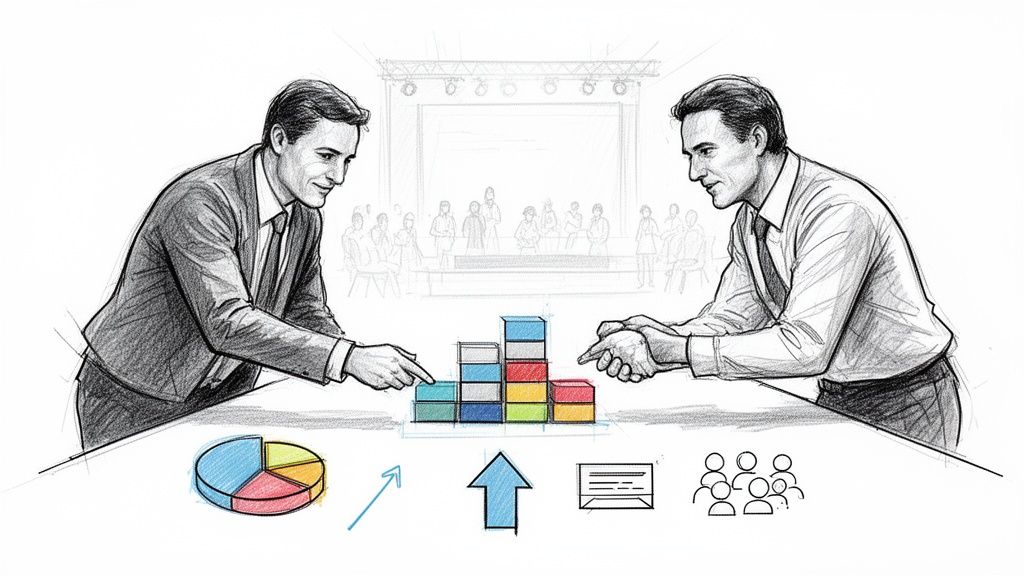
Crafting a winning sponsorship package starts with a crucial mental shift. You're not just selling ad space; you're building a strategic partnership proposal. A truly modern package needs to do three things exceptionally well: define your audience with precision, present tangible assets that solve real problems for sponsors, and back it all up with hard data to prove ROI.
This isn't about offering generic tiers anymore. It's about delivering real, measurable value.
Forget the old playbook of just slapping a logo on a banner and calling it a day. Today’s sponsors are savvy investors, not just charitable patrons. They expect data, they demand clear outcomes, and they want a partnership that feels like a seamless extension of their own marketing efforts. The era of "spray and pray" sponsorships is officially over.
This isn't just a gut feeling; the market data backs it up. A recent analysis revealed that 74% of brands are deliberately shrinking their sponsorship portfolios. Why? By focusing on fewer, more impactful deals, they've managed to slash administrative overhead by 18% and, more importantly, boost ROI by 12%. You can dig deeper into this "fewer, bigger, better" strategy in recent global sponsorship trend reports.
What this means for you is that the bar is higher. Your offer has to stand out as one of those high-impact opportunities worth investing in.
To get a seat at the table with these discerning sponsors, your package has to be built on a solid foundation of mutual value. Think of it less as a price list and more as a business case that clearly explains not just what a sponsor gets, but why it matters to their bottom line.
This takes some serious prep work before you even think about putting a price tag on anything.
To get started, here are the essential building blocks for a package that actually gets results:
Deep Audience Intelligence: You have to know your audience inside and out. Go way beyond basic demographics. What are their pain points? What do they value? How do they behave?
A Complete Asset Inventory: Map out every single touchpoint where a sponsor could connect with your audience. This includes everything from digital banner ads and newsletter mentions to exclusive content collaborations and main-stage speaking slots.
Benefit-Oriented Tiers: Ditch the generic "Gold, Silver, Bronze" labels. They mean nothing. Instead, name your packages based on the outcome they deliver, like a "Brand Visibility" package, a "Lead Generation" package, or a "Thought Leadership" package.
A Clear Path to ROI: Don't just promise results—show sponsors exactly how you'll track and report on key performance indicators (KPIs). This turns your pitch from a hopeful promise into a verifiable investment.
The table below breaks down these core components and their roles in creating a package that today's data-driven sponsors are looking for.
By weaving these elements together, you're not just asking for money. You're presenting a data-backed business case that shows a deep understanding of a sponsor's needs and a clear plan to meet them.
Take a look at how a platform like GroupOS can bring this to life. A dedicated sponsor profile becomes a central hub for visibility, content, and lead capture, all in one place.
This kind of dedicated space makes it easy for your members to connect with sponsors, and even easier for you to track the engagement that proves your value.
The most effective sponsorship package is less of a menu and more of a strategic proposal. It anticipates a sponsor's needs and presents a clear, data-supported solution to their marketing challenges.
When you assemble your package with this mindset, you completely change the conversation. You move from a simple sales pitch to a compelling investment opportunity, paving the way for not just securing a check, but building a genuine, long-term partnership.
Before you even think about putting a price tag on a sponsorship package, you have to get crystal clear on what you're actually selling. The most irresistible sponsorship deals I've ever seen are built on two things: a deep understanding of the audience and a complete inventory of every single thing you can offer.
Nail these two, and you’ll craft packages that sponsors genuinely get excited about.
Let's be clear: sponsors aren't just buying access to your event or your community. They're buying access to your people. Your first, most critical job is to prove you have the right people for them.
Forget about just telling sponsors you have "1,000 attendees." That number is meaningless without context. They need a vivid picture of who they'll be connecting with. It's time to dig into your data and build out a detailed audience profile.
Your profile needs to answer the real questions sponsors have:
A cybersecurity firm would get way more excited about reaching 100 actively engaged Chief Information Security Officers than 1,000 generic "tech professionals." Specificity is your secret weapon in a sales conversation.
This isn't just data; it's the foundation of a compelling business case. For more on slicing and dicing your audience data, our guide on customer segmentation models is a great place to start.
Once you have a rock-solid audience profile, it's time to map out every possible way a sponsor can get in front of them. This is your asset inventory, and it's about identifying every single touchpoint where a brand could interact with your members.
Most people stop at the obvious stuff, like a logo on the website or a booth in the expo hall. Don't make that mistake. Your most valuable assets are often the ones you haven't even thought of yet.
The trick is to group your assets into categories. This not only keeps you organized but also helps you think strategically about how to build packages that align with what sponsors actually want to achieve, whether that's brand awareness, lead generation, or positioning themselves as industry leaders.
Think from the sponsor's perspective. What is their ultimate goal? Group your inventory based on the problems you can solve for them.
Here's a simple way to break it down:
This isn't just a list of things to sell. It's a strategic catalog that turns your offerings into solutions. So, the next time a sponsor says, "We need more leads," you can confidently point them to a specific set of assets designed to do exactly that. This prep work is what separates a sponsorship package that gets ignored from one that gets signed.
Alright, you've done the foundational work. You know your audience inside and out, and you have a full inventory of every asset you can offer. Now comes the part where it all becomes real: designing and pricing your sponsorship tiers. This is where your strategy turns into a compelling offer a sponsor can't refuse.
The biggest mistake I see people make is falling back on the tired "Gold, Silver, Bronze" model. Those labels are meaningless. They tell a sponsor nothing about the value they're actually getting. Instead, your goal should be to craft tiers that tell a story, with each level offering a clear and escalating set of benefits tied directly to what a sponsor wants to achieve.
Everything boils down to the two pillars you've already established: your Audience and your Assets.
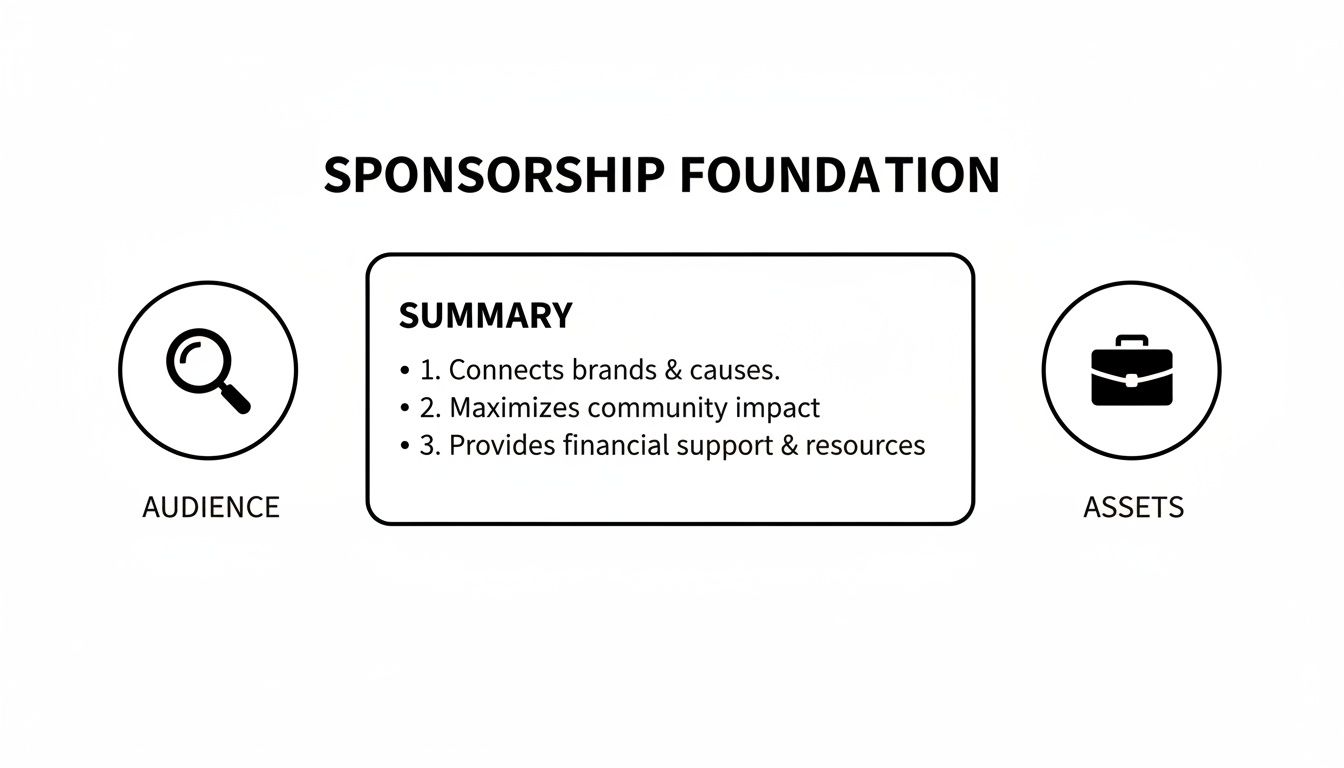
When you keep these two elements at the forefront, every package you create is automatically grounded in tangible value for your partners.
Think of your sponsorship tiers as different solutions for different problems. Not every sponsor has the same budget or the same marketing goals, right? Your job is to create logical bundles of your assets that cater to the most common objectives, like boosting brand awareness, generating qualified leads, or achieving deep integration with your community.
Here’s a practical way to structure tiers with real purpose:
The "Awareness" Tier: This is your entry point, designed for maximum visibility. You'd bundle assets like logo placement on your website and event app, social media shout-outs, and a mention in your email newsletters. It’s the perfect fit for a new brand breaking into the space or a well-known company just looking to stay top-of-mind.
The "Lead Generation" Tier: The next level up is built for sponsors whose main goal is filling their sales pipeline. This package would include everything in the Awareness tier, but you'd add high-value assets like a sponsored webinar, a dedicated sponsor profile with a lead capture form, or perhaps exclusive access to an attendee list (with consent, of course).
The "Integration" Tier: This is your premium offering for a true partner, not just a sponsor. It’s all about deep, immersive access to your community. This could mean a main stage speaking slot, hosting a VIP networking dinner, or even a custom-branded channel within your community platform.
This approach instantly communicates value and helps sponsors see exactly which package aligns with their strategy, allowing them to self-select the best fit.
Pricing can feel like the most intimidating part of this process, but it doesn't have to be a shot in the dark. While it's tempting to use cost-plus pricing (calculating your costs and adding a markup), the most successful sponsorship programs rely on value-based pricing. This simply means your prices should reflect what your assets and access to your audience are actually worth in the market.
So, how do you figure that out? Start by doing a little competitive research. See what similar events or communities in your niche are charging. Then, take a hard look at the quality of your audience. Access to a small, highly engaged group of C-suite executives is worth far more than a passing glance from a huge, general audience.
An irresistible package is built on strong data. You can highlight engagement metrics from tools like interactive member maps or QR code check-ins, which can track 100% of attendee interactions. Bundle your tiers logically—a bronze package at $5,000 for logo placement, a silver package at $15,000 adding a webinar, and a gold package at $50,000 with VIP upgrades and a custom channel—ensuring each level ties to clear KPIs. Some sponsors even report 33% higher engagement from tie-ins with social impact initiatives.
This data-driven approach completely changes the conversation from "How much does it cost?" to "What return can I expect?" For a deeper dive into pricing models, our guide on subscription pricing strategies has some great frameworks you can adapt.
How you present your packages is almost as important as what's inside them. You need to make it incredibly clear and easy for a busy marketing manager to compare their options. A clean, visually appealing table is one of the most effective ways to show the escalating value of each tier.
Below is a sample comparison that clearly outlines the escalating benefits across three tiers, each designed around a specific sponsor goal.
By laying out the options like this, you're not just listing features; you're helping sponsors visualize their investment and understand the unique advantages of upgrading.
The key is to avoid cluttering your proposal with every single tiny benefit. Instead, highlight the key differentiators that make each tier unique. List the price for each level clearly and include a strong call to action, making it simple for a sponsor to say "yes." When you design and price your tiers with this kind of strategic intent, you empower sponsors to see the value, understand the investment, and confidently choose the perfect partnership for their goals.
Your meticulously designed sponsorship package is only as good as the proposal you send. Think of this document as your ambassador; it's the first real, in-depth look a potential partner gets into the value you're bringing to the table. The goal here is to create something persuasive and professional, but also personal enough to get a real conversation started.
Don’t think of it as just a sales document. It's the opening chapter of a potential partnership. It needs to grab them from the first sentence and walk them logically toward a confident "yes."
While every proposal needs a personal touch, the core structure is pretty consistent. It's a framework that ensures you cover all the critical information a busy decision-maker needs. If you skip any of these parts, you leave sponsors with unanswered questions, and that makes it much easier for them to say no.
Here are the non-negotiable components:
A great proposal doesn't just present information; it anticipates a sponsor’s questions and answers them proactively. It shows you've done your homework, understand their marketing goals, and have a real plan to help them get there.
Sending the proposal is just the start. The real work—and the real magic—happens in the pitch and the follow-up conversations. This is where you bring that static document to life and turn it into a dynamic discussion about partnership.
Before you even think about hitting 'send,' do your homework. Dig into the sponsor’s recent marketing campaigns, their latest product launches, and any company news. Who are they trying to reach right now? What messages are they pushing? This isn't about being nosy; it’s about tailoring your pitch so your sponsorship feels like an obvious solution to their current goals.
Keep your first outreach email short and focused on value. Instead of attaching the full proposal and hoping for the best, your goal is to spark their curiosity and get them on a quick call.
Here’s a snippet of what that might look like:
"Hi [Sponsor Name],
I saw your recent launch of [Product/Campaign] and was really impressed by its focus on [Target Audience/Goal].
Our upcoming [Event/Community Name] is where over [Number] of these exact [Specific Audience Profile] professionals gather. I have a few specific ideas for how we could connect you directly with them to help drive [Specific Goal, e.g., demo sign-ups, brand awareness].
Would you be open to a 15-minute chat next week to explore this?"
This approach is respectful of their time and immediately frames the opportunity around their needs, not yours. Once you get the verbal "yes," the final step is to formalize everything. To lock in the deal, a well-drafted Influencer Agreement Contract is crucial for ensuring all deliverables and expectations are crystal clear and legally sound. For more tips, you can also grab our complete event sponsorship proposal template.
This demand for clear, value-driven partnerships isn't new, but it was certainly accelerated post-2020 when the pandemic forced brands to scrutinize every single dollar. That trend isn’t slowing down. The sports sponsorship market alone is projected to hit $115 billion by 2025 and is expected to grow at 8.7% annually toward $160 billion by 2030. What this tells us is that sponsors are willing to invest more than ever, but they're also demanding more in return. That makes a polished proposal and a strategic pitch absolutely essential.
Getting that "yes" from a sponsor is a fantastic milestone, but it's really just the starting line. Now comes the hard part: delivering on every promise and proving a real, measurable return on their investment. This is what separates a one-time deal from a long-term partnership, and it all comes down to activation and reporting.
Think of sponsorship activation as bringing the partnership to life. It’s the hands-on work of executing all the deliverables you outlined in the package—from banner ads to speaking slots—in a way that feels dynamic and valuable. But truly great activation goes way beyond just checking boxes. It’s about creating memorable experiences that connect your sponsors with your audience in a meaningful way.
Forget about just slapping a logo on a banner and calling it a day. The goal is to weave sponsors into the very fabric of your event or community. When it's done right, it feels natural and adds value for everyone. Technology is your best friend here, opening the door to engaging, trackable interactions that old-school methods just can't deliver.
Here are a few modern activation ideas that drive real engagement:
The best activations don't feel like ads. They feel like a helpful, integrated part of the member experience, seamlessly blending sponsor value with genuine community engagement.
These are just a few thought-starters. The real magic happens when you think creatively about how your specific platform can give sponsors meaningful touchpoints. This is the stuff that makes a sponsorship package truly stand out.
This is where you prove your worth. Sponsors today are swimming in data, and they absolutely expect you to provide clear, concise metrics that justify their spend. The days of guessing at ROI are long gone. With the right tools, you can track nearly every interaction and build a powerful story of impact.
Data-driven sponsorship is no longer a "nice-to-have." In fact, 78% of CMOs now prioritize ROI measurement in their investments. This focus on hard numbers is fueling incredible growth in the global sponsorship market, which is projected to jump from $63.1 billion in 2021 to $109.1 billion by 2030.
Modern platforms like GroupOS are designed to capture this data automatically. Here are a few features you should be putting to work:
This is exactly what that data looks like when visualized in a modern analytics dashboard.
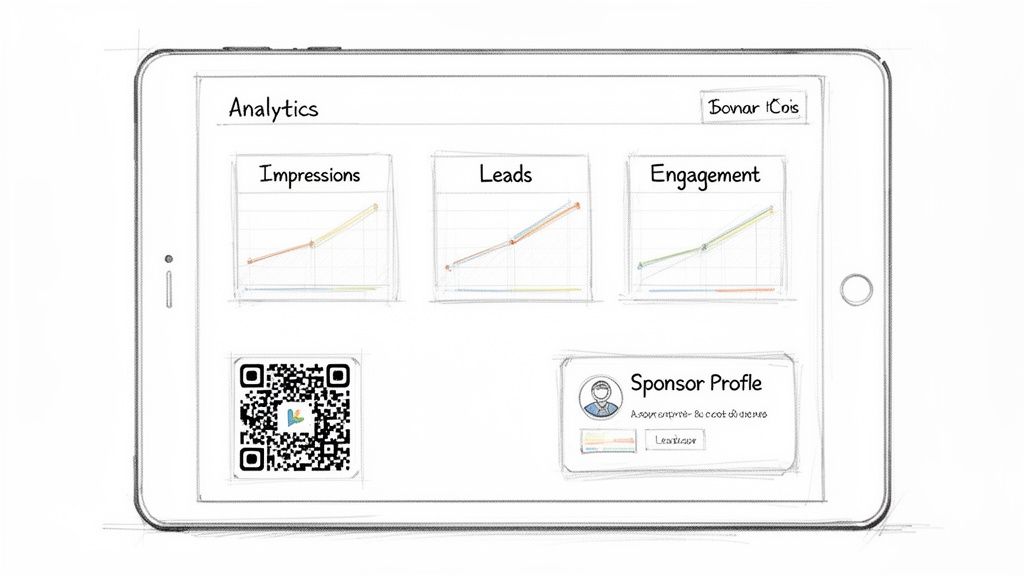
A clean dashboard translates raw data into actionable insights, making it easy to show a sponsor exactly where they got the most engagement.
Once the dust settles, your final job is to pull all this rich data into a comprehensive sponsorship report. This isn't just a courtesy—it's your single most powerful sales tool for locking in a renewal. The report should be clean, visual, and laser-focused on the metrics that line up with that specific sponsor's goals.
At a minimum, your report should always include:
When you present this kind of hard data, you completely change the renewal conversation. You're no longer asking them to take a leap of faith. You’re showing them a proven, data-backed success story and inviting them to come back for more. To dig deeper into this process, check out our guide on measuring event ROI.
Even the most well-thought-out sponsorship strategy will run into questions. It just happens. Let’s walk through some of the most common hurdles I see organizers face when they start building and pitching their packages.
First off, a custom request is a good thing! It means the sponsor is genuinely interested and thinking critically about how to partner with you. My advice? Always welcome the conversation, but go into it with a game plan.
Your first move is to listen. Really listen. Dig deep to understand what they’re trying to accomplish. Are they laser-focused on a specific niche within your audience? Is there a particular marketing goal their team is chasing that your standard packages don't quite hit?
Once you get their "why," take a look at everything you have to offer—your asset inventory. More often than not, you can build a fantastic custom package by simply remixing existing elements. For instance, if a sponsor craves more face-time with key members, you could bundle a private VIP dinner with a dedicated AMA (Ask Me Anything) session in your community’s online space.
The golden rule here is to protect your value. Make sure any custom package is priced fairly, reflecting the real value of the assets you're including. It has to align with your overall pricing. Never sell yourself short just to get a "yes."
Being flexible makes you a great partner, but having a structured approach ensures you don't give away the house.
Pricing without any history can feel like you’re throwing darts in the dark, I get it. But you can make a surprisingly accurate first guess with a bit of detective work.
Start by scoping out the landscape. What are similar events or communities in your field charging? Look at their sponsorship decks if you can find them. This will give you a ballpark figure to start from.
Next, be brutally honest about the value of your audience. Access to a small, hyper-engaged group of C-suite executives is worth a whole lot more than a massive, passive audience of casual followers. Your pricing should absolutely reflect that difference.
It’s also perfectly fine to start with slightly lower, introductory prices for your very first event. You can frame it as a special "founding partner" deal. This strategy helps you get those crucial first sponsors in the door, gather performance data, and collect powerful testimonials. You can then use that proof to confidently raise your prices for the next cycle.
Don't forget the power of purpose, either. Aligning with social causes can be a huge draw. We're seeing content tied to social good generate 33% more engagement, which is a stat that gets a lot of attention in sponsorship meetings. You can find more data on sponsorship trends at Accio.com.
Lobbing your brilliant proposal into a generic "info@" email inbox is like sending it into a black hole. To actually get a response, you need to find the right person.
LinkedIn is your best friend here. Search for the company you’re targeting and start hunting for people with titles like:
If it's a smaller company, you might aim higher and look for the CMO or Head of Marketing. Once you have a name or two, a little more digging can often turn up a direct email. A personal, direct email to the right person is infinitely more effective than a cold, generic blast.
Ready to stop juggling spreadsheets and start proving your value with hard data? GroupOS gives you everything you need to manage sponsorships—from slick sponsor profiles and banner ads to the analytics that prove ROI—all in one place. Start your free trial and build better partnerships today.