December 3, 2025

Before you book a venue, before you draft a single email, before you do anything else, you have to answer one simple question: Why are we having this event?
Seriously. Stop and think about it. Without a clear "why," you're just throwing a party. With a clear "why," you're creating a strategic asset. That purpose becomes your North Star, guiding every single decision you make down the line, from the speaker you choose to the font on the name badges.
The most important part of planning happens long before the actual event. It's the strategic work—the thinking, the debating, the getting-it-down-on-paper phase. This is where you figure out not just what the event will be, but why it absolutely needs to happen.
Skipping this step is the single biggest mistake I see planners make. They jump right into logistics and end up with a disjointed experience that doesn't deliver real results. Taking the time to build this foundation ensures every dollar you spend and every hour you work is pushing toward a measurable outcome.
So, what does a "win" actually look like for this event? The answer is never one-size-fits-all.
For a professional association, success might be boosting member retention by 15% with a killer annual conference. For a corporate community manager, the goal might be to walk away with 500 qualified sales leads from a new product launch.
Your primary objective shapes everything. Common goals often fall into these buckets:
A lead-gen event is going to feel very different from an educational one. The first will be heavy on networking and demos; the second will be all about expert speakers and hands-on workshops. To keep your team aligned, it’s a great idea to capture all of this in a central document. For a fantastic starting point, check out our guide on creating an effective event brief format.
An event without clear goals is just a party. An event with clear goals is a strategic asset. Your "why" determines your ROI.
Once you know why you're doing this, you have to define who it's for. And "local professionals" is not a target audience—it's a guess. You need to get specific. What keeps these people up at night? What problems are they trying to solve?
Dig deep and build out a few detailed personas. Ask yourself:
A tech conference for senior software developers is going to have a completely different vibe, agenda, and marketing plan than a nonprofit gala for local philanthropists. When you truly understand your audience's world, you can design an experience they feel they can't afford to miss. The core principles of knowing your guests apply to any gathering, even if you just want to learn how to plan a stress-free dinner party.
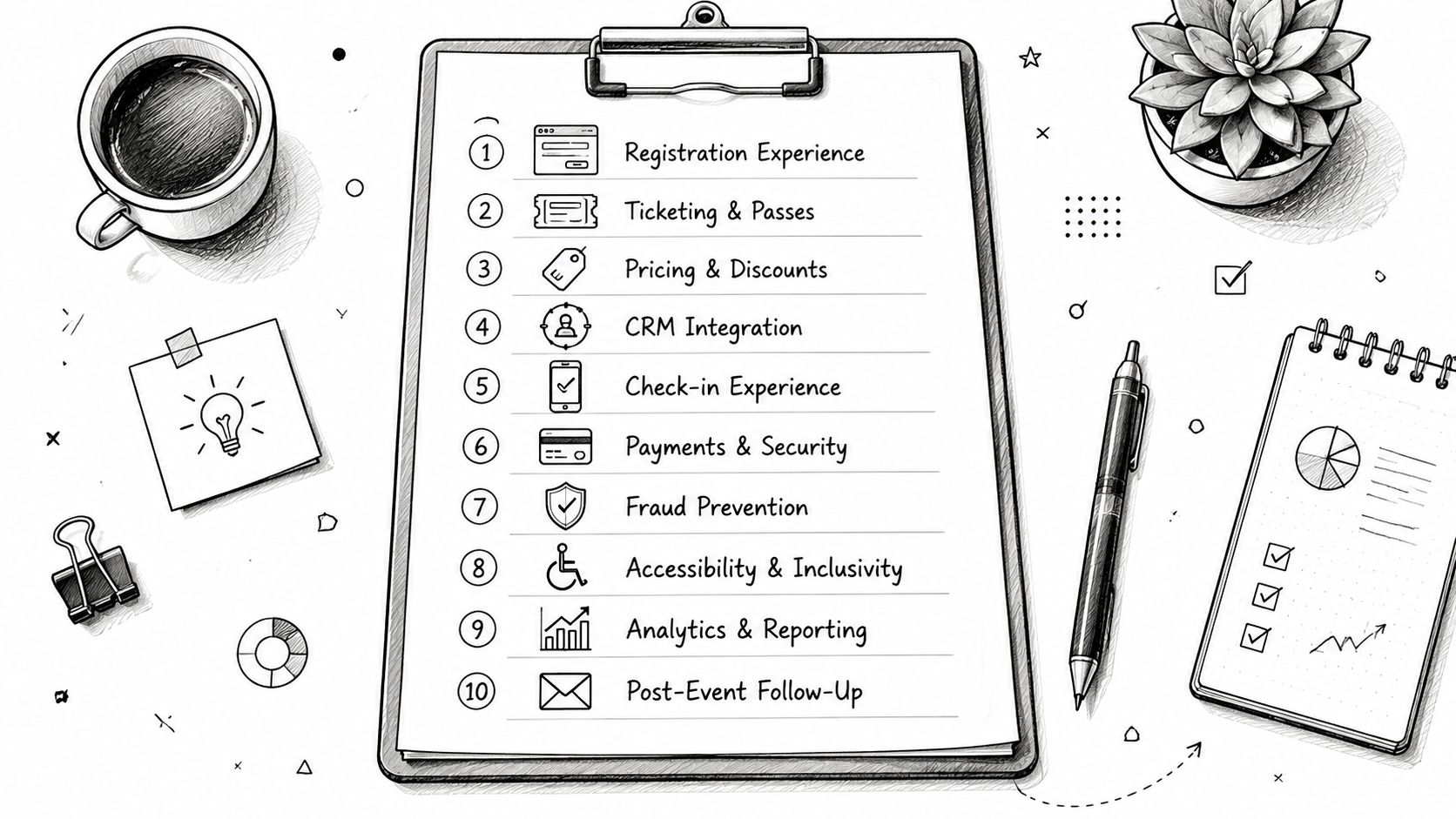
To help you nail down these foundational elements, here's a quick checklist to guide your initial brainstorming sessions.
This table breaks down the core elements you need to define at the very start of your event planning journey.
Working through these questions forces you to think strategically from day one, setting a solid course for everything that follows.
The event planning sector in the US is a tough, competitive market projected to hit $1.7 billion in revenue. Despite economic uncertainties, the demand for well-executed events is there. But to succeed, you have to prove your value. This is especially true when budgets are tight and professional planning might be seen as a luxury. That economic reality is precisely why defining clear, compelling goals and deeply understanding your audience isn't just a "nice-to-have"—it's absolutely essential for survival and growth.
Even the most brilliant event strategy will fall flat without the right people and tools to execute it. Let’s be real: planning a great event is a team sport, not a solo mission. It demands clear roles, smooth collaboration, and a smart technology backbone to handle all the moving parts.
Think of it like building a house. You wouldn't hire a single person to pour the foundation, frame the walls, run the plumbing, and paint every room. You need specialists. Your event is no different. You need a core team with well-defined responsibilities to avoid burnout and make sure no detail gets missed.
The exact team you build will naturally depend on the size and complexity of your event. A small internal workshop might only need one or two people juggling hats, but a multi-day hybrid conference requires a much more specialized crew.
Most successful event teams I've worked with have these key players:
These foundational pillars—your goals, audience, and budget—are what your team will rally around from day one.
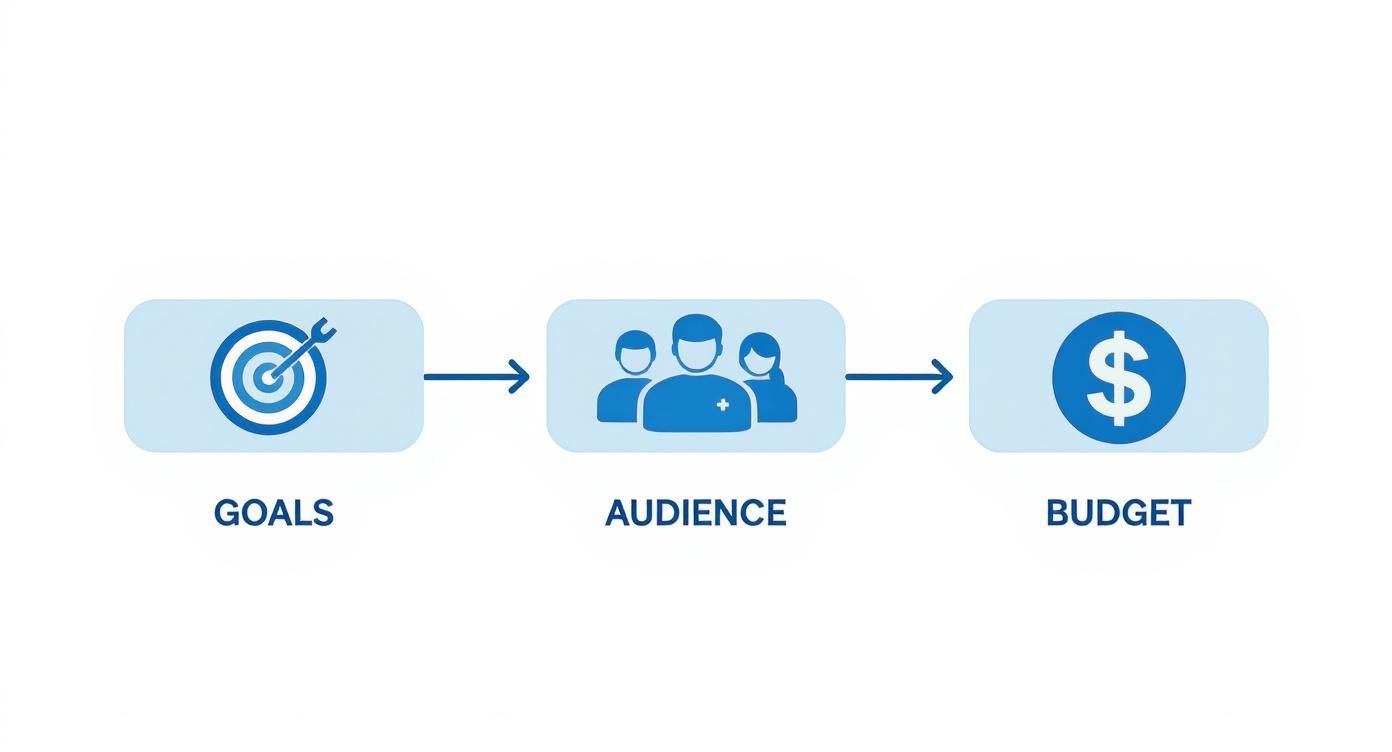
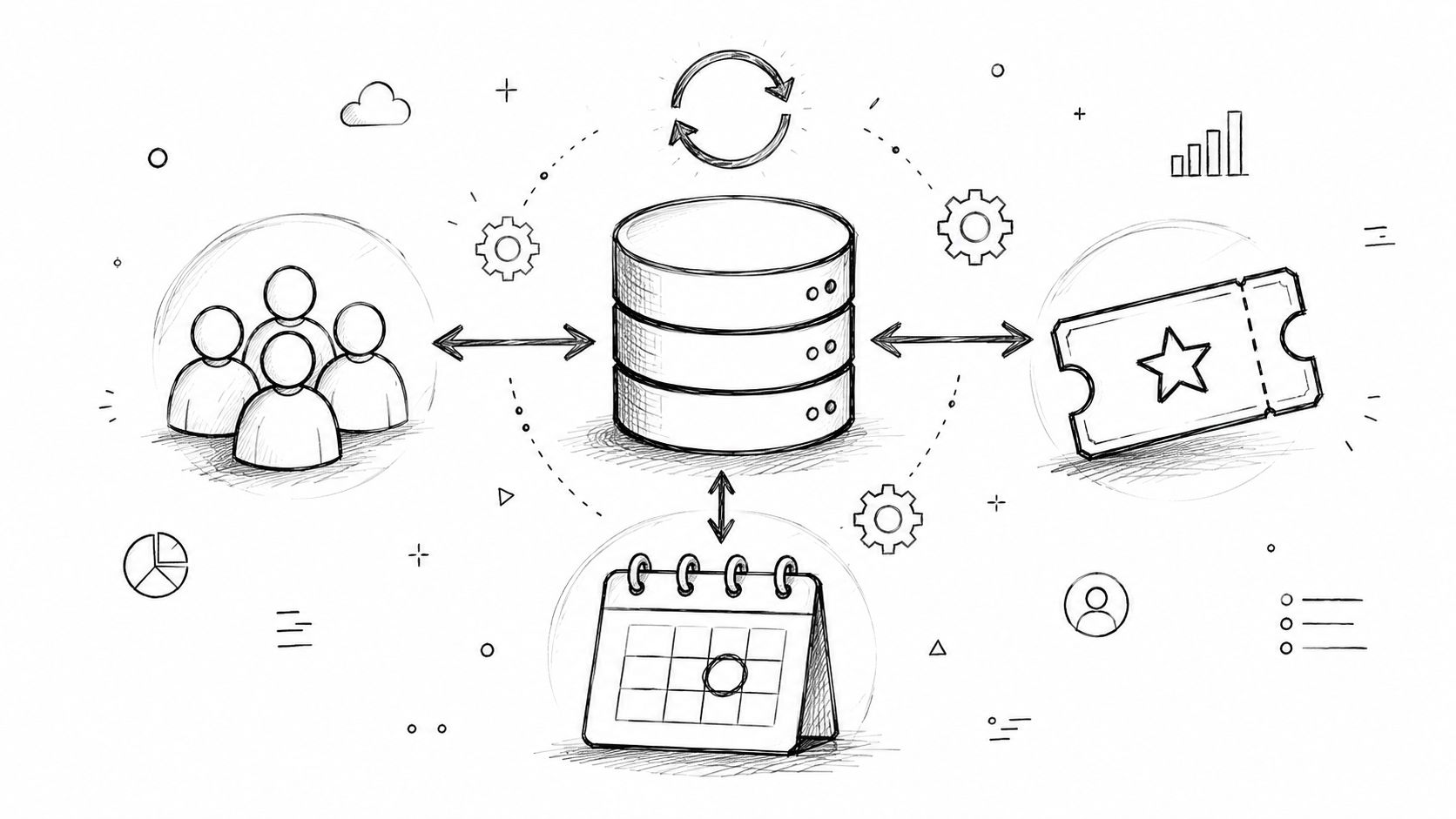
This simple flow shows just how crucial it is to get these first steps right. They directly inform both your team's priorities and the technology you'll need to support them.
With your team in place, it’s time to talk tech. The right technology doesn't just make your life easier; it can completely elevate the attendee experience. It's no surprise that over 85% of event planners now use event management software for everything from registration to post-event analytics. This isn't just a trend; it's part of a massive industry shift, with the global market for event software projected to hit $18.4 billion.
Generally, you have two paths you can take when building your tech stack:
For community managers running something complex like a hybrid user conference, an all-in-one platform is almost always the way to go. It guarantees a consistent brand experience and lets your in-person and virtual attendees interact seamlessly in the same digital space.
Ultimately, the best choice boils down to your event's specific needs and your team's resources. To help you sort through the options, we put together a detailed guide. You can explore our event management software comparison to see how different platforms really stack up.
Choosing the right tools from the start empowers your team to focus on what truly matters: creating a memorable experience instead of wrestling with clunky software.
Logistics and budgets might build the skeleton of your event, but the attendee experience is its heart and soul. This is where you move past managing line items and start creating genuine, memorable moments. A flawlessly run event that leaves attendees feeling bored is still a failure, after all. The real magic happens when you craft an experience that people are still talking about long after they've gone home.

The foundation for all of this is a compelling, well-paced agenda. It's about so much more than just landing a big-name keynote. You're essentially creating a narrative for the day, complete with high-energy peaks and thoughtful valleys for connection and reflection.
A great agenda is a delicate balancing act. You need to deliver the high-value content people paid to see, but you also have to leave plenty of room for the organic, unstructured interactions where the best networking happens. A common rookie mistake is cramming the schedule from dawn till dusk, which only leads to glazed-over eyes and attendee burnout.
Instead, think about creating a varied and dynamic flow. A structure I've seen work time and again looks something like this:
Think of your agenda as a story. Each session should build on the last, leading to a powerful closing that leaves attendees feeling inspired and ready to take action. This is the essence of all great experiential marketing events—you're making the audience an active participant, not just a spectator.
Your venue choice does way more than just provide four walls and a roof; it fundamentally shapes how people feel and interact. A stuffy, poorly-lit hotel ballroom can suck the energy out of even the most dynamic speaker. The right venue, whether it’s physical or virtual, should feel like a natural extension of your brand and the event's core purpose.
For an in-person event, look beyond just capacity:
Accessibility isn't just a compliance checkbox; it's a fundamental part of creating an inclusive and welcoming environment. When every attendee feels seen and accommodated, it elevates the experience for everyone.
For virtual events, your "venue" is the digital platform you choose. A clunky, hard-to-navigate platform can be just as frustrating as a bad physical one. Make sure your tech offers seamless video streaming, intuitive navigation, and robust tools for virtual networking, like breakout rooms and easy one-on-one chat functions.
The small details are what separate a good event from a truly great one. This journey starts the second someone decides to register. A simple, mobile-friendly registration process is table stakes now. Using a platform like GroupOS, you can create custom forms to gather essential information—like dietary restrictions or accessibility needs—right from the get-go.
In the weeks leading up to the event, keep your communication clear and consistent. Send out agenda updates, speaker announcements, and logistical info in easily digestible emails. Once the event is live, an event app with push notifications is your best friend for alerting attendees to last-minute session changes or impromptu networking opportunities.
Finally, don't wait until it's over to ask for feedback. Use live polls during sessions to gauge engagement in the moment. Have staff on hand—both in-person and virtually—to address questions or concerns immediately. This responsive approach shows attendees you genuinely care about their experience, turning a potential hiccup into a chance to show them you're on top of things.
You can plan the most incredible event in the world, but if nobody knows about it, it's just a great idea in an empty room. This is where your promotional strategy comes in. It’s all about building buzz, showing people exactly why they can't miss out, and making it dead simple for them to hit that "register" button.
Effective promotion isn't just about sending a few emails and hoping for the best. It's a conversation. You need to meet your audience where they are—whether that's scrolling through their inbox, browsing LinkedIn, or engaging in industry communities. A smart, coordinated plan is your ticket to a sold-out event.
One of the biggest mistakes I see is planners putting all their eggs in one basket. A truly effective promotional plan weaves together several channels, each with a specific job to do. This approach ensures you're reaching different people in different ways, building momentum from the first announcement right up to the final registration push.
Here are the channels you should have in your toolkit:
The goal is to map this all out on a content calendar. You'll know exactly what message is going out, on which channel, and when, creating a consistent narrative that builds excitement over time.
How you price and sell tickets has a huge impact on both registration numbers and your bottom line. Your registration process needs to be seamless. If it's clunky, slow, or confusing, you'll lose people who were seconds away from buying a ticket.
Think of your registration page as the final handshake. It's not just a form; it's the last chance to convince someone. It has to load fast, look great on a phone, and remind them of all the amazing value they're about to get.
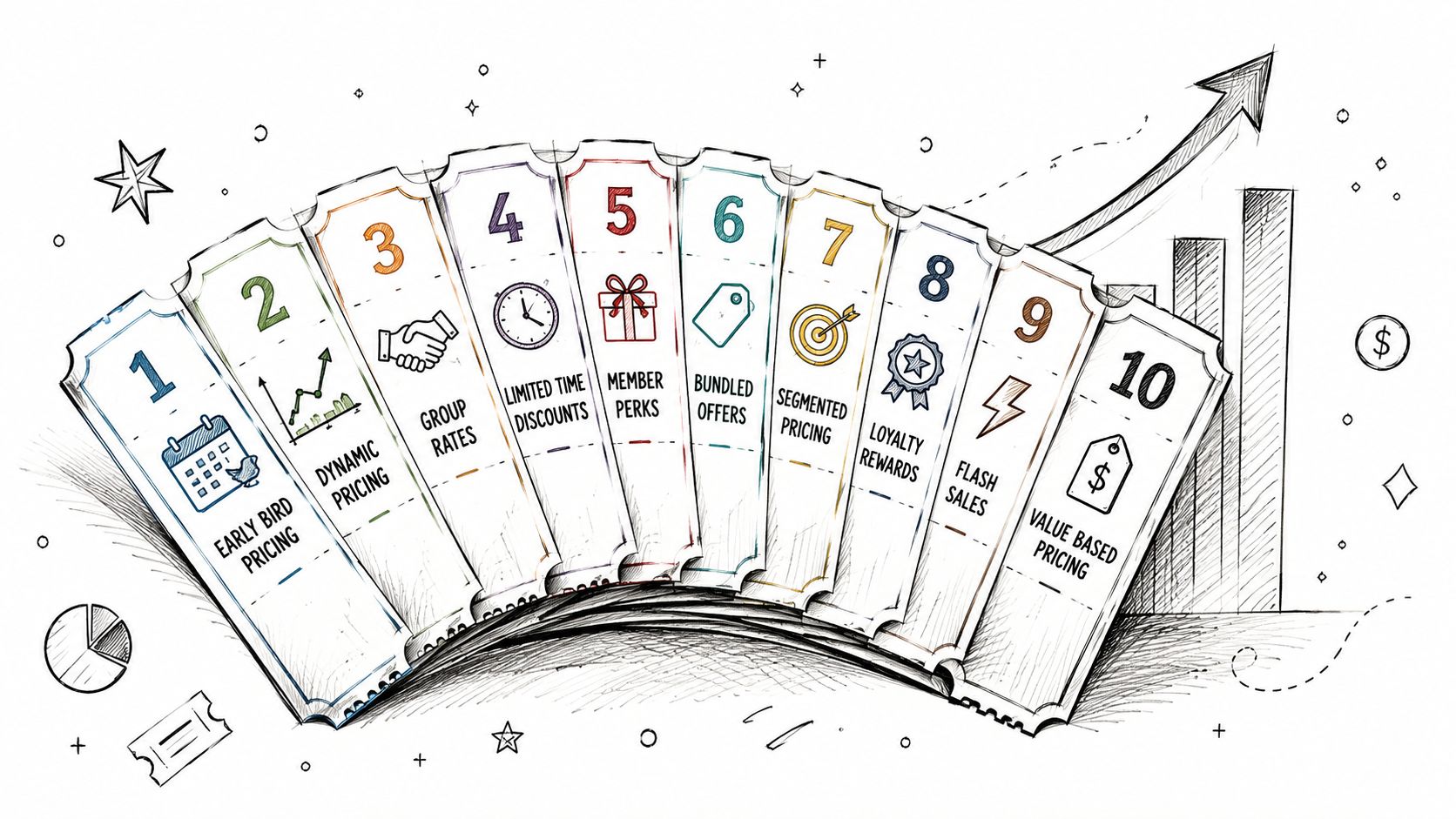
Tiered pricing is a fantastic way to create urgency and reward the people who commit early. A typical structure looks something like this:
Platforms like GroupOS make setting this up a breeze. You can create custom registration forms, schedule automatic price increases, and offer different ticket types like VIP packages or group rates—all without sending people to a third-party site.
Sponsorships are more than just a way to boost revenue; they add serious credibility to your event. The real secret here is to ditch the generic gold, silver, and bronze packages.
Instead, create opportunities that help your partners achieve their goals. Is a sponsor trying to generate leads? They’ll be far more interested in sponsoring a networking lounge than just getting a logo on a banner. For visibility, effective event marketing with custom banners is a classic for a reason, but it’s just one piece of the puzzle.
Offer a menu of options they can choose from—sponsoring the Wi-Fi, hosting a hands-on workshop, or getting a featured exhibitor profile in your event app. This way, they can build a package that delivers a genuine return for them, making them eager to partner with you again next year.
After months of careful planning, the big day is finally here. This is the moment your strategy becomes reality. A smooth execution isn't about everything going perfectly—it’s about anticipating needs and gracefully managing the flow of the day, ensuring the experience you designed on paper comes to life for every attendee.
But your job isn't over when the last guest walks out. The real value of any event comes from understanding its impact. Measuring your success against the goals you set from day one isn't just the last step; it’s the most critical input for making your next event even better. This is how you prove your event’s worth and secure buy-in for future projects.
On event day, you transition from planner to conductor. Your job is to orchestrate all the moving pieces, solve problems before they become crises, and be the calm center of the storm. A solid logistics plan is your best defense against chaos.
Start your day with a full walkthrough of the venue. Check in with every single vendor—from catering to the AV crew—to confirm they’re on schedule and have everything they need. Make a point to test all the tech yourself, especially microphones, projectors, and the livestream feed if you have a virtual component.
You absolutely must have a master contact sheet with the cell phone number for every vendor, speaker, and key staff member. When something goes wrong, you need to know exactly who to call without wasting a second.
The global events industry is a massive field, projected to hit a market size of roughly $1.35 trillion. This growth isn’t just about putting on more events; it’s about navigating more complex ones that blend in-person, hybrid, and virtual elements. With corporate events making up a huge 35% of this market, the pressure is on to deliver real business results. To stand out, your execution has to be just as strategic as your initial planning. You can explore more event industry statistics on Bizplanr.ai to see where things are headed.
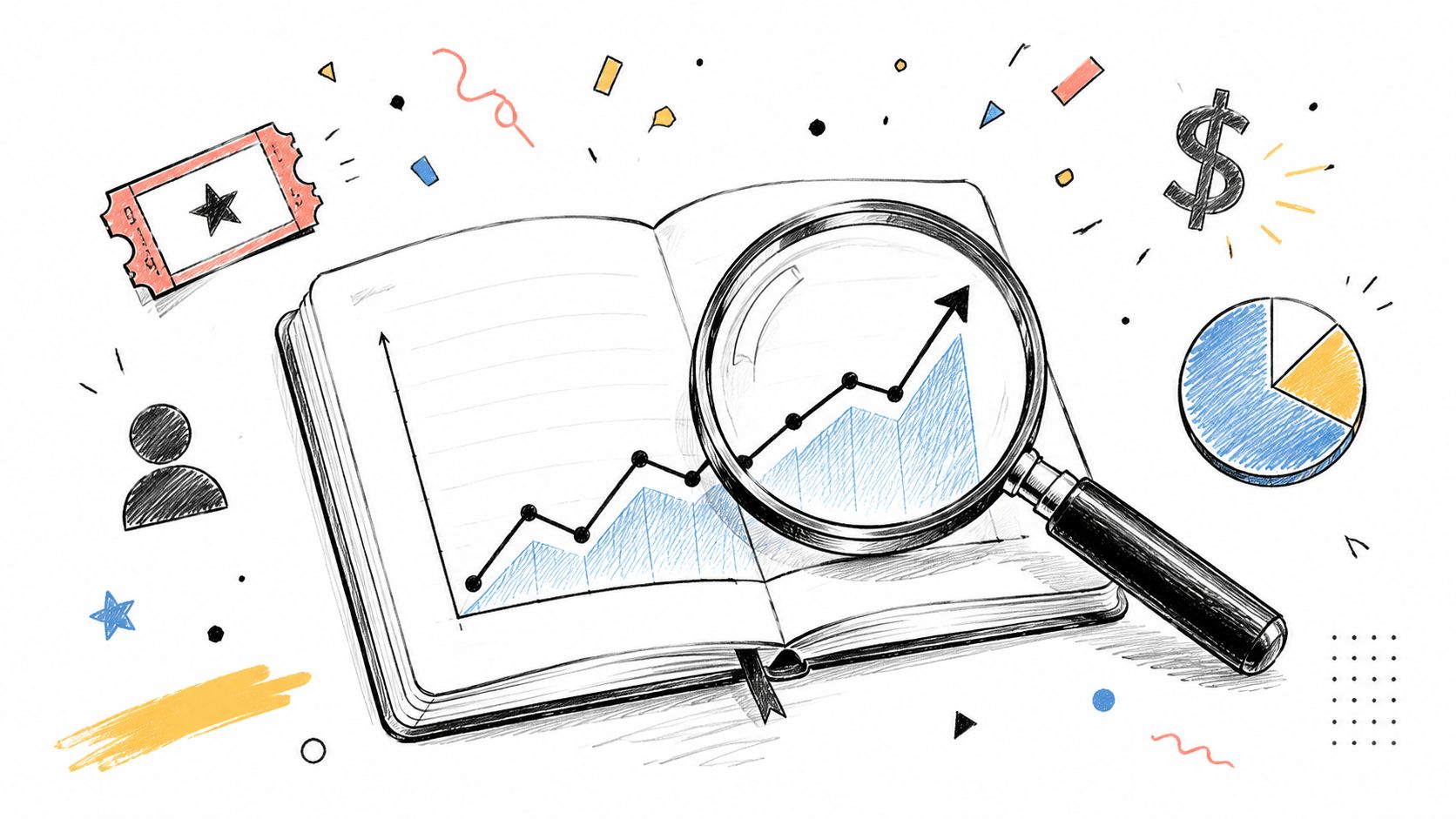
As soon as the event wraps up, it's time to dig into the data. The only way to prove your event moved the needle for your organization is by measuring the right things. The Key Performance Indicators (KPIs) you track should tie directly back to the goals you established in the very first stage of planning.
If your goal was lead generation, then your primary metric is the number of qualified leads captured. If it was all about community building, then attendee satisfaction scores and post-event engagement are what you need to focus on.
Don't just count heads; measure hearts and minds. An attendee satisfaction survey is one of the most powerful tools you have after an event. It gives you direct, actionable feedback on what really resonated and what fell flat.
Here are some of the most critical KPIs to start with:
Tying these metrics together gives you a complete picture of your event’s performance. For a deeper dive, check out our complete guide on measuring event ROI. This data is your most powerful argument when you need to demonstrate the value of your work to stakeholders and justify the budget for your next big idea.
Even the most seasoned event planners have questions. After years in the trenches, I’ve seen the same challenges trip people up time and time again. Let’s tackle some of the most common questions head-on so you can navigate the planning process with confidence.
Before you even think about a venue, a date, or a single speaker, you need to nail down your "why." Seriously, stop everything and ask: Why are we holding this event?
Is it to generate new leads? To strengthen your community bonds? To raise brand awareness? Your answer to that question becomes your north star. Every decision—from the catering menu to the content of your sessions—should directly support that core purpose. I’ve seen too many events fall flat because the organizers jumped into logistics without a clear mission. A disjointed event rarely delivers real results.
This is the million-dollar question, and the honest answer is: it depends entirely on the size of your event. There’s no magic number, but here are some battle-tested timelines that will keep you from pulling all-nighters the week before.
Whatever your timeline, always build in a buffer. Trust me, something unexpected will always pop up. It’s far better to be ahead of schedule than to be scrambling at the last minute.
A well-planned timeline is your best defense against chaos. It turns a massive, overwhelming project into a series of manageable tasks, ensuring nothing critical falls through the cracks.
It’s never the big-ticket items that blow up a budget. Everyone remembers the venue and the catering. It’s the sneaky, smaller expenses that catch you by surprise and send your finances into a spiral.
Keep a close eye out for these commonly forgotten costs:
The best way to avoid financial headaches is to create a detailed, line-item budget from day one and to treat your contingency fund as a real, untouchable expense.
Measuring success goes right back to the goals you set in the very first step. Your Key Performance Indicators (KPIs) are your proof, turning your gut feelings into hard data that demonstrates your event's value.
If your goal was lead generation, your primary KPI is the number of qualified leads captured and the final cost per lead. If you were focused on community building, you’ll want to measure attendee satisfaction with a post-event survey (a Net Promoter Score, or NPS, is great for this) and track engagement in your online community afterward.
For the financial side, a simple ROI calculation comparing revenue (tickets, sponsorships) against your total event cost tells a powerful story. By combining this quantitative data with qualitative feedback from attendees, you get a full, 360-degree view of your event’s impact.
Ready to stop juggling spreadsheets and disconnected tools? GroupOS is the all-in-one platform that makes it easy to manage registrations, create custom ticketing, and track every critical metric from a single dashboard. See how you can streamline your next event by visiting https://groupos.com.