December 25, 2025
The whole game of event sponsorship has changed. Forget just asking for a check. If you want to find sponsors—and keep them coming back—you need to build something they actually want to buy into. This means shifting your mindset from "asking for money" to presenting a can't-miss strategic partnership. It all starts with a rock-solid understanding of your audience and a clear story about the value you offer.
Before you even draft a single email, stop asking, "how do I find sponsors?" and start answering a much more important question: "Why should they sponsor my event?" The days of slapping a logo on a banner and calling it a day are long gone. Sponsors today are savvy marketers. They're looking for real partnerships that drive tangible business results, not just a little passive brand awareness.
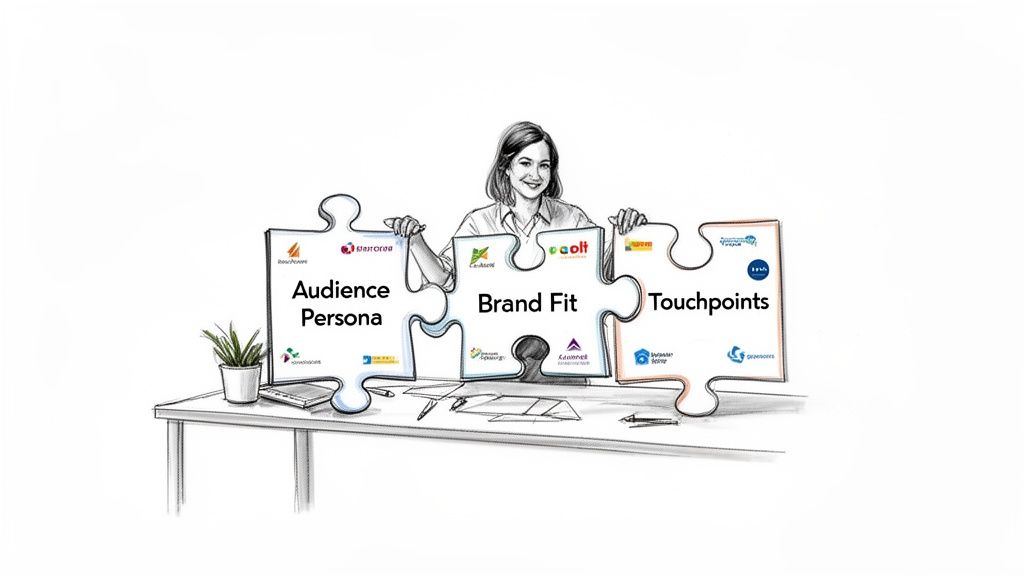
Think of it like putting a puzzle together. You need all the right pieces: a deep understanding of your audience, a natural brand fit with your partners, and clear touchpoints for them to engage. Your job is to transform your event from a simple line item on their budget into an essential part of their marketing strategy.
Your value proposition is the heart and soul of your sponsorship pitch. It’s the one clear, compelling reason a company should partner with you instead of spending their marketing dollars elsewhere. You have to get way more specific than "gain brand exposure."
What makes your event a unique opportunity? Drill down on what you can really offer.
A strong value proposition completely reframes the conversation. You’re no longer a charity case asking for a handout; you’re a solutions provider. It’s the difference between "Please fund our event" and "We can connect you with 200 qualified buyers and help you crush your Q3 sales goals."
Let's be blunt: sponsors aren't buying a booth. They're buying access to your audience. The more intimately you know who’s in the room (or on the Zoom call), the more valuable your sponsorship becomes. An attendee count is just a vanity metric; a detailed persona is what brings that number to life.
Go beyond the basic demographics. Dig into the psychographics that truly matter.
Knowing this stuff is a game-changer. For example, if you know your attendees are mostly mid-level project managers who are struggling with clunky workflow software, your event suddenly becomes a goldmine for a SaaS company that sells project management tools. You’ve just done half their sales prospecting for them.
Finally, what does your event stand for? A clear mission and a strong brand identity act like a magnet for sponsors who share your core values. A company that prides itself on sustainability will jump at the chance to sponsor an event with a zero-waste policy. A brand built on innovation will naturally gravitate toward a conference that's all about debuting new tech.
This alignment is about more than just good PR. It creates a more authentic and powerful experience for everyone involved. When your event's mission and a sponsor's message are in sync, the partnership feels genuine, boosting credibility for both of you.
This is where the industry is heading. In fact, 88.4% of event marketers now see sponsorships as their most effective source of revenue, and 52% of sponsors are demanding measurable, à la carte options instead of generic gold-silver-bronze packages. You can explore more data on these evolving sponsor expectations to see just how much the landscape has shifted. When you nail down your mission, your audience, and your value, finding the right sponsors becomes infinitely easier.
Once you’ve nailed down the value your event offers, it's time to find the right partners. Forget about blasting out generic emails to a hundred different companies. That’s a surefire way to waste your time. A smarter, more targeted approach is what separates the pros from the amateurs, focusing on brands that are not just able to sponsor you, but likely to.
This isn’t about volume; it’s about fit. It's about building a system to find, qualify, and prioritize your prospects before you ever hit "send."
Think of it as the difference between shouting into the void and starting a meaningful conversation with exactly the right person.
One of the most powerful techniques I’ve ever used is something I call "sponsorship genealogy." It’s simple: you trace the "family tree" of sponsors for similar, non-competing events. If a company has sponsored an event like yours before, they've already checked three critical boxes for you:
Start by listing 5-10 events that share your audience but aren't direct rivals. For instance, if you run a regional marketing conference, scout the sponsors of national marketing podcasts, related industry awards, or even large virtual summits for marketers. Head straight to their websites and find the "Sponsors" or "Partners" page. This is your goldmine.
Every logo you see on a similar event's sponsorship page is a pre-qualified lead. You're not guessing if they sponsor events; you know they do. Your job is to show them why your event is an even better fit.
From here, you can start building a high-quality prospect list. This method keeps you focused on companies that are already active in your space, which dramatically boosts your chances of getting a "yes." To go even deeper on this, our complete guide on how to find corporate sponsorship has more advanced strategies.
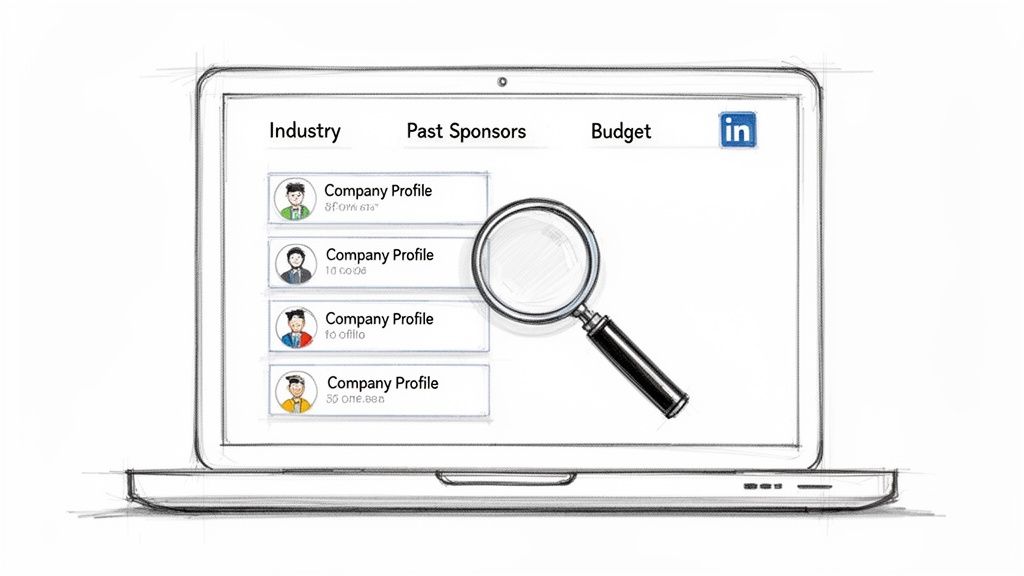
A list of company names is a good start, but it won’t get you a signed contract. You need to connect with the actual person who holds the budget and has the authority to make a decision. This is where a tool like LinkedIn Sales Navigator becomes your best friend.
Don't just look up the company. You need to drill down and find the right job titles. Typically, you're looking for people in roles like:
So, if you found a great software company from your genealogy research, a quick search on Sales Navigator for "Partnerships" at that company will likely give you the name and profile of the exact person you need to talk to. This gets your proposal into the right inbox on the very first try.
Don't overlook the resources right under your nose. Your industry’s ecosystem is packed with potential partners who are actively trying to reach the same people you are. Trade association directories and industry-specific publications are fantastic places to look.
If you’re a member of a professional association, scan their member directory or their list of corporate partners. These are businesses that have already paid to be part of the conversation in your industry.
Similarly, flip through the trade magazines or online journals in your field. Who’s advertising? A company paying for a full-page ad clearly has a marketing budget and a strong desire to connect with professionals just like your attendees. This is a low-effort way to build a list of relevant, financially capable prospects.
Once you have a long list of potential sponsors, you need to prioritize. To make this process more efficient, consider using AI lead scoring to rank your prospects. This helps you focus your energy on the opportunities most likely to convert, making your entire outreach effort far more effective.
Once you have a solid list of potential sponsors, your next move is to build an offer they can’t refuse. Your sponsorship deck isn't just a price list; it’s a menu of solutions crafted to solve a sponsor's marketing challenges. The best packages are the ones that make it dead simple for a prospect to see the value and say "yes."
This means getting more creative than the old-school gold, silver, and bronze tiers. Today’s sponsors are laser-focused on ROI, so you need to present a smart mix of brand visibility opportunities and real lead-generation tools. Your packages should feel both comprehensive and adaptable, ready to meet different budgets and objectives.
Before you can put a price on anything, you have to know what you’re selling. An "asset" is any benefit, tangible or not, that a sponsor gets from partnering with you. I always tell organizers to think through every single touchpoint an attendee has with their event—from the first email to the post-event survey. Each one is a potential sponsorship opportunity.
Your inventory of assets could be huge. Here are a few common ones:
The rise of hybrid and virtual events has thrown the doors wide open for new assets. In fact, something like 74.5% of planners are running hybrid events, and around 63% are putting more money into their virtual tech. This creates fresh opportunities like sponsoring the event's Wi-Fi, a virtual photo booth, or a charging lounge. You can find more stats like this over at remo.co's event industry breakdown.
Tiered packages work because they simplify the decision-making process. The secret, though, is to make the jump between tiers feel both logical and valuable. Each level needs to offer a clear, substantial upgrade from the one before it to justify the higher price tag.
Think of it like this: a Bronze package might give them basic logo placement. The Silver package adds a booth on the expo floor and a few social media shout-outs. But the Gold package? That’s where you bring in the heavy hitters, like a main stage speaking opportunity or pre-show access to the attendee list. This structure helps sponsors quickly find the tier that makes sense for their goals and their wallet.
To get a clearer picture, here’s a simple breakdown of how benefits can scale across different tiers.
This table shows how you can build value from one level to the next, making the upgrade to a higher tier a compelling choice.
Notice how the Gold package includes exclusive benefits like the attendee list and a speaking slot, which are high-value assets that directly address key sponsor goals like lead generation and thought leadership.
My best advice is to create a "ladder of value." The first rung should be an easy, accessible entry point for new partners. The top rung needs to offer an exclusive, high-impact partnership that feels truly special. This way, you have something for everyone.
It’s also crucial to blend different types of benefits. A sponsor who just wants to get their name out there will care about main stage branding. A sponsor who needs to fill their sales pipeline will be all about booth location and lead scanning. Great packages appeal to both. For more ideas, you can check out our guide with real-world examples of successful event sponsorship packages.
While tiers are a fantastic starting point, some of the best partnerships I've seen came from a bit of creative customization. Always include a line in your proposal that says something like, "Don't see a perfect fit? Let's build a custom package for you." It shows you're a true partner invested in their success, not just trying to sell a pre-built box.
A great way to stay flexible without causing total chaos is to offer à la carte options. These are standalone sponsorship opportunities that can be bought on their own or added to a package.
Some of the most popular à la carte items are:
These one-off options are perfect for sponsors with smaller budgets who still want to make an impact, and they let your bigger partners add even more high-visibility moments to their packages. This combination of smart tiers and flexible add-ons gives you a powerful and appealing menu of options that practically sells itself.
You’ve built some fantastic sponsorship packages and have a solid list of potential partners. Great. But those assets don't mean a thing if they're just sitting on your hard drive. A brilliant proposal gathering digital dust won't fund your event.
This is where a thoughtful, persistent outreach strategy comes in. It’s all about cutting through the noise to start a real conversation.
The goal of your first contact isn't to sell a sponsorship on the spot; it's to land a discovery call. You have to shift your mindset. You're not just pitching your event—you're trying to uncover a potential partner’s specific challenges and goals. This simple change reframes the entire dynamic from asking for money to collaborating on a solution.
Your initial email has to be sharp, personalized, and completely focused on what’s in it for them. Generic, copy-paste messages get deleted in seconds. You need to show you’ve done your homework and have a specific reason for contacting this company.
Every great first email has a few key ingredients:
This whole process is about presenting a solution, not just a list of benefits.
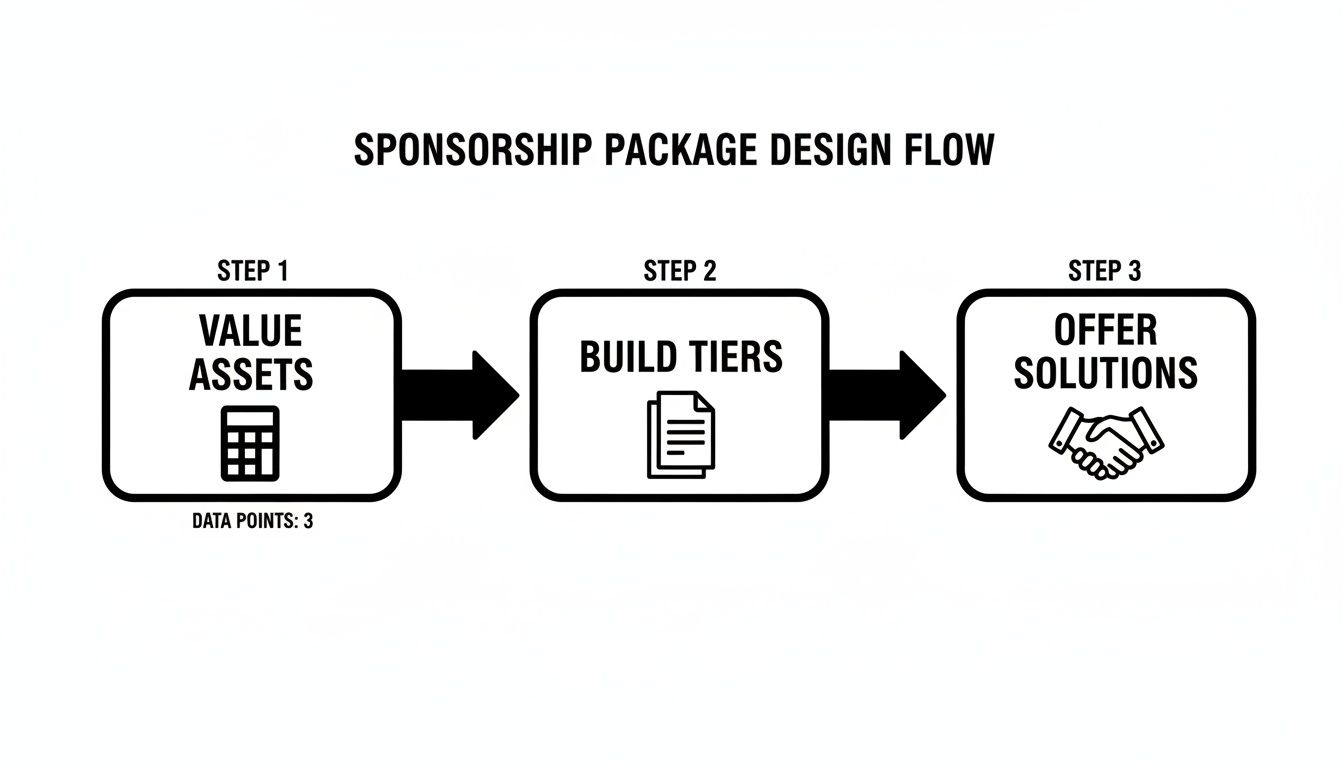
When your packages are built this way, they practically sell themselves during the pitch.
In today's world, sending one email and hoping for the best is a recipe for failure. You need a multi-touchpoint cadence—a planned sequence of interactions across different platforms—to stay on a prospect's radar.
A simple but effective approach could mix email with LinkedIn. Start with a LinkedIn connection request that includes a short, personalized note. A day or two later, send your initial pitch email.
If you don't hear back, a gentle follow-up a few days later can work wonders. But don't just "check in." Offer a new piece of value, like a link to a blog post about your event's audience demographics. The key is to be helpful with every touchpoint, not just repetitive.
The biggest mistake I see is people giving up too soon. It often takes several touchpoints to get a response. A well-planned cadence shows you're professionally persistent, not desperate.
Once you've landed that meeting, your job is to listen, not talk. This call is your chance to really understand the prospect's world. Your goal is to get them talking about their marketing objectives, who they're trying to reach, and their past experiences with event sponsorships—both good and bad.
Come prepared with a few open-ended questions to get the ball rolling:
By asking these kinds of questions, you gather the exact intel you need to position your sponsorship packages as the perfect answer to their specific problems.
This approach transforms the conversation from a sales pitch into a strategy session. You become a consultant helping them hit their goals, which is a much stronger position to be in. For a deeper dive, our guide on how to ask for sponsorship has templates and scripts to help you navigate these crucial conversations.
After the call, you can send a follow-up email that recaps the discussion and presents a tailored package that directly addresses the needs you just uncovered.
Getting a sponsor to sign on the dotted line isn't the finish line—it's the starting pistol. The real race begins now. Turning a one-time sponsor into a recurring partner all comes down to flawless activation and proving a clear, undeniable return on their investment. This is where you shift from a simple transaction to a genuine partnership.
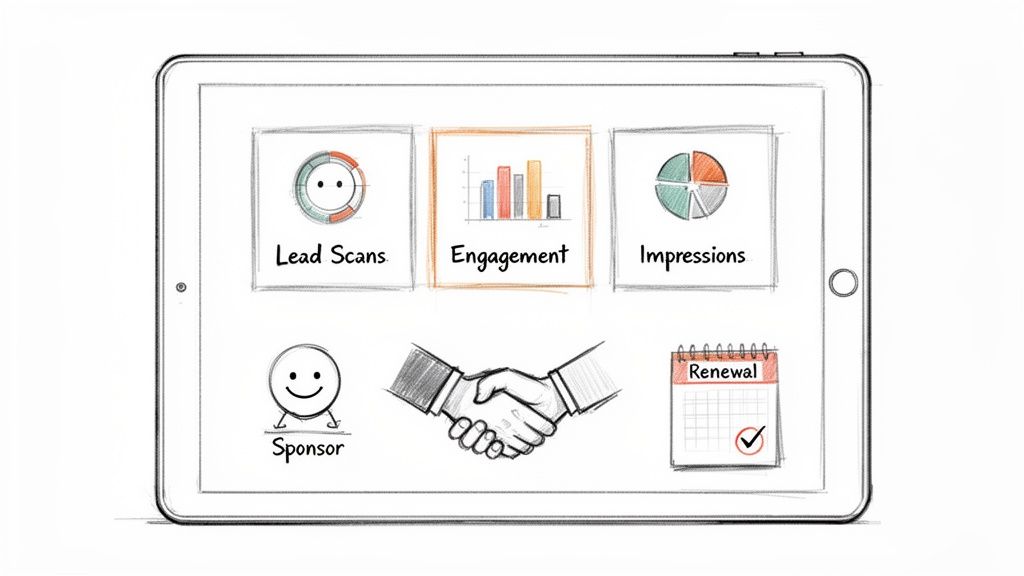
Too many organizers pour all their energy into the sale, only to treat the sponsor like an afterthought once the check clears. To lock in renewals, you have to pivot immediately to partnership management and focus completely on delivering value.
Let's be honest: today’s sponsors expect more than just their logo slapped on a banner. They're looking for meaningful engagement with your audience, not just passive brand awareness. Your job is to create activation opportunities that feel organic and actually enhance the attendee experience, rather than feeling like a commercial break.
So, think outside the basic booth. What unique, memorable experiences can you offer that weave the sponsor's brand into the fabric of the event?
These kinds of ideas transform sponsors from advertisers into active contributors to your event's success.
If you want to prove your event's value, you need to speak the sponsor's language. And that language is data. They need to see a clear return, which means you have to track the right key performance indicators (KPIs) from start to finish.
This is where event technology, like the analytics tools inside a platform like GroupOS, becomes your best friend. It lets you go beyond fuzzy, feel-good metrics and deliver the hard numbers that justify their spend.
You should be laser-focused on tracking:
By proactively tracking these metrics, you aren’t just hoping the sponsor had a good experience—you’re building an undeniable case for the value you delivered. This data is the foundation of your renewal pitch.
Don't wait. Within a week of the event, send every sponsor a personalized post-event report. This isn't just a "thank you" note; it's a professional, visually engaging summary of their ROI, packed with all the data you just collected.
Globally, the sponsorship market was valued at around $97.5 billion in 2024 and is rocketing toward nearly $190 billion by 2030. With 44% of corporate marketers planning to increase their sponsorship budgets, brands are clearly willing to spend—if you can prove the value. Securing your slice of that pie means positioning your event as a performance-driven investment with crystal-clear KPIs.
Your report needs to make the renewal conversation feel like the most natural and logical next step. After all, precisely measuring return on marketing investment is what this is all about.
End your report with a forward-looking call to action. Instead of a generic "Interested in next year?" try something specific based on their results. For example: "Your session was one of our highest-rated. For next year, let's explore turning it into a full hands-on workshop track." That proactive approach shows you're already thinking about how to deliver even more value next time.
For a deeper look at the data points to include, check out our complete guide on https://groupos.com/blog/measuring-event-roi.
Getting into the world of event sponsorship can feel a little like navigating a maze, especially if you're new to it. You've got the basics down—you know how to build value, find prospects, design packages, and deliver ROI. But there are always those nagging questions that pop up.
Let's clear the air and tackle some of the most common ones I hear from organizers. Nailing these fundamentals is often the difference between a last-minute cash scramble and a smooth, successful partnership that everyone feels great about.
The golden rule here? Start way earlier than you think you need to. I can't stress this enough. For your biggest fish—the title or presenting sponsors—you should be starting conversations a full 9 to 12 months before your event.
That timeline isn’t just some random number; it’s tied directly to how big companies work. Most corporate marketing budgets are finalized in the fall for the entire following year. If you get in front of them early, your event becomes a planned line item. If you wait, you're asking them to find spare cash for an unexpected expense, which is a much harder sell.
For your mid-tier and smaller sponsorship deals, you have a bit more wiggle room. A 4-to-6-month lead time usually does the trick. That's still plenty of time for contract negotiations, getting their logos and ad copy, and planning any cool on-site activations they want to do.
Starting early isn't just about securing a "yes." It sends a powerful signal that you're a professional, well-organized operation. That builds a sponsor's confidence that you can pull off a great event and deliver a real return on their investment.
Hands down, the single most damaging mistake you can make is blasting out a generic, one-size-fits-all pitch. Sponsors at well-known brands get hammered with these requests all day long. They can spot a copy-and-paste email from a mile away, and it’s an instant trip to the trash folder.
The root of this problem is a failure to do your homework. When your pitch doesn't mention the brand's recent campaigns, show you understand their target audience, or connect your event to their specific business goals, it just screams, "I want your money."
Instead, every single email, every call, needs to feel personal. Show them you've put in the work. Mention their new product launch. Reference a recent article about their CEO. Talk about how your event’s mission lines up with their corporate values. This kind of personalized approach shows them why your event is the perfect solution to their unique challenges.
Pricing is part art, part science. You're trying to balance your hard costs with the intangible value you offer, all while keeping an eye on the market. There's no magic formula, but there is a reliable process.
Calculate Your Costs: First, figure out the direct, hard costs for every benefit you offer. What does it actually cost you to print that banner, provide that booth space, or get a logo on 500 lanyards? This number is your absolute price floor.
Assess Intangible Value: Now, think about the intangibles. What’s the real value of giving a sponsor direct access to your highly-targeted audience? How much is the brand trust they gain by associating with your respected organization worth? This is where truly knowing your audience pays off.
Conduct Market Research: Take a look at what similar, non-competing events are charging. This benchmarking helps you understand the going rate and ensures your pricing is competitive without selling yourself short.
As a general rule of thumb, I always recommend creating a total sponsorship inventory that’s valued at 25-50% more than your actual revenue goal. You probably won't sell every single item, so this buffer ensures you still hit your target. And most importantly, always frame your pricing as a starting point for a conversation, not a take-it-or-leave-it number.
Absolutely. One hundred percent, yes. While tiered packages are great for giving people a clear and simple place to start, some of the best, most lasting partnerships I’ve seen have come from building something totally custom. Your flexibility is a huge competitive advantage.
When you're on a discovery call, your main job is to listen. Really listen. Pay close attention to what the sponsor is actually trying to achieve.
Use what you learn to build a tailored proposal that hits their goals head-on. Maybe that means grabbing a benefit from your Gold tier and mixing it with an à la carte option to create the perfect package. This consultative approach shows you're in it to build a real partnership, not just make a sale.
Juggling all of this—from finding prospects to planning activations—can be a lot to handle. This is where a platform like GroupOS can be a game-changer. It's an all-in-one tool built to help you manage memberships, sell tickets, and deliver serious sponsor value with features like dedicated exhibitor pages and powerful analytics. To see how you can simplify your event management and boost sponsor ROI, take a look at what GroupOS can do for you.