May 21, 2026
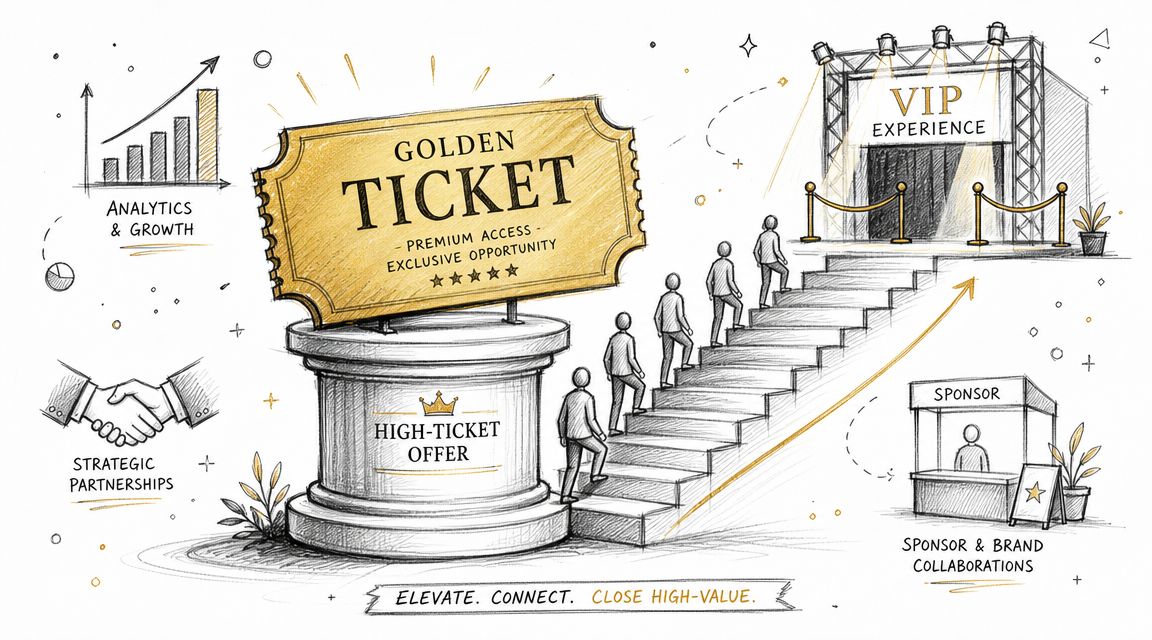
High-ticket sales usually means a premium offer with a larger financial commitment, often £1,000+ in B2C and $10,000+ in B2B, but the key distinction is the process around it. Once a buyer needs more time, more proof, and more internal alignment, you're no longer selling a simple product. You're guiding a high-consideration decision.
That's why so many association and event teams get stuck when they launch a premium offer for the first time. The package looks strong on paper. The pricing seems reasonable. But the offer doesn't move because the team is treating it like a regular registration upgrade or a standard sponsor prospectus.
A premium annual membership, a VIP event package, or a major sponsorship isn't defined only by price. It becomes high ticket when the buyer slows down, weighs risk, asks for justification, and often brings other people into the decision. That changes your messaging, your sales process, and even the assets you need to support the deal.
If you're planning a conference and considering a premium tier, the first question usually sounds simple: “What counts as high ticket for us?” In practice, that question trips people up because the term means different things in different markets.
One source defines high-ticket offers as over $1,000 and sold through personal relationships, while another places the floor at $5,000+ and ties it to multiple stakeholders and longer timelines, as noted in this breakdown of what high-ticket sales means. For event businesses, that ambiguity is normal. A $1,500 VIP pass can be high ticket to an individual attendee, while a $10,000 sponsorship can be high ticket to a regional partner with a cautious budget.
That's why the useful question isn't “What's the universal price?” It's “At what point does this buyer stop behaving like a quick purchaser and start behaving like an evaluator?”
Three things usually shift at once:
For community and event teams, that means a premium package should be built as a decision package, not just a priced-up add-on. If you're thinking through that move, GroupOS's article on high-ticket ecommerce is a useful adjacent read because it highlights how premium offers require more deliberate buyer support.
High ticket sales meaning isn't “expensive.” It's “important enough that the buyer treats the decision differently.”
That distinction is what separates a premium offer that sits untouched from one that closes consistently.
The cleanest way to define high ticket sales meaning is this: a sale becomes high ticket when the buyer sees the decision as consequential. Price matters, but it isn't the whole story.
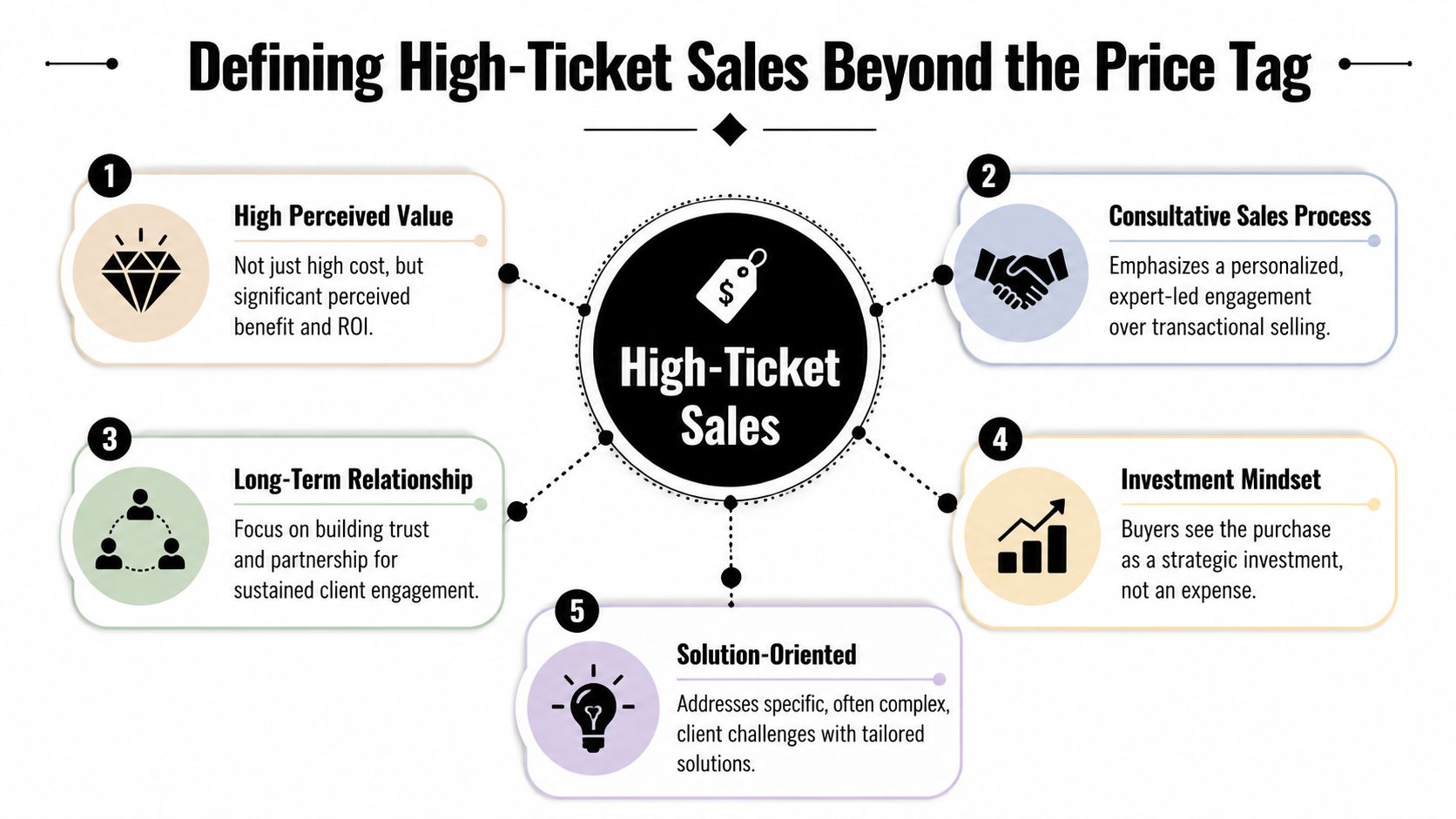
In B2B, that often means deals exceeding $10,000, involving 8 to 13 stakeholders, with sales cycles running 60 to 180 days, according to Trumpet's guide to high-ticket sales. Those numbers matter because they show what really defines the category. More scrutiny. More internal discussion. More delay between interest and commitment.
You can usually identify a high-ticket offer by looking for three markers.
The amount has to feel meaningful to the buyer. In some association contexts, that could be a leadership council membership, a premium cohort program, or a large exhibitor package. The exact threshold changes by market, but the buyer has to pause before approving it.
Many teams often misread the situation. They assume the deal is “just not urgent” when the actual issue is that the buyer is moving through a more serious internal process.
A high-consideration sale often includes:
Low-ticket buying can happen with little trust. High-ticket buying rarely does. Even if the buyer likes your event brand, they still need confidence in execution, fit, and follow-through.
Teams get into trouble when they define premium offers only by the invoice amount. They produce a glossy sponsorship deck, list the perks, and wait. But high-ticket deals often require a content and sales system behind the offer.
That might include custom follow-up emails, stakeholder-specific one-pagers, sample attendee profiles, or a stronger monetization strategy around content and access. If you're building that commercial layer into an association business, this guide to content monetization is relevant because premium offers often depend on packaging content, audience access, and outcomes in a way buyers can evaluate.
Practical rule: If the buyer needs to explain the purchase to someone else, treat it as high ticket even if the price looks modest by enterprise standards.
That mindset prevents one of the most common mistakes: using transactional tactics for a non-transactional decision.
A high-ticket buyer is not mainly asking, “Do I want this?” They're asking, “Can I justify this, and will I regret it if it underdelivers?”

That's the psychological shift many event and membership teams miss. They keep adding benefits when the buyer needs certainty. A premium sponsor doesn't just want logo placement. They want confidence that the audience is right, the activation is credible, and the investment won't create awkward internal questions later.
Apollo notes that over 70% of B2B buyers are willing to spend more than $50,000 through a fully remote sales process, and that many prefer a rep-free experience while aligning an average of 8 to 13 stakeholders internally, as explained in Apollo's overview of modern high-ticket sales. That has a direct implication for associations. Buyers are doing more homework before they ever speak with you.
Even in committee-led decisions, the first reaction is still human. Buyers scan for fit, relevance, status, and downside. Then they build the rational case.
That's where psychographics matter. Demographics tell you who the buyer is. Psychographics tell you what they care about, what they fear, and what identity they're trying to reinforce. For teams refining premium positioning, Spur's guide to psychographic segmentation is worth reading because it helps sharpen messaging around motives rather than surface traits.
A sponsor buying a premium package may be driven by one of several internal stories:
If your pitch doesn't match that story, the offer feels generic even when the package itself is strong.
High-ticket buyers usually worry about three kinds of risk:
| Risk type | What the buyer is thinking |
|---|---|
| Financial risk | “Will this investment be questioned?” |
| Reputational risk | “If we sponsor this, will it reflect well on us?” |
| Operational risk | “Will the organizer deliver what was promised?” |
That's why broad promises fail. Buyers need specifics they can reuse internally.
This short video captures that mindset well:
The seller's real job is often to equip one internal champion to persuade everyone else.
When you understand that, your sales assets get better. You stop writing copy for applause and start writing material a buyer can forward to finance, leadership, or a committee without rewriting your argument for you.
A low-ticket sale and a high-ticket sale can sit inside the same association business, but they should not be sold the same way. The mistake is assuming a strategy that works for a webinar, a basic ticket, or a self-serve membership will also work for a premium partnership.
Low-ticket sales usually reward speed, simplicity, and automation. High-ticket sales reward qualification, relevance, and buyer confidence.
| Characteristic | Low-Ticket Sales (e.g., $50 Webinar) | High-Ticket Sales (e.g., $15k Sponsorship) |
|---|---|---|
| Buyer behavior | Fast decision, often individual | Slower decision, often shared |
| Main motivation | Immediate usefulness or convenience | Strategic value and defensible investment |
| Lead source | Email campaigns, ads, self-serve pages | Referrals, outbound, partnerships, direct outreach |
| Sales role | Reduce friction and increase conversion | Diagnose needs and support internal justification |
| Offer format | Standardized and fixed | Tailored package or negotiated scope |
| Messaging focus | Benefits, urgency, easy purchase | Outcomes, fit, risk reduction, proof |
| Buying process | One-step checkout or short funnel | Conversation, review, follow-up, approval |
| Success metric | Volume and conversion rate | Deal quality, renewal potential, average contract value |
For a low-ticket offer, a discount deadline or one-click checkout can help. For a high-ticket offer, the same tactics can reduce trust. Buyers may read urgency as pressure, especially when they expect a thoughtful commercial conversation.
In practical terms:
If you're selling a premium sponsorship with the same playbook you use for event tickets, the issue usually isn't lead quality. It's sales design.
That's why event portfolios often need both models at once. A standard attendee pass can stay self-serve. A premium roundtable seat, annual partnership, or strategic sponsor package should move through a more consultative path.
High-ticket selling needs a different scoreboard. Clicks and open rates can still help at the top of the funnel, but they won't tell you whether your premium offer is commercially sound.
What matters more is whether the offer produces enough value per deal, closes within a manageable timeframe, and creates room for renewal or expansion.
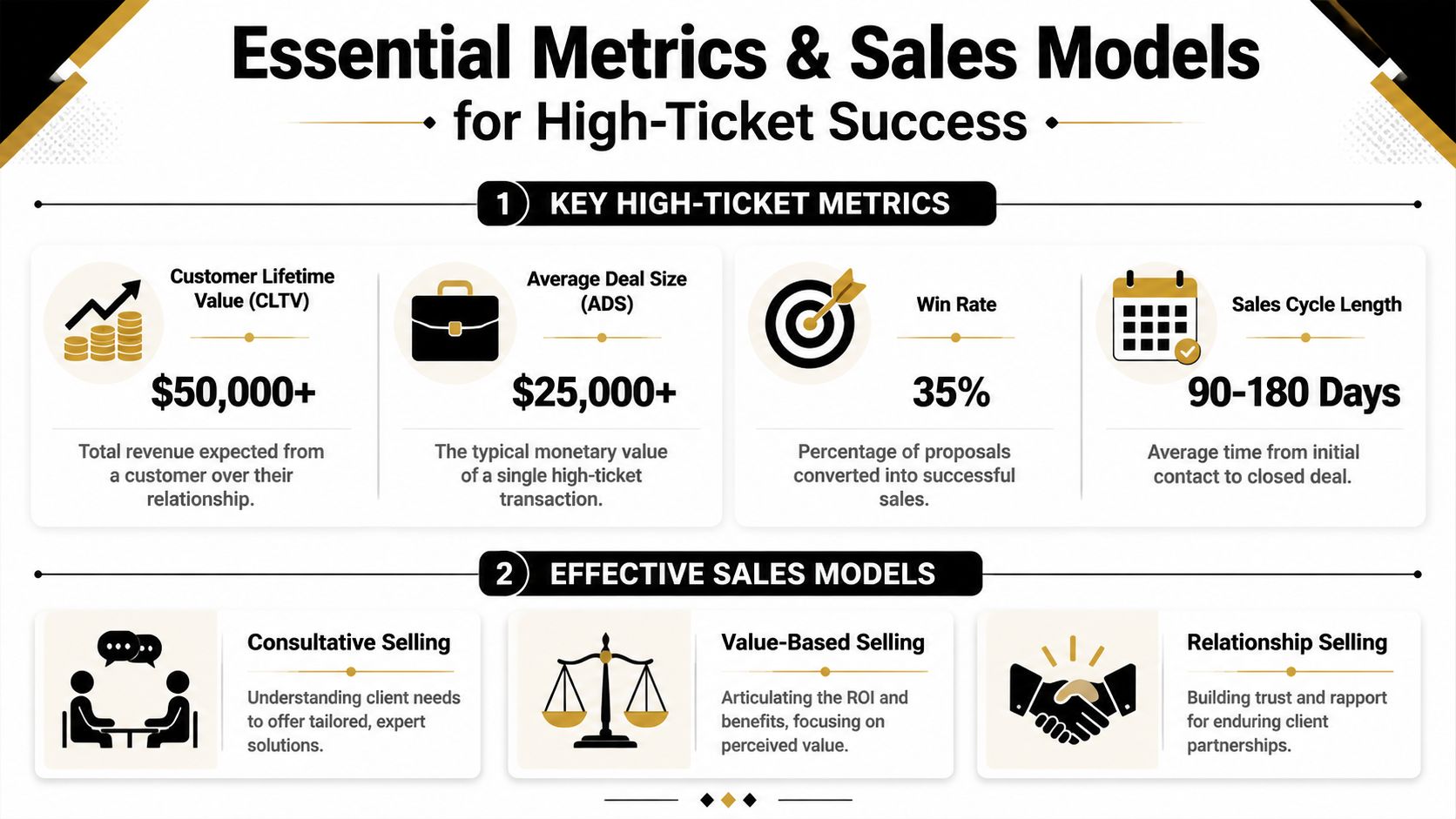
Martal describes high-ticket B2B selling as a consultative sale of $10,000+ where the process becomes evidence-heavy, and the deal is often won by demonstrating measurable outcomes such as reduced admin time or higher retention before price is discussed in its guide to high-ticket sales. That's the right operating model for association offers as well. Premium buyers want evidence of operational or commercial gain.
I'd focus on a short list first:
If you want a solid external reference on what a stronger account and revenue scorecard can look like, Tagada's article on essential growth metrics is a practical read.
Three models tend to work well for associations and event teams:
You ask, diagnose, and shape the offer around a defined need. This works well for sponsorships, executive memberships, and premium advisory programs.
You anchor the conversation in outcomes, not line items. For a buyer, that may mean lead quality, member retention, reduced admin load, or higher-value attendee engagement.
This matters most when the offer has renewal potential. A sponsor who trusts your team is easier to expand than a sponsor who bought once on a price comparison.
Recurring commercial value matters here too. If your organization is building premium offers into a broader revenue strategy, this overview of recurring revenue business models helps frame why renewability should shape the original deal design.
Sales teams often lose premium deals because they try to persuade harder instead of making the decision easier. That approach fails when the buyer already understands the basics and mainly needs evidence, clarity, and material they can use internally.
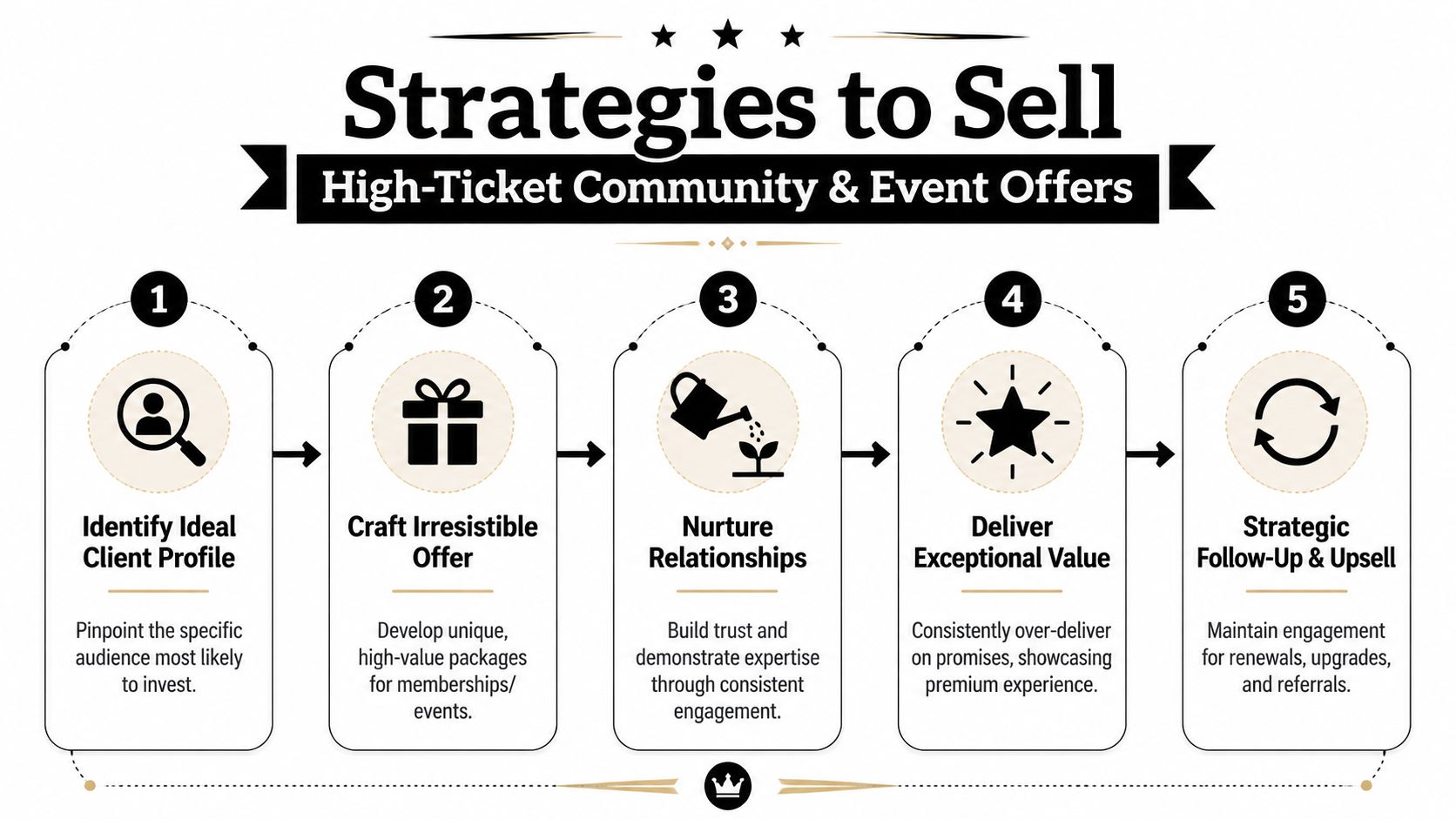
Apollo describes the modern motion as a shift from persuasion to evidence-based enablement, where sellers quantify the cost of inaction and lead with ROI, while teams invest in sales engagement and intelligence tools to support multi-stakeholder buying committees in its analysis of high-ticket sales. That's exactly the frame community and event businesses need.
A premium membership or sponsorship package should answer four questions before a live call ever happens:
If your materials don't answer those clearly, the buyer has to do too much translation work.
A good premium offer package usually includes:
Most high-ticket community deals have one person who likes the offer first. That person is rarely the only decider. Your job is to help them carry the case.
That means giving them reusable language such as:
Strong premium sales collateral should survive forwarding. If it loses force outside the sales call, it isn't finished.
A common mistake in event sales is stacking benefits without shaping a coherent premium experience. “Booth plus banner plus speaking slot plus logo placement” is a list. It is not a strategy.
A stronger package connects every component to a buyer outcome. For example, a sponsorship can be positioned around targeted access, year-round visibility, executive positioning, or lead capture quality. A VIP pass can be positioned around faster access, curated networking, or protected time with decision-makers.
For associations creating facilitated peer programs, premium packages also work well when they include structure, implementation, and continuity. That's one reason mastermind-style offers often translate well into high-ticket community products. The value isn't only the session. It's the guided progress around it.
Premium selling becomes easier when your operating tools reinforce the promise. For example, GroupOS can support event and association teams that need branded registration flows, VIP upgrades, sponsor profile pages, lead-generation features, and post-event analytics in one platform. That matters because buyers often ask for proof of delivery as much as proof of concept.
Other useful tool categories include CRM systems, proposal software, meeting schedulers, and content hubs. The exact stack matters less than one rule: every tool should reduce buyer uncertainty or internal admin friction.
These patterns hurt more than they help:
The winning posture is calm, specific, and evidence-led. Not louder. Not more aggressive.
No. It should start at the point where the value proposition is credible and deliverable. Many teams price their first premium offer by ambition instead of evidence. A better approach is to define the outcome, shape the delivery, and make sure the buyer can clearly see why the offer sits above your standard tiers.
Yes, if the audience is specific and commercially meaningful. A smaller community can be attractive when access is concentrated, trust is high, or the buyer sees a clear strategic fit. Scale helps, but relevance often matters more in premium sales.
Usually by whoever can hold a consultative conversation and manage follow-through. High-ticket selling is less about department ownership and more about commercial discipline. The person handling the deal must be able to qualify, tailor, document next steps, and help the buyer build an internal case.
Use credible proxies. You may not have a long track record for the new offer, but you can still show audience fit, prior event performance, member engagement patterns, delivery process, and activation quality. Be direct about what's established and what's new. Premium buyers can handle honest limits. They usually distrust overreach more than modesty.
Start with proof of process if you don't yet have proof of scale.
Longer than a standard registration sale and often longer than teams expect. Premium decisions slow down when budgets, legal review, procurement, or leadership sign-off enter the picture. The safest move is to start outreach earlier and build follow-up assets before conversations begin.
They confuse a more expensive product with a high-ticket sales process. Raising the price without changing qualification, messaging, proof, and follow-up usually leads to stalled deals. A premium offer needs a premium buying experience.
If you're building your first premium membership, sponsorship, or VIP event package, GroupOS gives association and event teams one place to manage registrations, ticketing, sponsor visibility, member experiences, and post-event analytics so the sales promise and the delivery system stay aligned.