February 3, 2026
So, what exactly is a customer engagement platform?
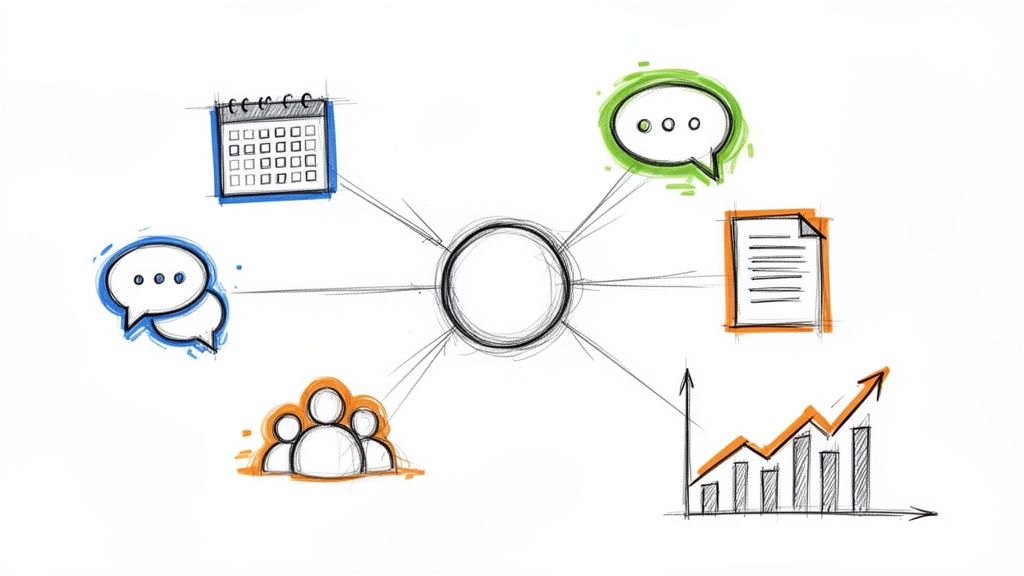
At its core, it's a software system built to manage every single interaction you have with your customers or members, all from one place. Think of it as the central command center for your community, connecting what used to be scattered touchpoints—like your events, membership portal, and email marketing—into a single, intelligent hub. The goal is to make sure every conversation is consistent, personal, and builds on the last one.
Let's cut through the jargon. Imagine your organization is a bustling city. In the old days, every department—events, memberships, content, communications—was its own separate town with its own rules. To get anything done, your members had to travel from one office to another, filling out different forms for people who had no clue what they just did in the building next door. It was inefficient and frustrating for everyone.
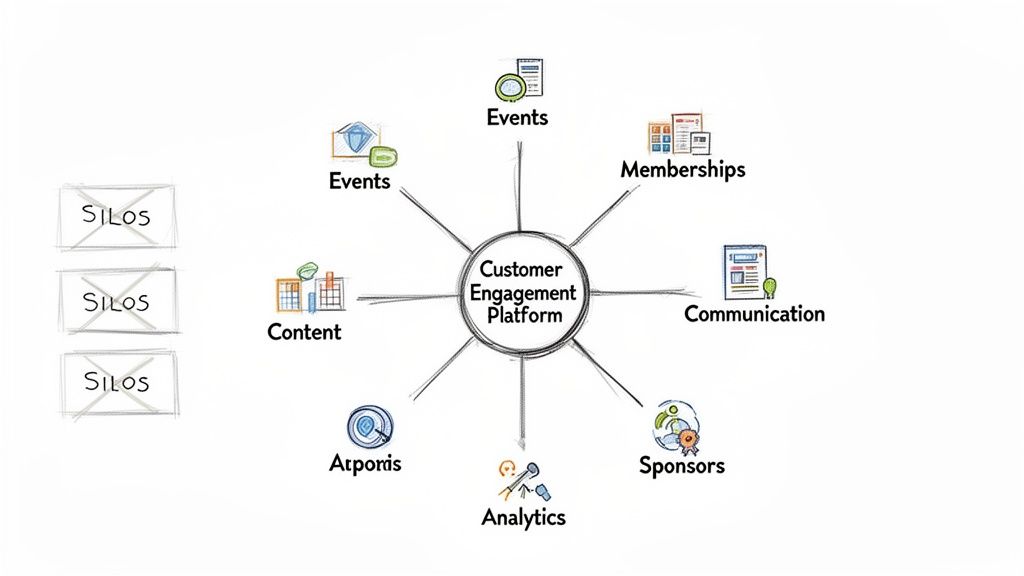
This fragmentation is the exact problem that a modern customer engagement platform is designed to fix.
Many organizations are still wrestling with this disconnected setup. They're juggling one tool for event registration, another for membership databases, a separate email service for newsletters, and maybe a social media group for community chats. This creates "data silos"—isolated pockets of information that prevent you from seeing the full picture. The result is a choppy, confusing experience for your members and a massive headache for your team.
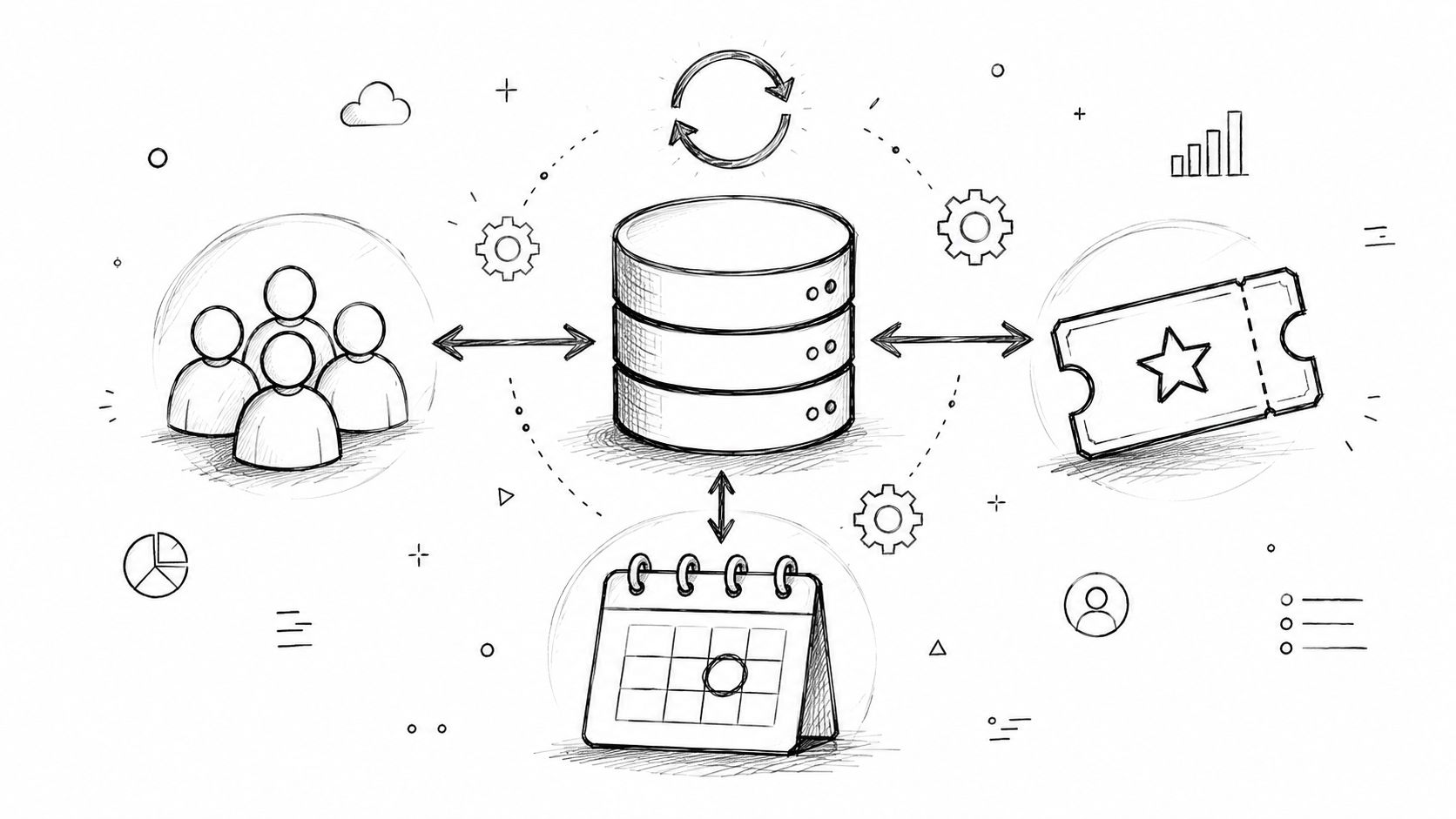
A customer engagement platform acts as the central nervous system for your community. It connects all these disparate parts into one cohesive ecosystem, where data flows freely and every interaction builds on the last.
This isn't just a small operational tweak; it’s a strategic shift. It moves your focus from merely processing transactions to actually building relationships. Instead of seeing a member as just an event attendee or an email subscriber, you start to see their entire journey—the events they joined, the content they read, and the discussions they valued.
The difference between the old, fragmented approach and a modern, unified one is night and day. One creates friction and blind spots, while the other fosters clarity, efficiency, and real connection.
To really see the impact, let's compare the two side-by-side.
As you can see, bringing everything under one roof does more than just add convenience. Customer engagement platforms fundamentally change how you understand and interact with your audience. You can finally deliver the kind of personalized, responsive, and valuable experiences that build true loyalty and drive sustainable growth for your community.
A great customer engagement platform isn't just a random box of tools. Think of it as a connected ecosystem where every feature works together to create a smooth, intuitive experience for your members. Instead of looking at features one by one, it helps to see them as answers to specific problems—solutions that deliver real results for both your organization and your community. These are the building blocks of a strong, connected group.
This integrated approach is exactly why the market for these platforms is booming. Projections show the customer engagement platform market is on track to hit a massive USD 25 billion by 2033, growing at a 12% CAGR from 2025. This isn't just a trend for big corporations; small and medium-sized businesses are getting in on the action, using cloud-based systems to slash costs by 30-40% compared to clunky, old on-premise software.
Your members are the heart of your organization. A solid membership management feature is the engine that drives predictable recurring revenue and helps you understand the true value each member gets from your community. We're talking about much more than a simple spreadsheet of names and emails.
Think of it as a living, breathing member directory. It handles renewals automatically, manages different subscription levels, and keeps a running history of how each person engages. This lets you spot your biggest advocates, see who might be drifting away, and get a clear picture of what really keeps people coming back.
For many organizations, events are the most powerful way to connect with members. A good customer engagement platform turns event management from a logistical nightmare into an opportunity to create memorable experiences. It’s not just about selling tickets; it’s about designing a seamless journey from the moment someone registers to the final follow-up email.
This means you can build custom registration forms to gather useful attendee info, offer different ticket types with exclusive VIP upgrades, and manage check-ins with a quick scan of a QR code. Because everything is connected, all that event data flows right back into member profiles, giving you even deeper insights into their interests. For more on this, check out our guide on https://groupos.com/blog/tools-for-community-engagement.
A truly integrated platform ensures that an event is not a one-time transaction but a key data point in a long-term relationship. It turns attendees into engaged community members.
Let's be honest: conversations scattered across email chains, social media DMs, and random chat apps are messy. They create a disjointed experience and make it impossible to track valuable discussions. An integrated communication hub fixes this by bringing all those interactions together under your own branded roof.
This is where you give your community the tools to build real connections.
To manage all this effectively, many platforms also include essential social media content management tools to help with scheduling posts, monitoring conversations, and analyzing performance.
Finally, a key feature of any modern platform is a centralized content delivery hub. This becomes the single source of truth where members can find all your exclusive materials, turning your platform into an invaluable knowledge base.
No more digging through old emails for a webinar link or a forgotten PDF. Members can just log in to one place and find everything they need, whether it's a library of documents, a series of online courses, or on-demand videos from past events. This kind of reliability builds trust and constantly reminds them of the value of their membership, giving them a reason to log in again and again.
It’s one thing to understand what a customer engagement platform does, but it’s another thing entirely to connect those features to actual business growth. That’s where the magic really happens. These platforms aren’t just fancy operational tools; they’re strategic assets built to turn vague goals like “better engagement” into hard numbers.
For anyone leading an association, running events, or managing a corporate community, this means translating what the platform can do directly into the Key Performance Indicators (KPIs) that your stakeholders truly care about.
The whole idea is to stop talking about generic benefits and start focusing on concrete results. Instead of just having a communication hub, you get a measurable drop in member churn. Rather than just hosting an event, you see higher attendance and can finally prove a real return on investment for your sponsors. This shift in thinking turns the platform from a line-item expense into a powerful engine for revenue and retention.
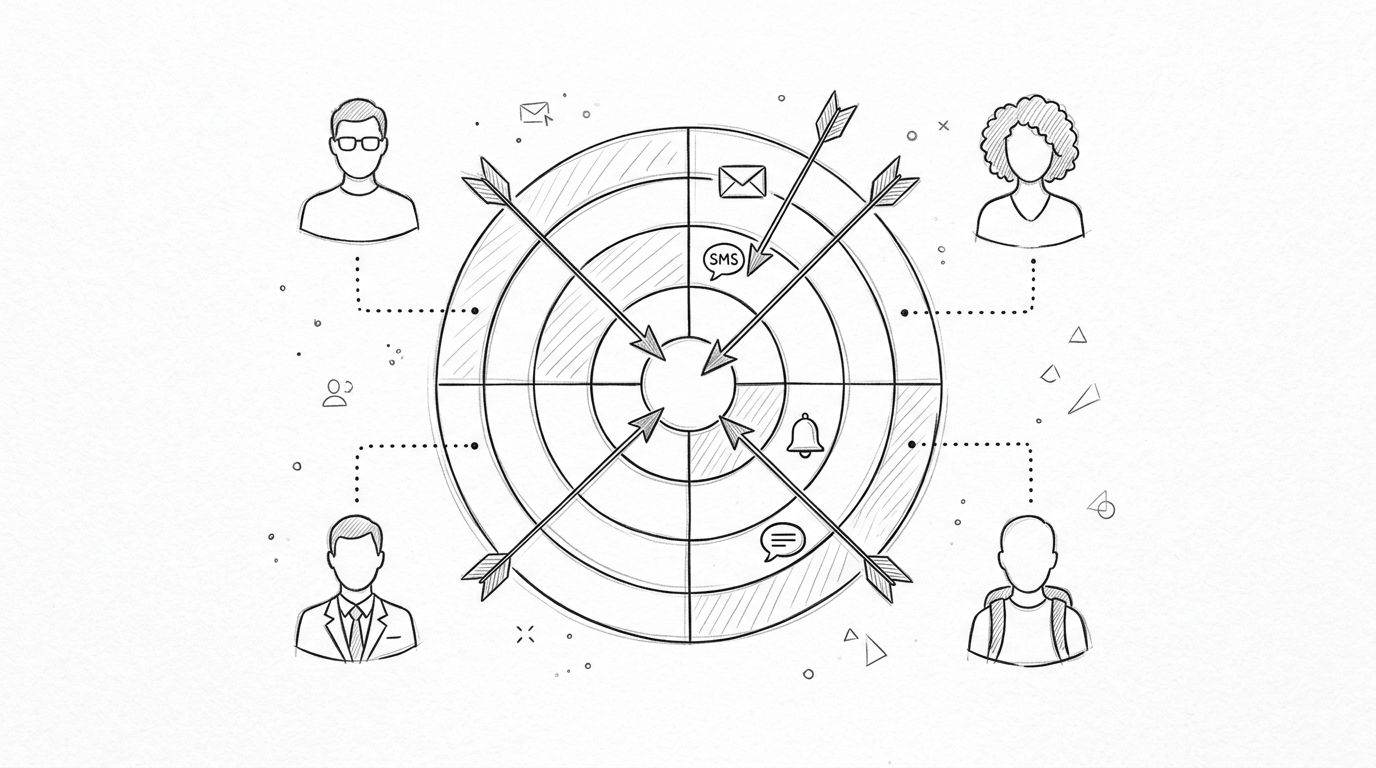
One of the biggest impacts you’ll see from a unified platform is a serious boost in member retention. When every single interaction—from an event check-in to a content download—is tracked in one central place, you get a complete picture of each member's health. This lets you spot at-risk members and proactively pull them back in before they decide to leave.
This is especially true for organizations that use a multi-touchpoint strategy. Businesses see 15-25% higher retention when they connect with members across integrated channels like email, private groups, and event apps. For GroupOS users, that might mean using insights from QR code check-ins to send personalized follow-up messages that build loyalty. On a global scale, this integrated approach not only keeps members around longer but also uses AI automation to cut service costs by an average of 30%, according to market research you can dig into on ResearchandMarkets.com.
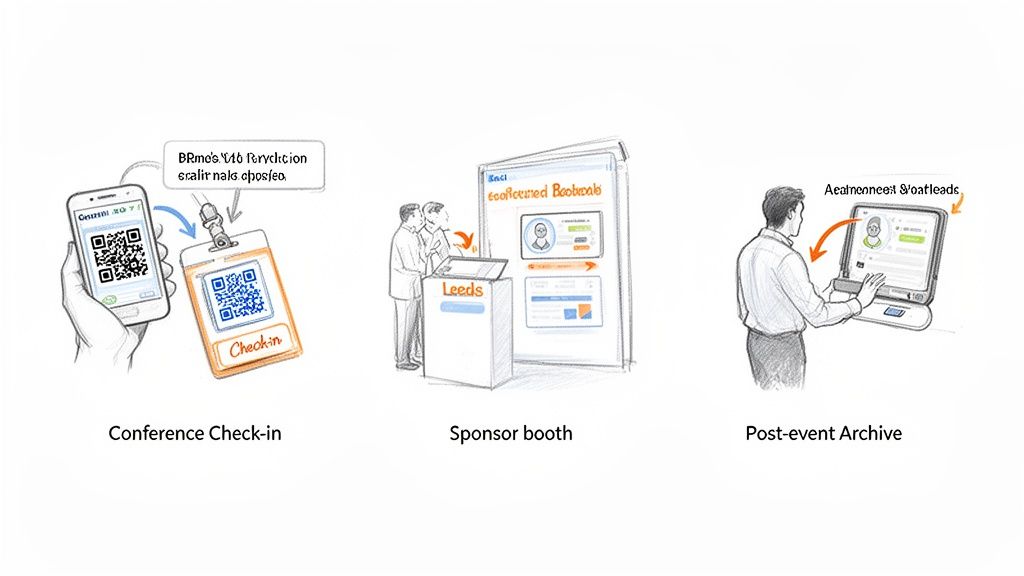
If your organization is driven by events, a customer engagement platform gives you the tools to not just sell more tickets but to create genuinely valuable experiences for everyone involved. Features like customizable registration forms, instant push notifications, and post-event content archives all work together to make the entire event journey smoother and more engaging.
This concept map illustrates how the platform’s core functions—managing members, hosting events, and delivering content—are all intertwined.
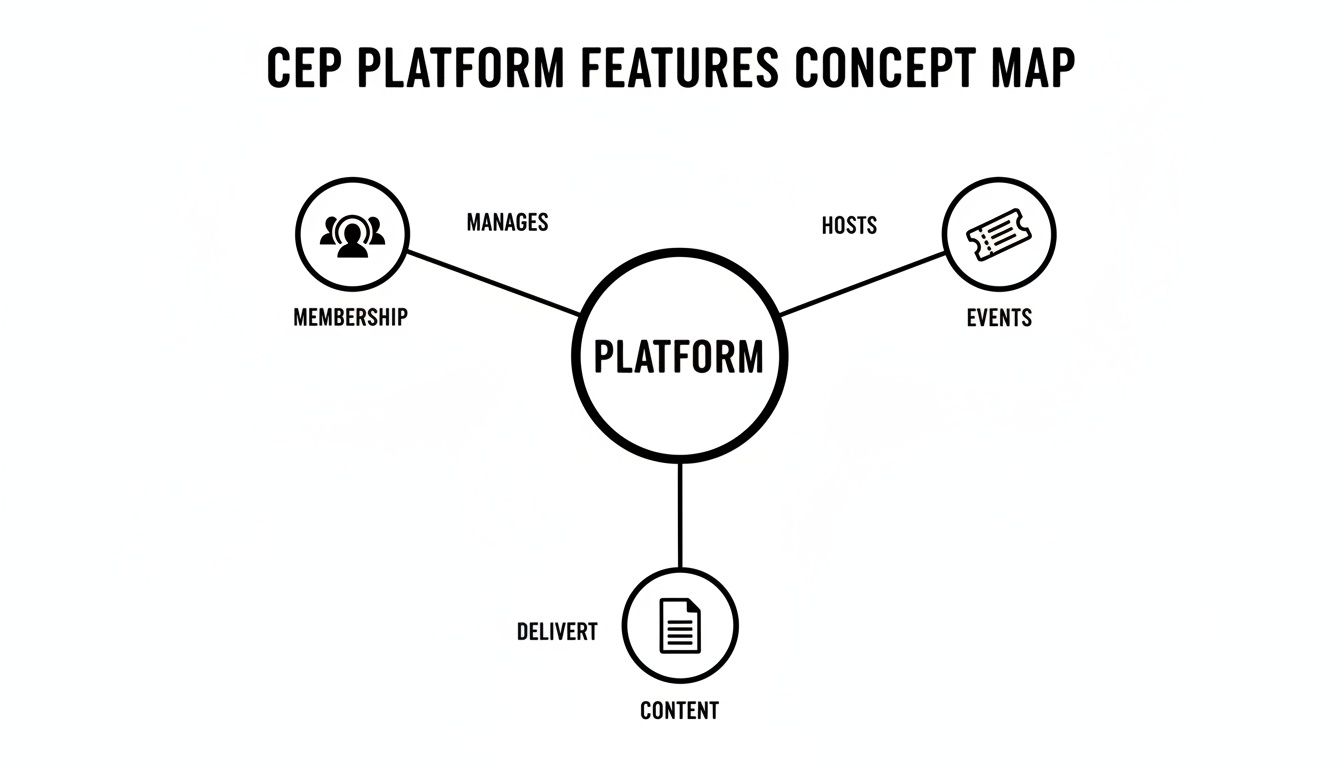
The key takeaway here is that these aren’t separate activities. They are all part of a single, unified strategy designed to build deeper relationships with your customers.
Sponsors, in particular, get a massive upgrade. Instead of settling for a simple logo on a banner, they can now use dedicated profile pages and product showcases to generate qualified leads. This turns their sponsorship from a branding play into a measurable marketing investment.
By providing sponsors with detailed analytics on profile views, clicks, and leads generated, you can definitively prove the value they received, making it easier to secure renewals and attract new partners.
Finally, there’s a benefit that’s often overlooked but absolutely critical: the huge reduction in administrative busywork. When you automate tasks like membership renewals, payment processing, and event communications, your team gets a ton of time back. This newfound efficiency lets your staff focus on high-impact work like strategy, content creation, and building real relationships with members. A well-designed customer retention program can make these effects even more powerful.
The most direct KPI here is the Reduction in Administrative Hours. By tracking how much time your team spends on manual tasks before and after implementing the platform, you can calculate a clear and compelling ROI based purely on saved labor costs. It's proof that the platform can pay for itself through operational efficiency alone.
To truly understand the impact, it's helpful to track a specific set of KPIs that directly reflect the value of your engagement efforts.
Tracking these metrics gives you undeniable proof of the platform's value, turning your engagement strategy into a clear driver of business success.
It’s one thing to talk about features and KPIs, but it’s another to see how a platform actually works in the real world. This is where the lightbulb really goes on.
Let's walk through a few practical stories tailored for professional associations and event-driven organizations. These examples show just how these platforms solve nagging problems and open up new opportunities.
Imagine a national trade association that's losing its spark. The main tool for member networking is a static, outdated directory—it’s little more than a glorified spreadsheet. Members feel isolated, regional chapters are dwindling, and new sign-ups aren’t seeing much value beyond a line on their resume.
The Problem: The directory is a dead end. It lists names and locations but gives members no way to connect, collaborate, or find each other based on shared interests or expertise. This disconnect leads to low engagement and a painful churn rate come renewal time.
The Platform-Driven Solution: The association switches to a customer engagement platform with an interactive member map. Suddenly, the directory isn't just a list; it’s a living, breathing network.
Members can now filter the directory by industry specialty, years of experience, or specific skills. They can send direct messages to connect with peers, spin up project groups, or organize local meetups. Chapter leaders can use the map to spot and welcome new members in their area, making them feel part of the community from day one.
The Measurable Result: Within six months, member-to-member messaging skyrockets by 300%. Two new regional chapters form on their own, started by members who met through the platform. Best of all, the association sees a 15% jump in first-year member retention because new folks immediately find their people.
Now, let's picture a big annual conference that’s gotten a little stale. Attendance is slipping, and the feedback is that the event feels impersonal. The whole experience is trapped within the three days of the conference, with zero buzz before or after.
The Problem: The event feels purely transactional. People show up, sit through sessions, and then leave. There's no easy way to network, get updates on schedule changes, or access content later. The value disappears the second the doors close.
The Platform-Driven Solution: The conference organizers bring in a unified platform that becomes a digital companion for the entire event journey.
By shifting the event from a one-off moment to a continuous experience, the organization builds a truly loyal following. The platform becomes the thread connecting this year's conference to the next, creating a self-sustaining cycle of engagement.
Finally, think about the sponsor's experience at that same conference. In the past, they’d pay a hefty fee for a booth, collect a handful of business cards, and just hope for the best. Proving the value of that investment back at the office was a nightmare.
The Problem: The traditional sponsorship model offers fuzzy visibility and no reliable data. Sponsors had no idea who visited their booth, what products people cared about, or how many qualified leads they actually generated.
The Platform-Driven Solution: The engagement platform gives every sponsor a dedicated digital profile. This page works like a mini-website inside the event app, complete with product showcases, downloadable brochures, and intro videos. Sponsors can see exactly who views their page, clicks their links, and requests more information.
During the event, they schedule one-on-one meetings through the platform and scan attendee badges to capture lead data instantly. Afterward, they get a detailed analytics report showing page views, engagement metrics, and a full list of qualified leads with contact info.
The Measurable Result: The lead capture rate for top-tier sponsors jumps by 70% compared to the previous year. Armed with hard data that proves their ROI, the event locks in a 90% sponsor renewal rate for the next year—with many upgrading to bigger packages.
Picking the right customer engagement platform isn't like buying a new piece of software. It’s more like choosing a strategic partner. This decision will define how you connect with your community for years, so looking past a simple feature list is crucial to find a platform that can grow right alongside you.
Think of it this way: you’re not just building a single house; you’re laying the foundation for a whole neighborhood. A short-sighted choice gets you a roof over your head for now, but the right one supports a thriving, expanding community for the long haul. That means looking at the total picture—from how it integrates with your other tools to whether the vendor truly understands your world.
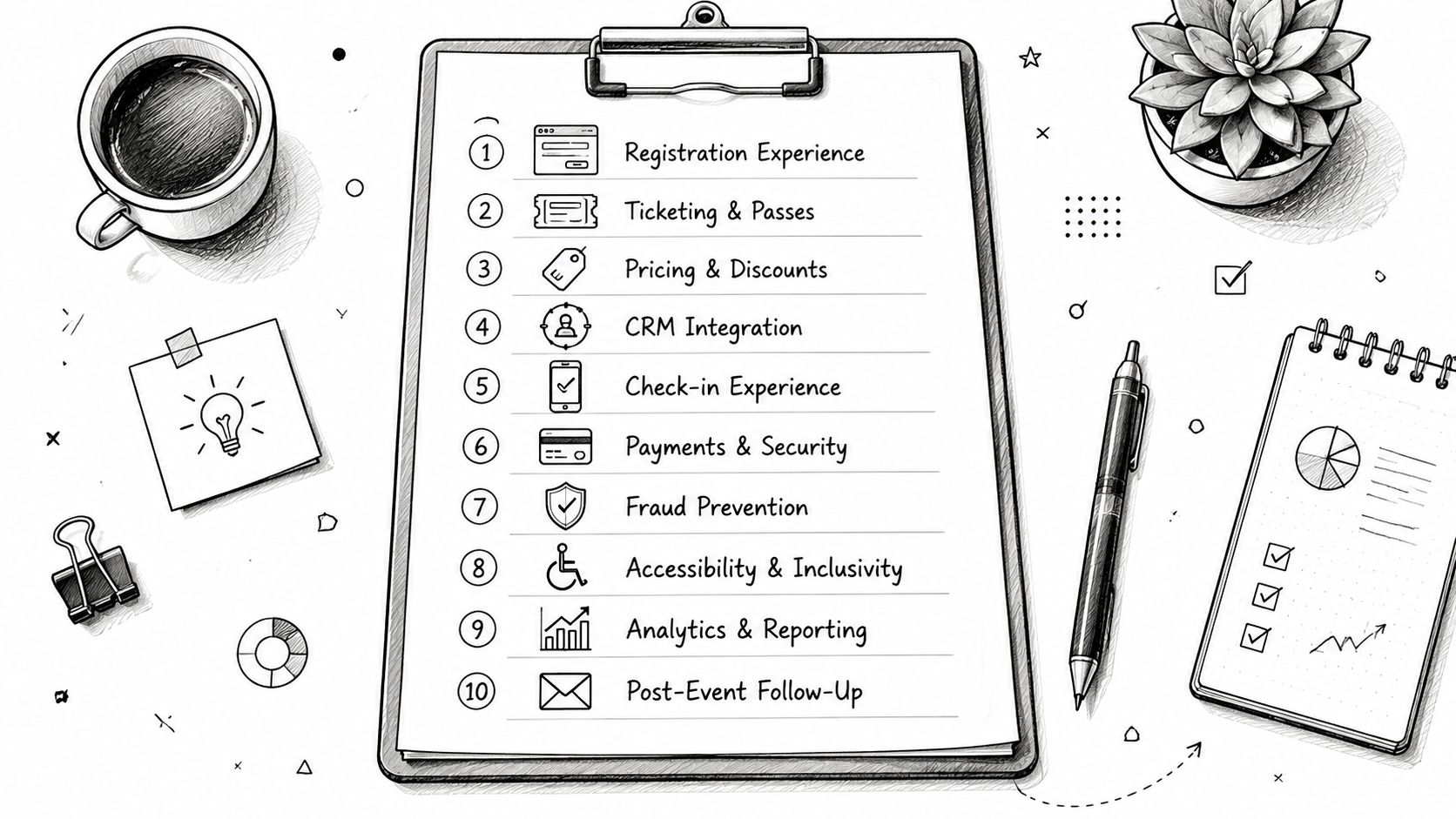
Before you even book your first demo, you need a crystal-clear picture of what you’re trying to accomplish. A simple checklist can be your best friend here, helping you cut through the noise of flashy features to focus on what actually moves the needle for your organization.
A great platform is so much more than the sum of its parts. Once you have a shortlist of vendors based on core functionality, it’s time to investigate what a long-term partnership would actually look like. These factors often matter more to your success than any single feature.
The market for these platforms is huge, and it's growing fast. The U.S. market alone is expected to hit USD 9.85 billion by 2025. Tellingly, cloud-based solutions now make up 58% of the market because they're so much more scalable. This trend makes it clear: you need a modern, cloud-native partner built for the future.
Choosing a vendor is a long-term commitment. You need a partner who understands your industry’s DNA—its challenges, its language, and its goals. A generic platform built for e-commerce won't grasp the nuances of running a professional association.
If a big part of your strategy involves virtual or hybrid events, it’s worth looking at platforms that specialize in that area. Digging into resources that compare the Top Virtual Events Platforms can give you a better sense of what’s possible.
Finally, you have to look at the real investment. It’s not just about the monthly subscription fee. Be sure to calculate the Total Cost of Ownership (TCO), which includes things like the implementation timeline, staff training hours, and any costs to migrate your data. An all-in-one platform might look pricier at first glance, but it often saves you a ton of money compared to duct-taping multiple tools together.
A single, unified platform gets rid of all those hidden costs—managing several vendor contracts, fixing broken integrations, and training your team on a half-dozen different systems. In the end, the right platform isn't the cheapest one or the one with the longest feature list. It's the one that gives you a clear, scalable, and sustainable path to building a deeply connected and valuable community. To see how this plays out, check out our deep dive on the best customer engagement solutions for different types of organizations.
Bringing a new customer engagement platform online is a big move, but it doesn't have to be a stressful one. Think of it like a well-planned road trip. You wouldn't just jump in the car and start driving; you’d map your route, pack what you need, and plan your stops. A smooth platform launch works the same way, breaking the journey into clear, manageable steps.
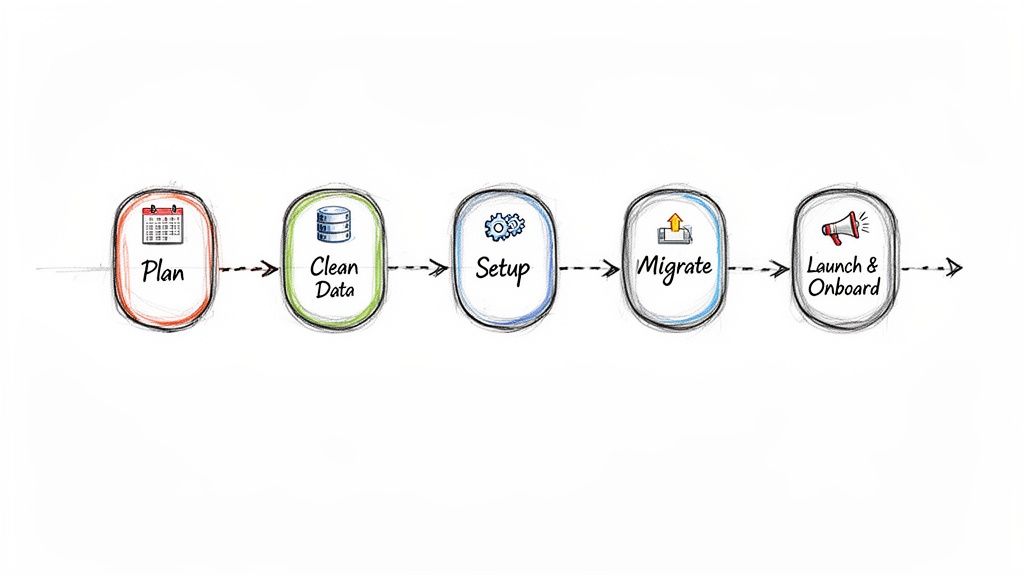
When you approach it this way, you can get ahead of potential problems, make the switch seamless for your members, and get people using the new system right away. The goal is to feel prepared and in control, not like you're just reacting to issues as they pop up.
This first phase is all about getting your house in order. Before you even think about moving data, you have to clean up what you already have. This is your chance to fix outdated contact info, merge duplicate accounts, and make sure everything is formatted consistently. A clean dataset is the bedrock of a great engagement platform—skipping this will cause major headaches down the road.
At the same time, you need to get crystal clear on your goals. What, specifically, are you trying to accomplish with this new tool? Defining those outcomes from the start will guide every decision you make.
Key actions for this phase include:
Now that your data is clean and your goals are set, it’s time to build your new digital home. This is where you inject your brand’s personality into the platform. You’ll customize the look and feel with your logo and brand colors and set up the features to work exactly how your organization operates.
This is the hands-on part where you might build out your first few event pages, set up automated welcome and renewal emails, and start populating your content library. It’s the process that transforms the platform from a generic piece of software into your system.
Think of this phase like decorating a new house. You're arranging everything so it's intuitive and welcoming for your members when they first walk through the virtual door.
The final phase is all about go-live. A great launch hinges on great communication. You'll need a solid plan to tell your members about the new platform, get them excited about the benefits, and walk them through logging in for the first time. This might look like a series of emails, a live webinar tour, or a detailed FAQ page.
Don’t forget about your internal team! Staff training is just as important. Your team needs to feel comfortable with the new system so they can support members effectively. Giving them good training and resources will turn them into confident advocates for the platform. By focusing on both member and staff onboarding, you create a positive feedback loop that ensures your new customer engagement platform is a success from the moment it goes live.
It's natural to have questions when you're thinking about bringing a new platform into your organization. Even when the benefits seem clear, a few key details can make all the difference. Let's tackle some of the most common questions that pop up.
This is a great question, and the distinction is crucial. Think of your CRM as your internal filing cabinet. It's where your team stores customer data, logs phone calls, and tracks sales pipelines. It's a system of record, built for your staff to look at the customer relationship.
A customer engagement platform (CEP), however, is the room where you actually build that relationship with your customer. It’s designed for two-way interaction, creating a living, breathing community space. While a CRM tracks the history of your relationships, a CEP is where they grow.
Worried you'll need a developer on speed dial? You can relax. The days of needing to write code for every little update are long gone.
Modern engagement platforms are built for the people who actually use them—community managers, event planners, and marketing teams. With intuitive drag-and-drop tools and no-code interfaces, you can build pages, launch registration, and publish content yourself.
The whole point is to empower your team to act quickly without getting stuck in a technical bottleneck.
The return on a customer engagement platform isn't just a single number; it shows up in several powerful ways. First, you'll notice better member retention. When people feel connected and see real value, they stick around.
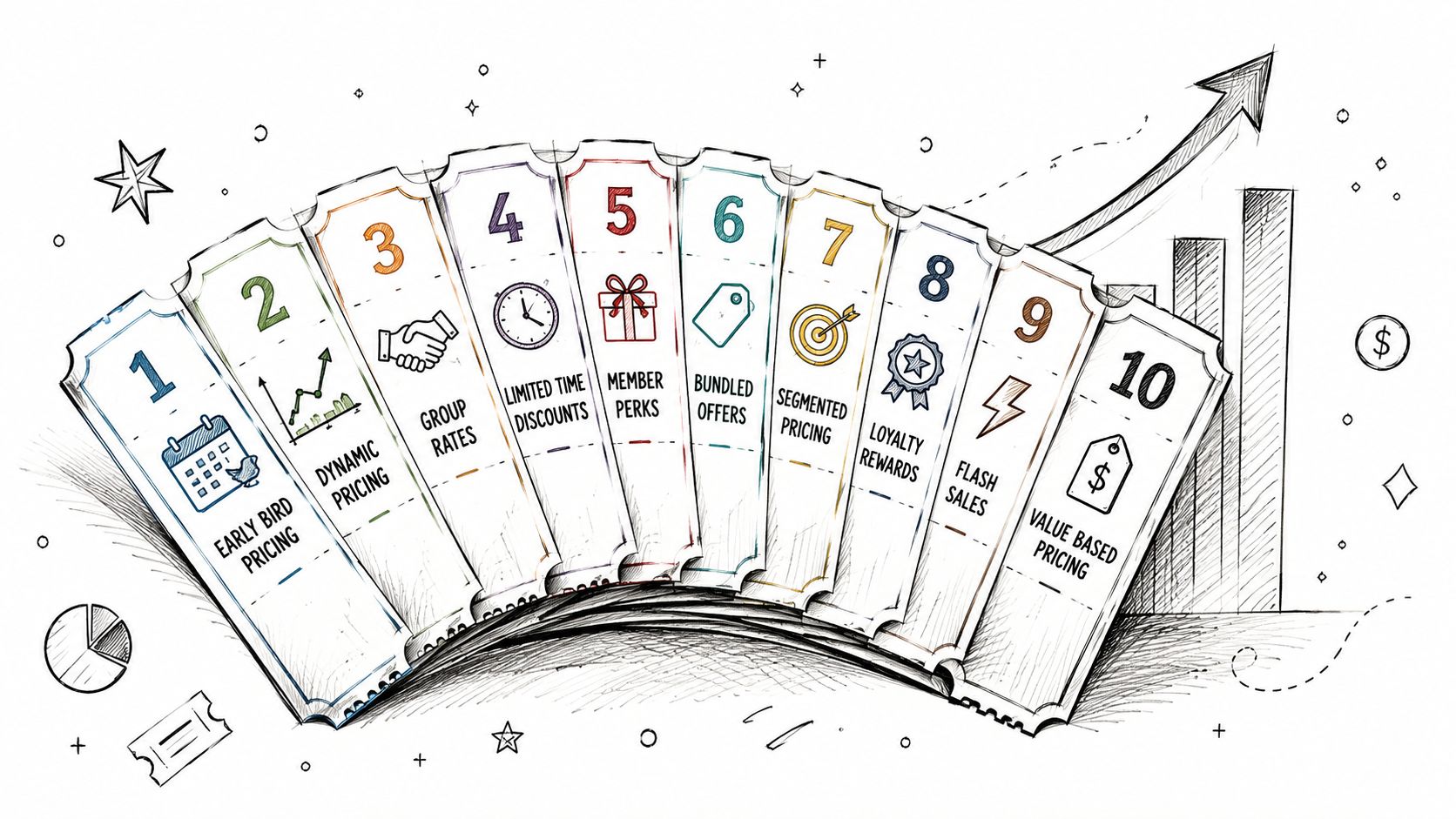
You also gain huge operational efficiencies. By automating routine tasks like membership renewals or event reminders, your staff gets back precious time to focus on more strategic work. Finally, you unlock new revenue opportunities—think premium content, tiered event tickets, and far more attractive sponsorship packages. It’s less of an expense and more of an engine for growth.
Ready to see how an all-in-one platform can bring your community, events, and content together? GroupOS gives you all the tools you need in one unified space. Explore the GroupOS platform and see what's possible.