February 1, 2026
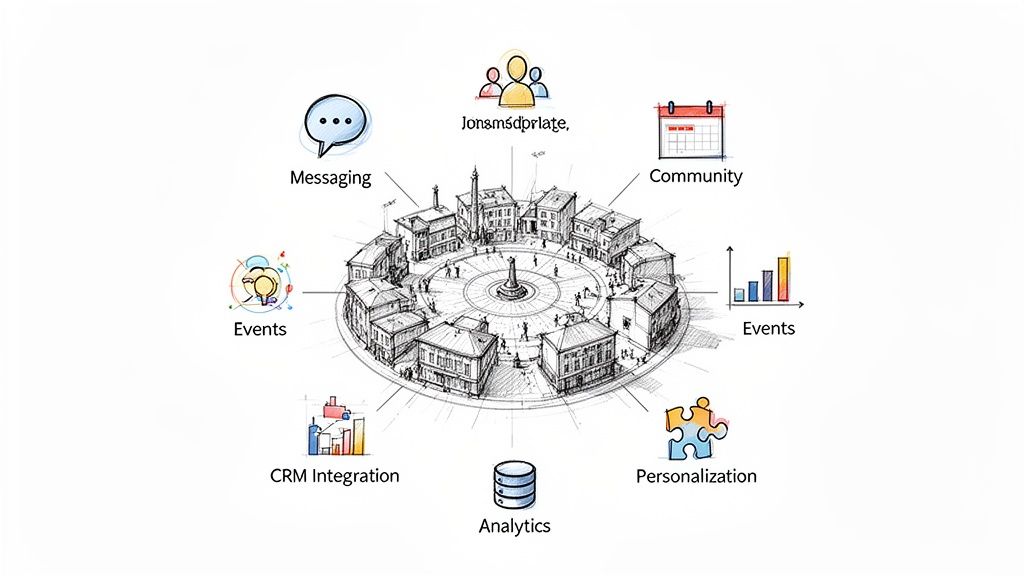
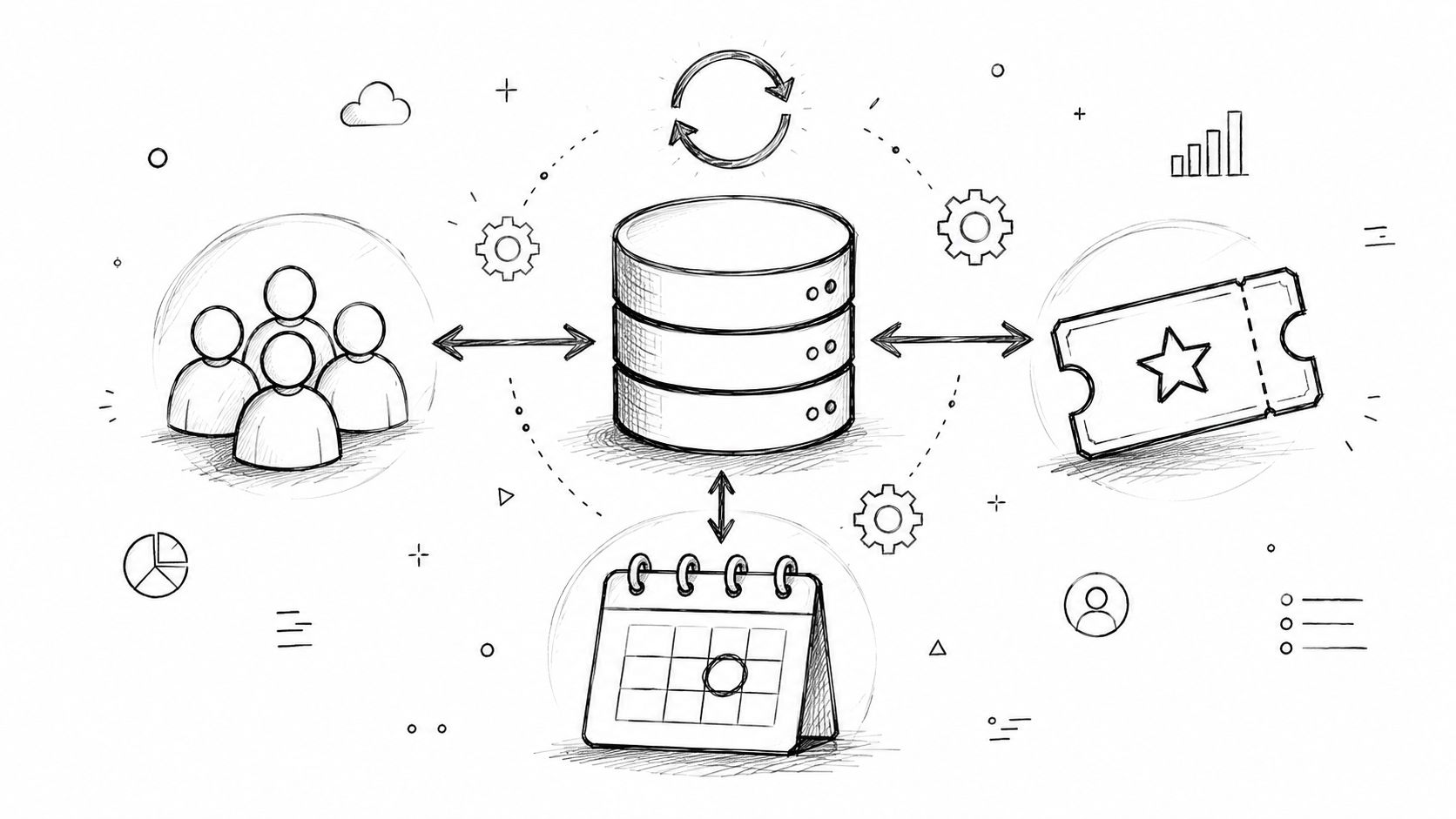
At its core, a customer engagement platform is the central hub where all your customer interactions live. Think of it as the digital home for your community—a single piece of software that brings together everything from emails and forum discussions to event registrations and direct messages.
The goal is simple: get rid of the messy, disconnected tools and create one smooth, branded experience for everyone.
Imagine you’re trying to build a house. You wouldn't hire a different contractor for the foundation, another for the framing, and a third for the roof without them ever speaking to each other. The result would be a structural nightmare. Yet, that's exactly how many organizations manage their customer relationships—using a patchwork of separate, siloed tools that create a clunky and frustrating experience.
A customer engagement platform acts as the master blueprint and the general contractor all in one. It’s a unified, branded space where every interaction is connected and makes sense. Instead of forcing your members to jump between their email, a separate community forum, and a third-party event site, you give them one consistent place to belong. This integrated approach is the secret to building real, lasting relationships.
When your tools don't talk to each other, you lose the story. Your marketing team might send a cheerful "we miss you!" email to a member who, just yesterday, was dealing with an unresolved support ticket. That’s not just a small mistake; it’s a missed opportunity that damages trust.
The chaos of separate tools creates very specific problems:
Let's break down the real-world difference between juggling separate systems and using a single, unified hub. The old way of doing things just doesn't hold up anymore.
Ultimately, a unified platform isn't just about convenience; it's a strategic shift that puts the member experience at the very center of your operations.
A true customer engagement platform is more than just a collection of communication tools. It’s the foundational system for building, managing, and measuring the health of your entire community. The rapid growth in this space shows just how critical this shift has become for modern organizations.
The global customer engagement platform market is exploding, projected to hit USD 38.4 billion by 2032—a huge jump from USD 12.5 billion in 2023. This isn't just a trend; it's a fundamental change in how businesses connect with their audiences. You can dive deeper into these market insights from research on dataintelo.com.
This guide will walk you through everything you need to know about these powerful systems. We'll cover the must-have features, the real business benefits, and practical examples to give you a clear roadmap for building a community that truly thrives.
A customer engagement platform isn't just one piece of software; it's more like a central nervous system for your entire community. It connects different functions that used to live in separate, disconnected apps, making the member experience feel effortless and whole.
Think of it this way: instead of asking your members to use one tool for emails, another for events, and a third for community discussions, a true engagement platform brings it all under one roof.
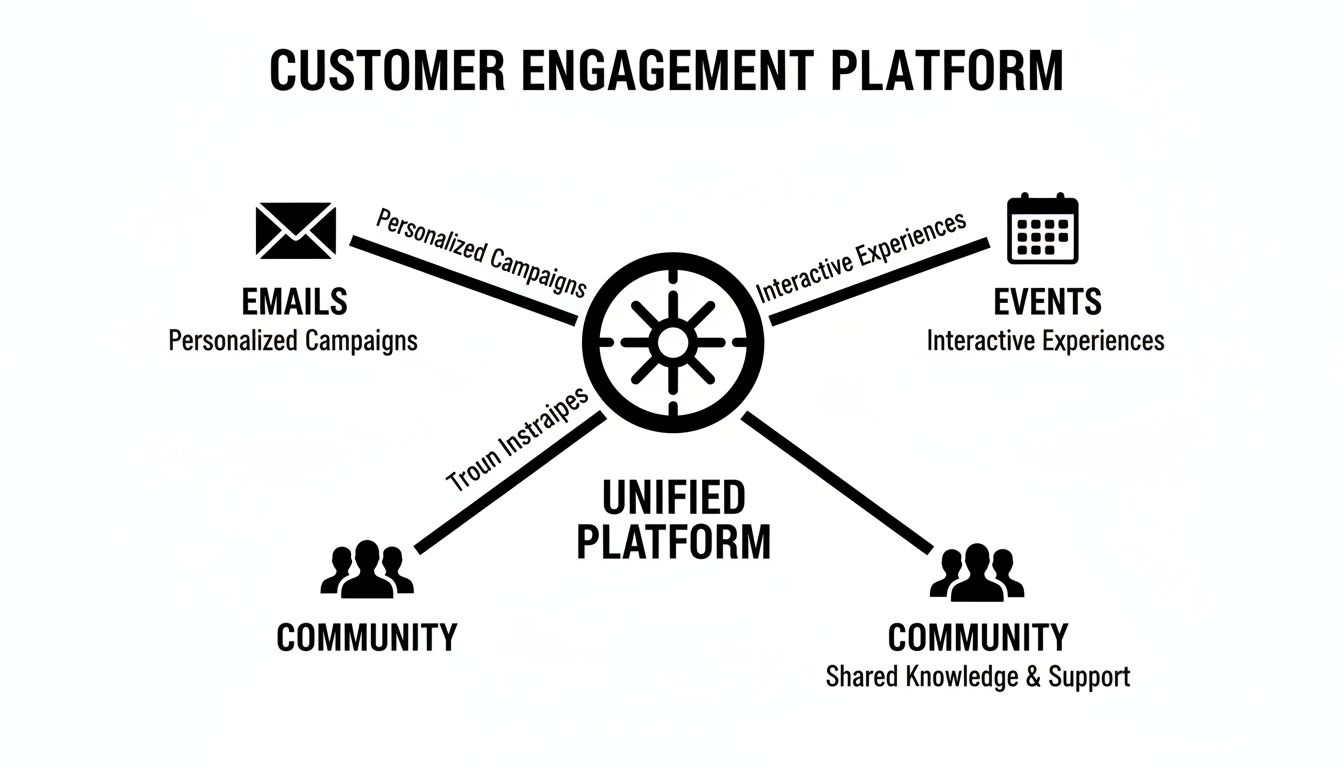
This unified approach means every interaction feels like part of the same conversation, which is the secret to building real, lasting engagement. Let's break down the key components that make this possible.
Communication is the lifeblood of any community. A great platform acts as the central hub for all conversations, so members aren't constantly switching between email threads, social media DMs, and other apps. It becomes the single source of truth.
You'll typically find a few key communication tools:
For instance, a professional association could host a private channel for its board members while also running a public forum where anyone can get advice on industry challenges.
This is where a platform really shows its value—by turning a passive audience into an active, self-sustaining community. It provides the digital spaces and tools for members to discover and connect with each other, which creates value that goes far beyond what your organization alone can offer. The same principles that increase social media engagement apply here, but in a more focused, private environment.
A searchable member directory with detailed profiles is a game-changer. It allows people to find peers based on job title, location, or shared interests. An association manager might use this to find experienced professionals for a new mentorship program, instantly creating valuable connections for newcomers.
Events are no longer just a date on the calendar; they're a key beat in the rhythm of year-round engagement. When your event management tools are built into your platform, the entire experience stays within your branded ecosystem, from registration to post-event follow-up.
By keeping event management within the same platform as your community, you create a powerful flywheel. Pre-event buzz builds in the forums, the event itself strengthens connections, and post-event discussions keep the momentum going.
An integrated module should cover the essentials:
This turns a one-off event into a cornerstone experience that reinforces the community's value. You can dive deeper into managing these spaces in our guide to community management software.
To truly serve your community, you need to understand it. A top-tier platform doesn’t just collect data; it makes it easy to understand and act on. This happens through two critical functions: CRM integration and built-in analytics.
CRM integration is huge. It automatically syncs all the valuable engagement data from the platform—like who attended which event, who is most active in the forums, and who they talk to—back to your main customer database. This gives your sales and support teams a 360-degree view of every single member.
At the same time, advanced analytics dashboards give you a real-time pulse check on your community's health. An event organizer, for example, can instantly see which sessions had the highest attendance and engagement, providing clear, data-backed direction for next year’s conference.
Let's be honest, features are great, but what really matters is the impact on your bottom line. A customer engagement platform is more than just another piece of software; it's a strategic investment in your organization's growth. By bringing all your member interactions under one roof, you’re not just tidying up your tech stack—you’re building an engine for real, sustainable growth.
This isn't about tiny tweaks. It's about a fundamental shift in how your community experiences your brand, and that directly moves the needle on the metrics that keep your organization thriving.
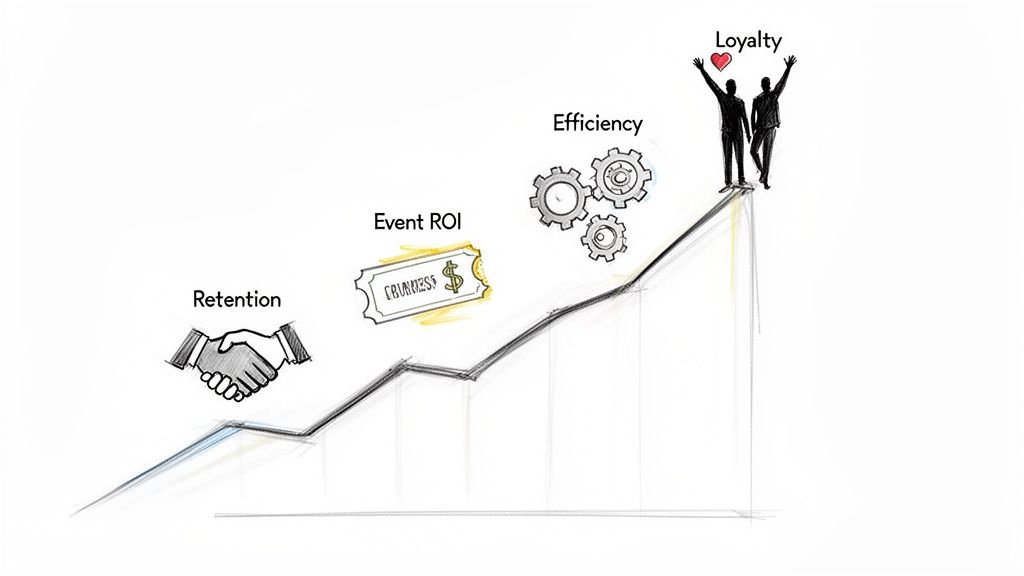
Losing members is a silent killer for any association or subscription-based business. When people feel disconnected or can't see the value you offer, they don't always complain. They just...leave. A unified platform meets this challenge head-on by making it easy and rewarding for them to stay involved.
You're no longer broadcasting to a passive audience. Instead, you're nurturing an active community where people build relationships, share knowledge, and feel a real sense of belonging. This constant, organic interaction keeps your organization top-of-mind and cements its place in their professional lives. By tracking engagement, you can even spot members who are drifting away and proactively reach out. This is a crucial part of any successful customer retention program that turns casual members into passionate advocates.
Think about it: a professional association might discover that members who join at least one forum discussion a month have a 90% higher renewal rate. With that knowledge, they can create campaigns to nudge new members into those conversations, directly boosting their retention numbers.
Events are a huge investment of time, money, and energy. But proving their return on investment (ROI) is a nightmare when you're juggling a dozen different tools. An integrated platform changes the game by turning your events from one-off moments into key milestones in a continuous community journey.
When you manage registrations, communications, and follow-up content all in one place, you create a seamless experience that gets more people to show up. Sponsors and exhibitors also see far more value. They get dedicated digital hubs to share content and capture leads, which makes their investment a much easier sell. The best part? The buzz from an event doesn't just fizzle out; it flows right back into the community, keeping conversations going and building momentum for the next one.
This is how you drive better event ROI:
How many hours does your team lose switching between apps, wrangling spreadsheets, and dealing with data-sync headaches? A customer engagement platform gives you that time back by consolidating your tools.
When your community management, event ticketing, and member messaging all live in the same system, your team can finally work from a single, unified dashboard. This automation frees them from soul-crushing administrative tasks and lets them focus on what they do best: creating incredible experiences for your members.
Here’s where you'll see the biggest wins:
This isn’t just about saving a few bucks. It’s about reallocating your team's most valuable resource—their time—toward initiatives that truly matter. When you remove friction for both your members and your staff, you create an organization that people are excited to join, eager to participate in, and happy to stick with for the long haul.
All the theory in the world doesn't mean much until you see how a tool actually solves a real problem. That’s where a customer engagement platform really starts to click. It's not just a piece of software; it's a practical solution that bends and adapts to what different organizations truly need.
Let’s get out of the abstract and look at a few real-world scenarios. You’ll quickly see how having one central system can completely change how you operate and how your members feel.
A national trade association was dealing with a classic headache: their membership tiers felt meaningless. Gold members got the same generic newsletters as student members, and their exclusive committee work was buried in chaotic, never-ending email chains. Unsurprisingly, engagement was flat because no one felt like they were getting special value.
The Solution: They brought in a customer engagement platform to build distinct, private spaces for each membership level.
The payoff was huge. Member satisfaction soared, and the administrative team could finally breathe. For more ideas on getting people involved, check out these powerful community engagement examples.
A big tech company was struggling with two things: onboarding new hires and collecting product feedback. Their internal wiki was a ghost town, and feedback was a mess—scattered across emails, random surveys, and a dozen Slack channels. It was impossible for product managers to see what mattered, and new hires felt lost.
The Solution: The community manager used the platform to create a dedicated internal hub for all employees.
This hub became the central nervous system for internal culture. It transformed onboarding from a checklist of tasks into a guided journey, helping new hires feel like part of the team from day one.
The platform gave them a structured home for two critical functions:
This new system drastically cut the time it took for new employees to become productive and handed the product team a goldmine of organized, actionable insights.
A firm that runs large-scale industry conferences had a sponsor problem. Exhibitors were unhappy, complaining that they weren't getting enough good leads for their investment. As soon as the event ended, all the buzz and engagement vanished. The organizers desperately needed a way to prove ROI and keep the conversation going year-round.
The Solution: They adopted a customer engagement platform to build a permanent community around their event.
The platform had the perfect tools to solve their biggest challenges:
The outcome was a 45% increase in sponsor retention for their next event. Exhibitors could finally point to a dashboard full of tangible leads and sustained engagement, making their investment a no-brainer.
Picking a customer engagement platform is a huge decision. It’s not just about buying another piece of software; you're choosing a partner that will shape how you connect with your community for years. Get it right, and it feels like a natural extension of your brand. Get it wrong, and you create headaches for both your members and your team.
So, how do you navigate the crowded market? It’s tempting to get distracted by flashy features, but the real value lies in the fundamentals. Think of it like building a house. You need a solid foundation that can support future additions, a design that feels like home, and plumbing that connects to the city's water supply.
Your community is going to grow, so your platform needs to be ready for it. The first question you should ask any vendor is, "Can this platform grow with us?" A system that works perfectly for 100 members might grind to a halt when you hit 10,000. Look for platforms with a proven history of supporting organizations as they scale.
Just as important is the ability to make the platform your own. This is your community's digital home, and it has to feel that way.
No platform works in a vacuum. A top-tier customer engagement platform has to play nicely with the other tools you rely on every day, especially your Customer Relationship Management (CRM) system. Without a rock-solid integration, you’re doomed to a life of exporting spreadsheets and wrangling siloed data—the very problems a unified platform is supposed to solve.
The gold standard is a two-way data sync. This means engagement data from the platform automatically flows into your CRM, giving your sales and support teams a complete picture of every member. In return, data from the CRM (like membership level or purchase history) flows back to the platform to create highly personalized experiences.
Ask vendors about their ready-made integrations with systems like Salesforce or HubSpot. A powerful API is also a must-have for creating custom connections to any other software in your toolkit.
At the end of the day, a platform is only useful if people actually use it. This goes for your internal team managing it and for your community members logging in. A clunky, confusing interface is the fastest way to kill engagement before it even starts.
Look for a platform that’s a breeze to use for everyone involved:
The market is full of options, particularly in North America, which accounts for 38-40% of the global market. The shift to cloud-based solutions, which now command 58% of the market, has made these powerful tools more accessible and easier to deploy than ever. You can dig deeper into these trends at fortunebusinessinsights.com. For a direct comparison, check out this list of the 12 best customer engagement platforms.
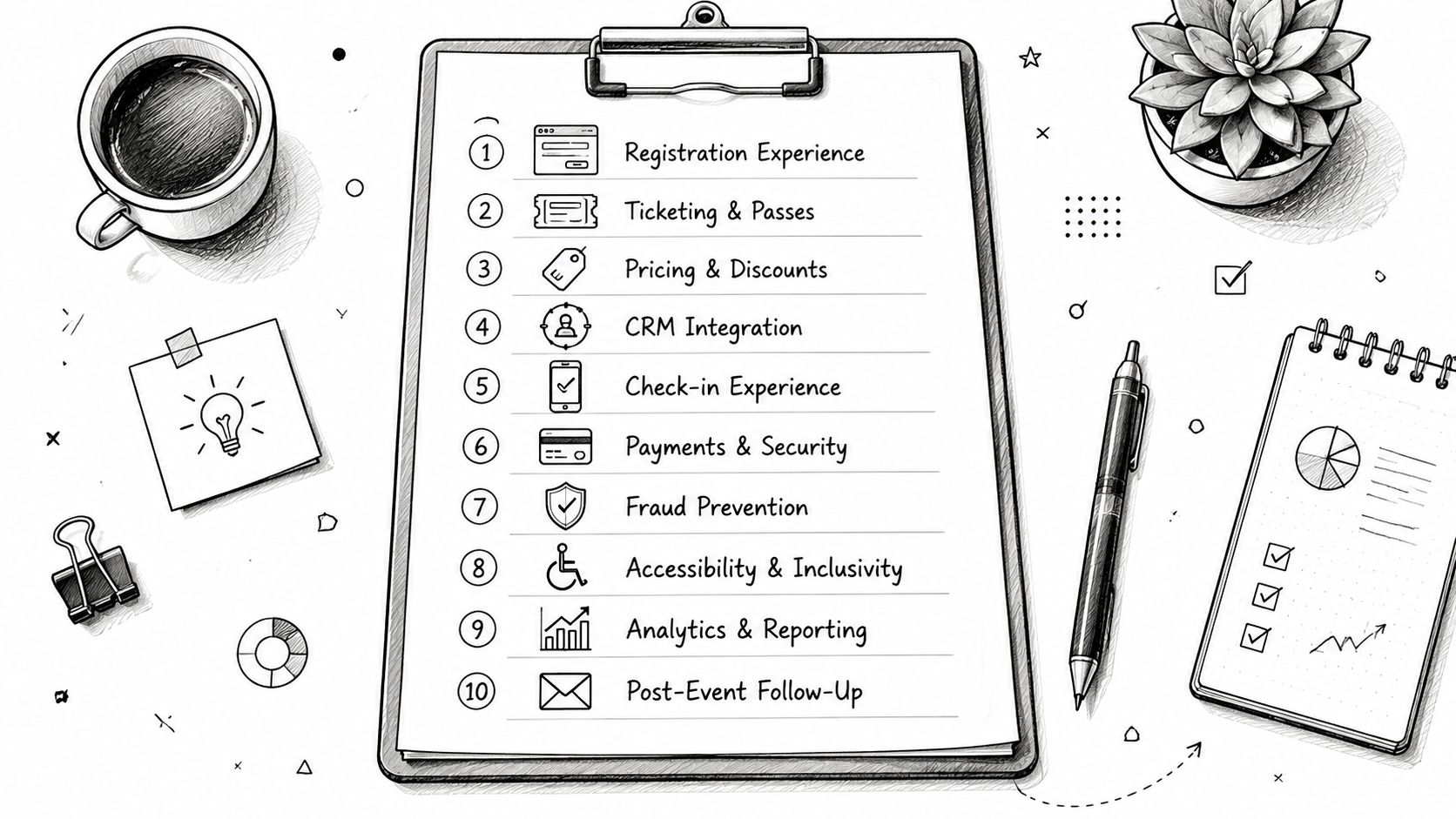
To help you stay organized during your search, use this checklist to compare your options side-by-side.
This checklist is designed to help you methodically evaluate potential platforms. Before you even start looking at demos, sit down with your team and decide what's a "must-have" versus a "nice-to-have."
Remember, the goal isn't to find a platform that checks every single box, but to find the one that best aligns with your highest-priority needs. A clear understanding of your requirements will make the final decision much easier.
It’s one thing to talk about the theory of customer engagement platforms, but it’s another to see one in action. This is where we can stop talking about concepts and start looking at how a platform like GroupOS actually solves the problems we’ve covered.
Think of it less as another piece of software and more as the digital home for your community. It’s designed from the ground up to be that central, branded hub that pulls your community, events, and all your communications into one cohesive place, turning scattered touchpoints into a unified member journey.
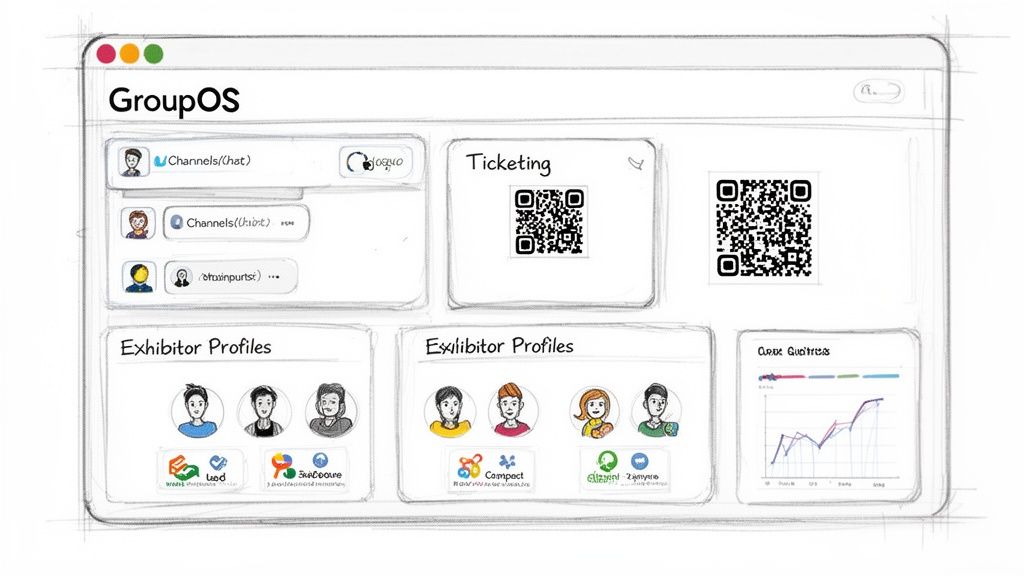
Remember the headaches that come from juggling disconnected systems? That’s exactly the chaos GroupOS was built to solve. Every feature is intentionally designed to work in concert, creating a fluid experience for your members and a much simpler workflow for your team.
Here's a direct look at how GroupOS maps to the core functions we’ve discussed:
Let's be honest: the true test of any platform is the tangible results it produces. A major pain point for event organizers is the struggle to prove ROI to sponsors and exhibitors. It’s a constant battle.
GroupOS tackles this head-on. We built dedicated exhibitor profiles, integrated product showcases, and powerful lead generation tools right into the platform. Finally, sponsors can track their interactions and see hard data on their success, making those renewal conversations a whole lot easier.
This focus on provable value is what’s driving the market forward. The Asia Pacific region, for instance, is exploding into the fastest-growing market for customer engagement solutions, with experts projecting a 15-15.8% compound annual growth rate. This isn’t just a trend; it reflects a critical need for tools that deliver on sponsor showcases and lead generation. You can read the full research on strategicrevenueinsights.com to see just how massive this shift is.
Making a change can feel like a huge undertaking, but it doesn’t have to be a painful one. We make sure your transition to GroupOS is smooth and fully supported. It all starts with a free trial and a custom setup process to get you going. This isn’t just a software handoff—it’s a partnership dedicated to your long-term success.
Ready to see how a true customer engagement platform can reshape how your organization connects with its people? Let’s talk. Schedule a personalized demo, and we’ll show you exactly how GroupOS can be configured for your specific needs to help you build a community that doesn't just exist, but thrives.
It's natural to have questions when you're exploring a new type of software. We've pulled together the most common ones we hear from community leaders, event pros, and executives to give you the clear answers you need.
This is probably the most common question we get, and the distinction is crucial.
Think of your CRM (Customer Relationship Management) as your internal system of record. It’s the database where your team tracks sales pipelines, logs customer service calls, and manages contact details. It’s fundamentally a tool built for your staff to manage data.
A customer engagement platform, on the other hand, is the front-facing digital space where your community actually lives and interacts. It’s the forum where they connect with peers, the event hub where they register for your conference, and the resource center where they access valuable content.
A CRM is the filing cabinet where you keep records about your customers. An engagement platform is the living room where you build relationships with them.
While a great engagement platform must integrate seamlessly with your CRM to keep data flowing both ways, its primary job is to create a vibrant, active community—not just to store information.
Absolutely. In fact, smaller organizations often see the biggest impact. When you're running on a lean team, you can't afford to waste time juggling a dozen different tools that don't talk to each other.
A unified platform puts an end to that chaos by bringing everything under one roof. It automates the tedious, manual work that can bog down a small staff, like:
It also gives you a polished, professional online presence that punches well above your weight class, helping you deliver a top-tier experience that can compete with much larger organizations. Modern platforms are built to scale, so you can start with what you need now and add more power as you grow. It's a smart investment that pays off for years to come.
This is a valid worry, but the good news is that modern platforms are designed for the people who actually use them every day: community and event managers, not developers. The whole point is to make your life easier, not add another technical headache to your plate.
You should look for platforms with intuitive drag-and-drop builders for creating pages, simple content editors, and straightforward analytics dashboards. Any good provider will also offer hands-on onboarding, training, and real-person support to make sure you’re comfortable from the get-go. Your job is to build a great community, not to wrestle with clunky software.
Ready to see how a true all-in-one platform can bring your community to life? GroupOS gives you the tools to host unforgettable events, foster meaningful connections, and deliver undeniable value. Schedule your personalized demo today!