February 2, 2026
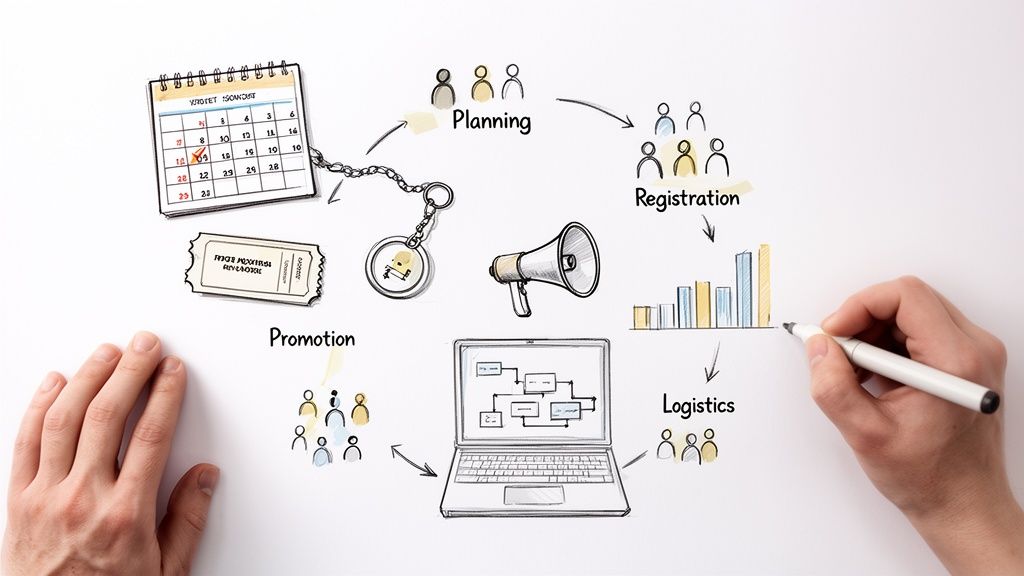
Before you even think about venues, speakers, or marketing campaigns, you need to lay a solid groundwork. Getting the foundation right is everything. This means defining a crystal-clear purpose for your event, getting inside the heads of your ideal attendees, and locking down a realistic budget.
Nail these three things, and you're not just planning an event; you're engineering an experience destined for success.
It’s tempting to jump straight into the fun stuff, like booking a cool venue or designing the invitations. I’ve seen it happen time and again, and it’s a classic mistake that leads to a disconnected, lackluster event. The most memorable events—the ones people talk about for years—are built on a strong strategic bedrock. It all starts with defining your "why" long before you figure out the "how."
Let's be clear: creating an event today isn't just about throwing a party. It’s a serious business opportunity. The global events market is booming, expected to jump from $1,227.3 billion in 2024 to a massive $1,346.92 billion in 2025. That's a 9.7% growth spurt. For anyone managing a professional community, this means events are a total powerhouse for engagement and revenue. To get your piece of the pie, you need a plan that’s more than just surface-deep.
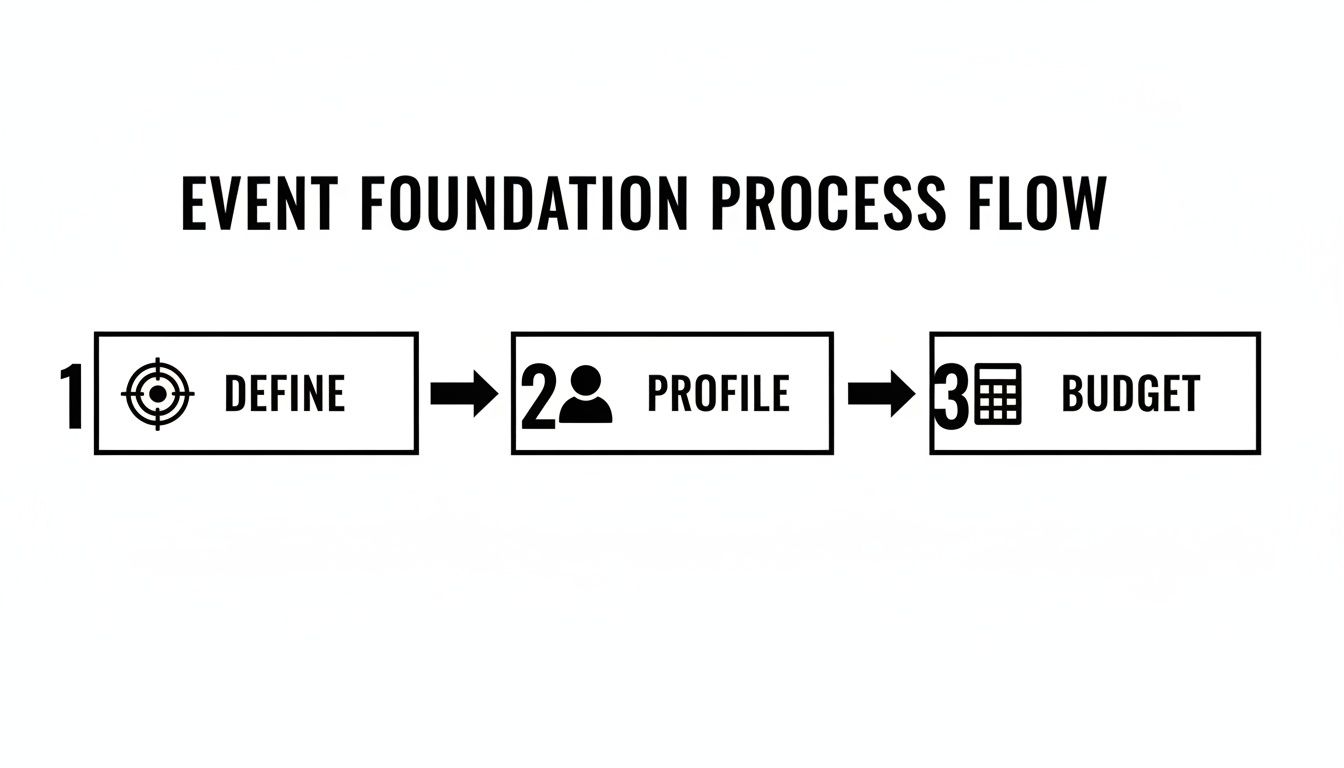
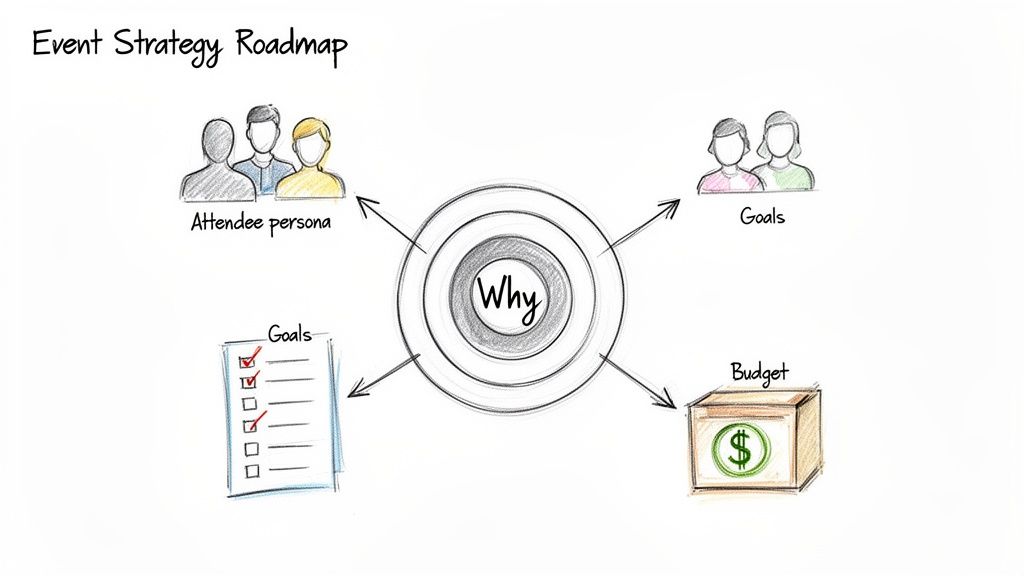
This initial planning phase boils down to a few core components that you absolutely must define.
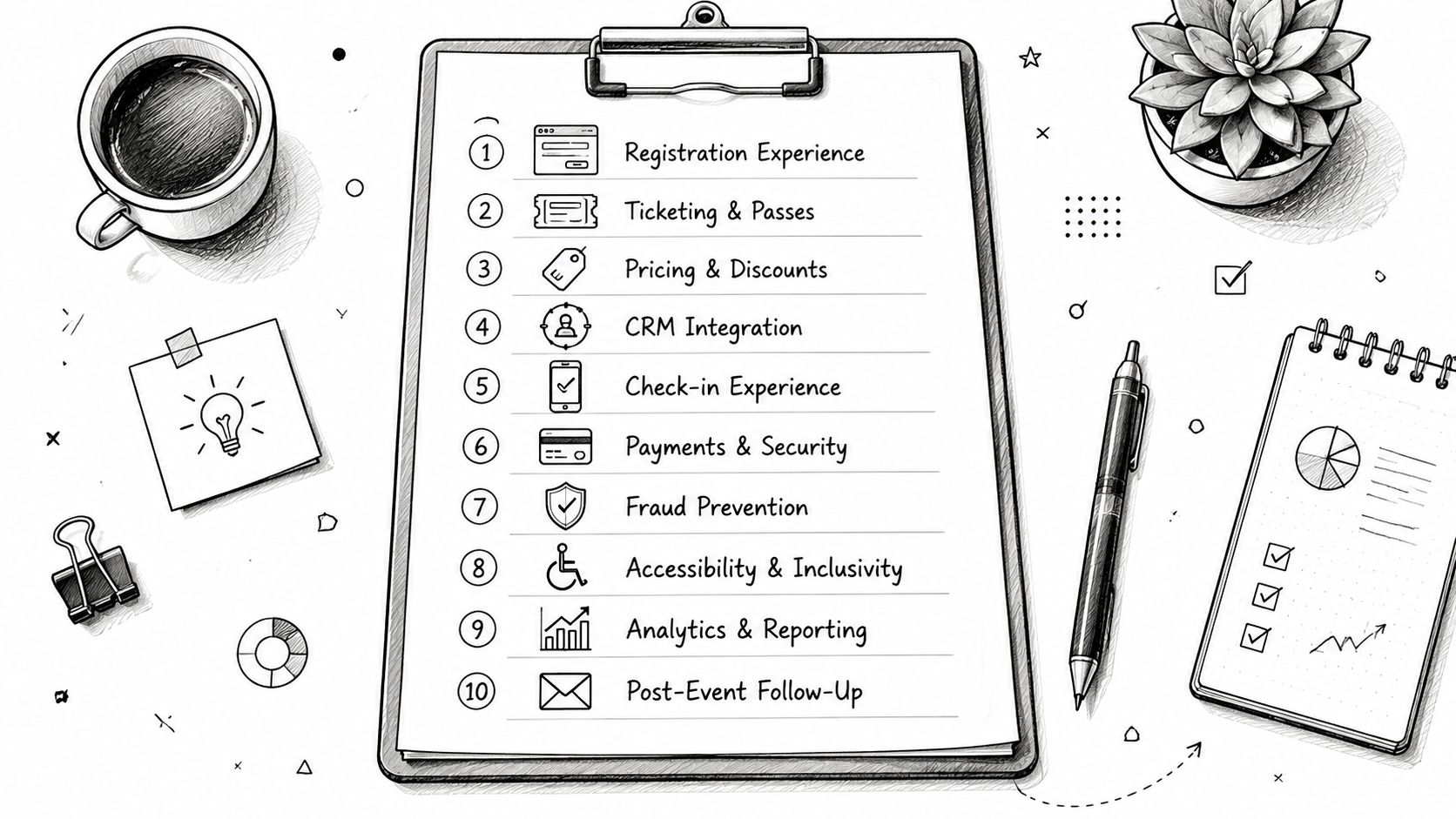
To keep track of these essential early-stage decisions, I recommend using a simple checklist framework. Here’s a table outlining the key areas to focus on as you build your event's foundation.
By working through these questions, you create a strategic document that will guide every subsequent decision, ensuring your event stays on track and delivers real value.
Your event's objectives are your compass. Vague goals like "boost brand awareness" or "encourage networking" just won't cut it—they’re impossible to measure. You need to get specific and tie your goals directly to tangible business outcomes.
What does a win actually look like for your organization? Translate that vision into concrete numbers.
Here are a few real-world examples I've seen work:
Setting specific, measurable, achievable, relevant, and time-bound (SMART) goals is non-negotiable. It transforms your event from a simple gathering into a strategic business initiative with a clear ROI.
Once you know why you’re hosting the event, you have to figure out who it’s for. This is where attendee personas come in. A persona is a detailed, semi-fictional profile of your ideal guest, and you need to go way beyond basic demographics like age or job title.
To make your personas truly useful, you have to dig deeper into their mindset. Ask yourself:
For instance, let's say you're planning a tech conference. One of your personas might be "Developer Dave." Dave couldn't care less about high-level keynotes; he wants hands-on coding workshops. He'd much rather have a casual networking session with craft beer than a stuffy, formal dinner.
Every single decision you make from here on out—from session topics to the evening's entertainment—should be filtered through the lens of your personas. For your event to truly hit the mark, it's wise to build in versatility in event strategy from the very beginning.
The last pillar of your foundation is the budget. A good budget isn't just a list of expenses; it's your financial roadmap. It needs to align perfectly with the objectives you just set.
Start by brainstorming every possible cost, from the big-ticket items like the venue down to the often-forgotten things like volunteer t-shirts and credit card processing fees. For a comprehensive look at what to include, our guide on how to create a solid event budget is a great resource.
On the other side of the ledger, map out every potential revenue stream: ticket sales, tiered sponsorships, exhibitor fees, you name it. By comparing your costs against your projected income, you can ensure your event is financially sound and make smart choices about where to invest your resources.
Your event's registration page is the first real interaction someone has with your event. Think of it as the digital handshake—if it's clunky, confusing, or takes too long, you’ll lose them before they even pull out their credit card. A smooth signup process doesn't just feel professional; it builds confidence right from the start.
This is the moment you turn a curious visitor into a committed attendee. The goal isn't just to get people signed up, but to make the entire journey feel easy and worthwhile. A clunky form or a weird checkout flow will send your drop-off rates through the roof.
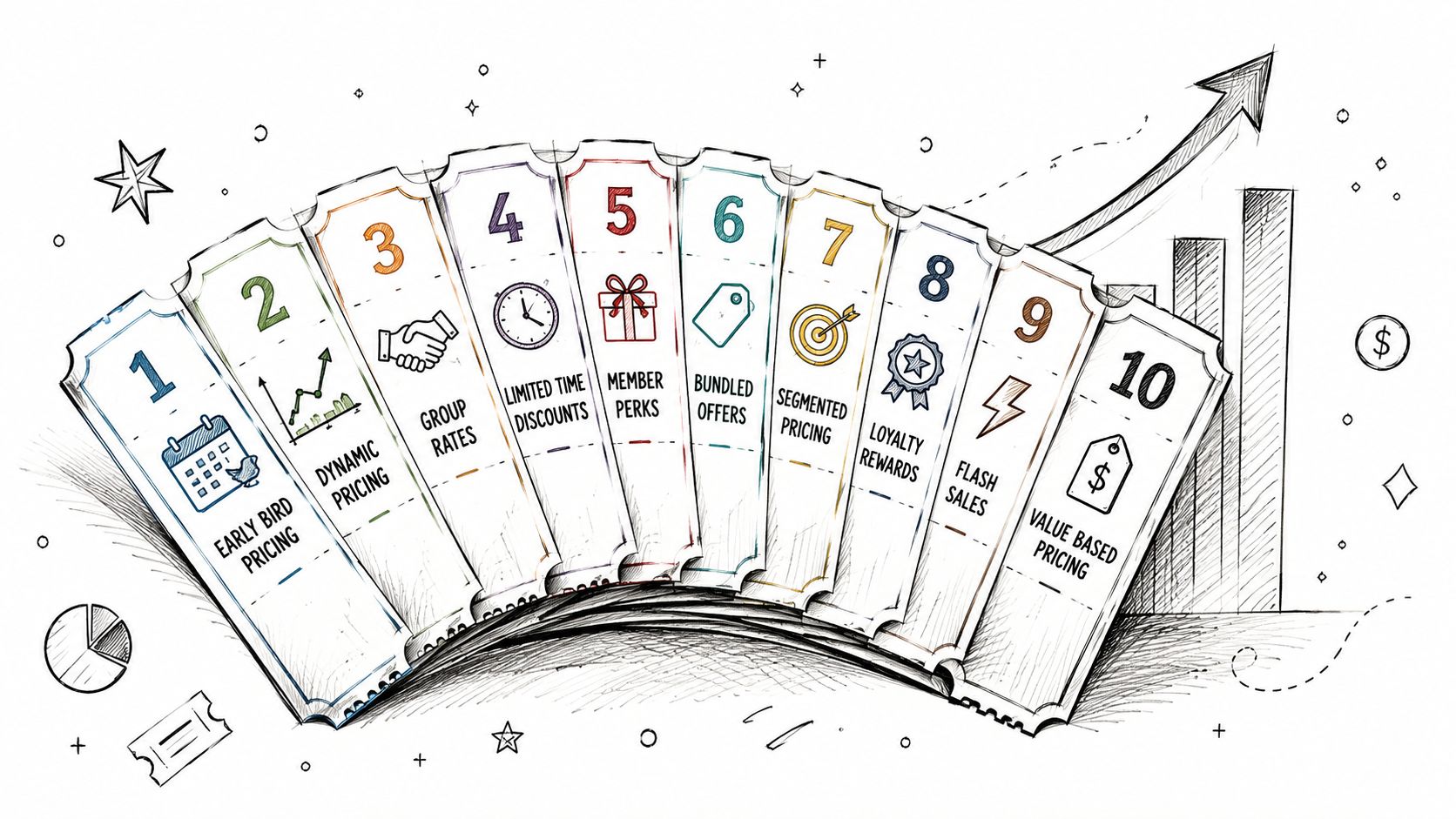
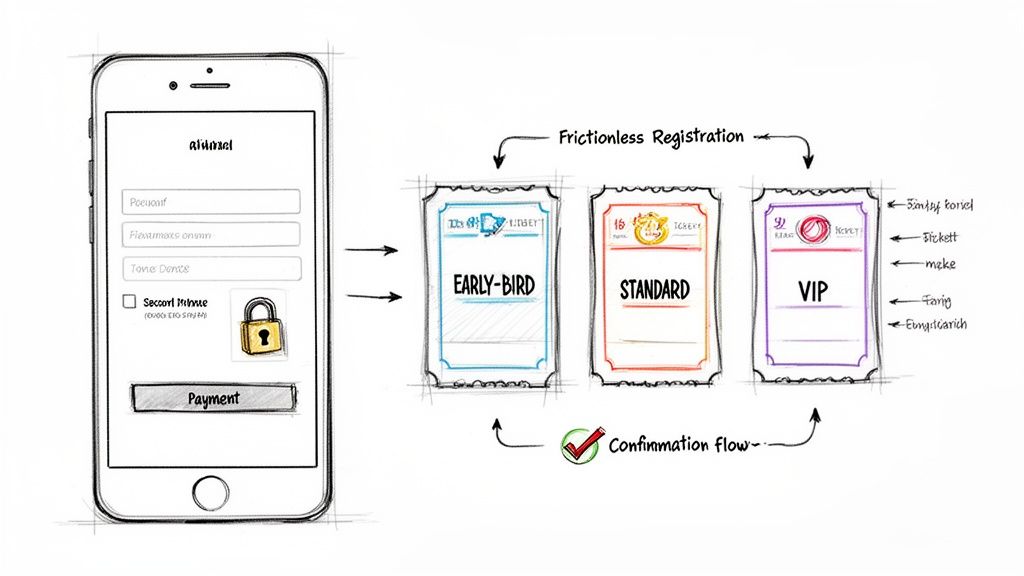
A one-size-fits-all ticket rarely cuts it anymore. Smart ticketing tiers let you cater to different types of attendees and create powerful incentives for people to register now. It's not just a revenue play; it's about building momentum.
Here are a few tiers I’ve seen work time and time again:
The trick is to clearly lay out what each tier gets you. I always recommend using a simple comparison table on the registration page. It makes the upgrade to VIP feel like a no-brainer for the right person. As you build this out, using a good landing page optimization checklist will help make sure every element is pulling its weight.
The registration form itself is a tightrope walk. You need enough data to understand your audience, but every single field you add is another chance for someone to give up. My rule of thumb? Only ask for what is absolutely essential to get them in the door.
Really question every field. Do you need their job title and company size right now? Or could you ask for that in a pre-event survey after they've already committed? Keep that initial form lean: name, email, and payment info is often all it takes.
A complicated registration process is a conversion killer. Every extra field you add can cause a drop-off. Keep it simple to keep your sign-ups flowing.
If you’re running a more complex event, conditional logic is your best friend. For instance, if an attendee selects "Student" as their role, then you can show them a field to enter their university. This keeps the form clean and relevant for everyone, so they aren't bogged down by questions that don't apply to them.
The final hurdle—payment—has to be perfect. Nothing kills trust faster than a sketchy or broken payment gateway. Stick with well-known, trusted providers like Stripe or PayPal to handle your transactions.
Make sure your payment process is integrated directly into your registration page, not redirecting people to some random third-party site. It creates a much more cohesive and secure feeling. As soon as the payment goes through, an automated confirmation email should hit their inbox instantly.
This email absolutely must include:
This immediate follow-up solidifies their spot and gives them everything they need, leaving them feeling organized and excited about your event. If you're looking for the right tools, it's worth exploring the best event registration platforms, as many have these features built right in.
You can plan the most incredible event in the world, but without an audience, it’s just a well-organized rehearsal. Once you’ve laid the groundwork and your registration page is live, it's time to shift gears and start building some real excitement. This is where you pivot from logistics to marketing, creating a plan that doesn't just tell people about your event, but makes them feel like they have to be there.
It all starts with a compelling brand and a core message. This is more than just a slick logo; it's the story you're telling. This story needs to resonate with your ideal attendees, hitting on their pain points and goals, and making it crystal clear what they'll gain by showing up. Every email, social post, and ad should echo this central theme.
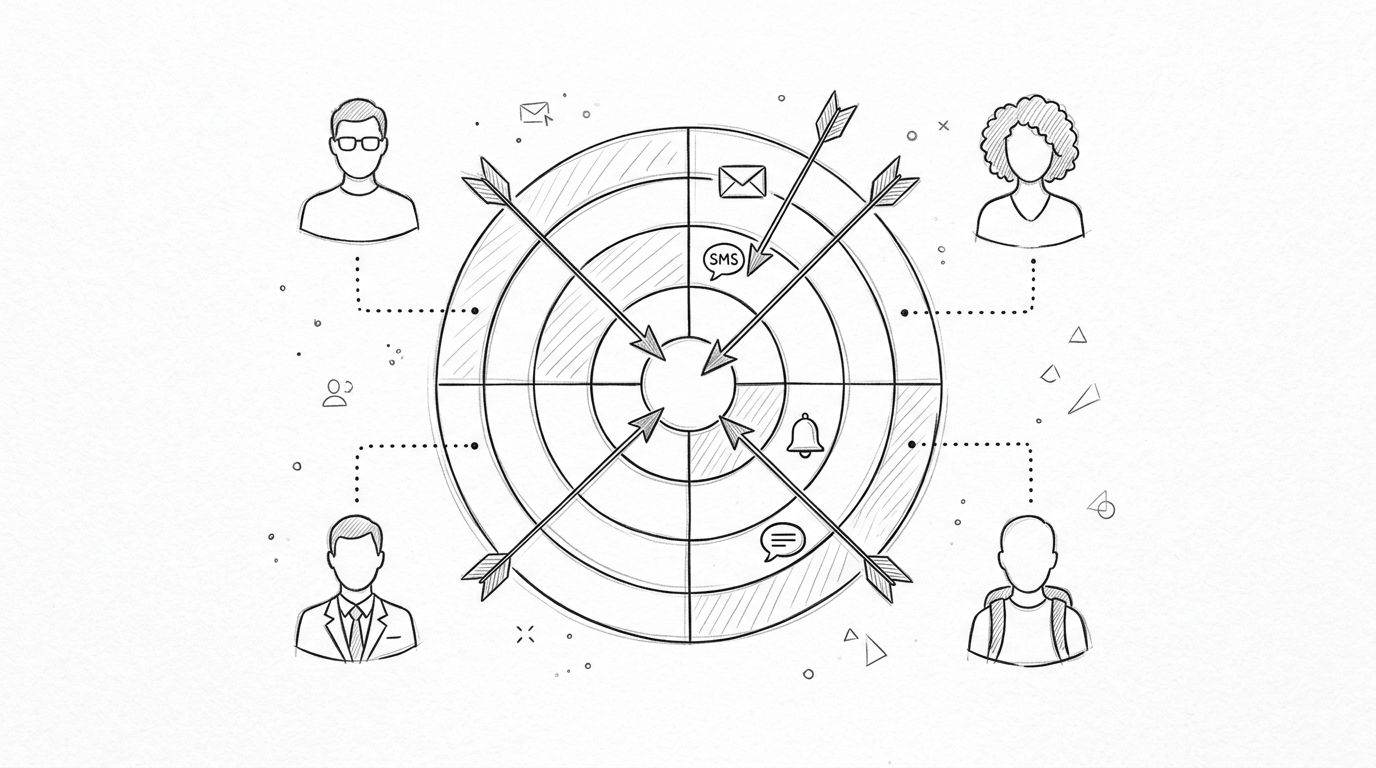
Email is still a powerhouse for event promotion, but only if you use it smartly. Blasting the same generic message to your entire list is a one-way ticket to the spam folder. The real magic happens with segmentation and personalization.
Break your audience down into meaningful groups. For instance:
Think of your email campaign as a story that unfolds over time. Don't just shout, "Tickets on sale!" Build anticipation with a planned sequence of speaker announcements, sneak peeks of sessions, and countdowns that create a genuine sense of urgency.
Content is the fuel for your promotional engine. It gives you valuable stuff to share across all your channels and helps you build a relationship with potential attendees long before they even think about buying a ticket. It's your chance to prove the quality of your event before the doors even open.
Move beyond the basic blog post. Map out a content calendar that mixes different formats to get people talking.
Content Ideas to Generate Buzz:
This approach shifts your marketing from a hard sell to a valuable conversation, pulling people in instead of pushing a message at them.
An effective promotion strategy meets your audience where they already are. Instead of trying to pull them to a new platform, integrate your event promotion into the communities they already trust and engage with daily.
The best event promotions don't feel like ads at all; they feel like organic conversations happening inside a community. If your target audience lives in a specific Slack channel, a niche Facebook group, or a professional forum, that's exactly where you need to be.
But don't just parachute in and drop a registration link. Become an active participant. Share your speaker interviews, ask for feedback on session topics, and help connect community members with your speakers. This kind of authentic engagement builds trust and makes your event feel like a natural extension of the community itself.
By weaving your event into these existing channels, you drive real conversation and turn passive observers into enthusiastic participants. When you create an event that feels like it was built for the community, by people who get it, the registrations will take care of themselves. For a deeper dive, check out these expert tips on how to promote an event and make your next one a sell-out.
After all the planning, promotion, and ticket sales, the big day is finally here. This is where the rubber meets the road, and your meticulous prep work truly shines. Mastering the on-the-ground (and online) logistics is what separates a good event from an unforgettable one. It's the moment your strategy becomes a real, tangible experience for every single attendee.
Whether your event is in-person, fully virtual, or a hybrid of the two, the guiding principle is the same: eliminate friction. Every single touchpoint, from the moment someone checks in to the final closing remarks, should feel effortless. When logistics are smooth, your guests can focus on why they came—the content, the connections, and the overall experience—instead of getting tripped up by clunky processes.
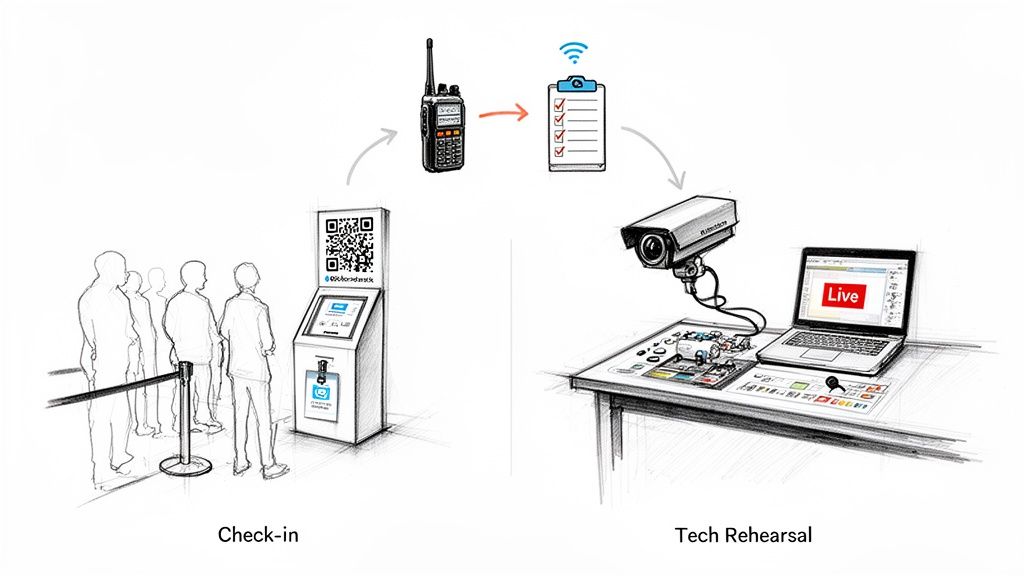
For any physical event, the journey begins the second your attendees walk through the door. That first impression at check-in sets the tone for the entire day. A long, confusing line is a surefire way to start things off on the wrong foot.
This is where a little tech goes a long way. QR code check-ins are a game-changer. By sending each attendee a unique QR code with their ticket, you can slash check-in times from minutes to seconds. Arm your staff with a few tablets or smartphones, and they can scan people in, print badges on the spot, and keep the energy positive and the line moving.
Of course, a smooth check-in is just the start. Your coordination with the venue has to be airtight. Your team needs to be in lockstep with everyone from the AV techs to the catering manager. Always, always do a pre-event walkthrough to confirm the details:
A well-run event should feel like a swan gliding across a lake: graceful and effortless on the surface, with a whole lot of frantic paddling happening underneath. Clear roles and constant communication are what make that seamless experience possible.
When your event has a digital element, your tech stack is the venue. The platform you choose directly shapes how engaged and satisfied your attendees will be. Before you go live, you absolutely must run full technical rehearsals with every single speaker. This isn't just a quick "can you hear me?" check. It's about making sure they're comfortable advancing their own slides, launching a poll, and navigating the Q&A features.
For hybrid events, the real challenge is creating one cohesive experience for two very different audiences. Your virtual attendees can't feel like they’re just second-class citizens watching a choppy livestream. This means investing in dedicated camera operators for dynamic shots, high-quality audio feeds, and an online host whose sole job is to engage the remote audience. They need to be the voice for the virtual crowd, feeding their questions into the live discussion and making them feel every bit as present as the people in the room.
The event world is becoming more and more blended. When you look at the data, it's clear that hybrid and virtual formats are here to stay. A whopping 74.5% of planners are now embracing hybrids, and 63% are increasing their virtual event investments for 2025. While 21% of all events are virtual-only, in-person still holds the top spot with 59% of attendees preferring it.
For anyone running corporate events or managing a membership community, the takeaway is clear: mixing formats gives you the biggest reach and impact. In fact, 79% of organizers are already using an Event Management System (EMS) to juggle it all. You can dive deeper into these and other event industry trends on Eventgroove.
Your event staff and volunteers are the face of your event. Giving them clear roles, the right information, and the authority to make decisions is non-negotiable. Every single person on your team should have a "run-of-show" document that breaks down the schedule, key contacts, and emergency plans.
Set up a central communication hub, like a dedicated Slack channel or a simple group chat, for real-time updates. This lets your team flag and fix issues on the fly without ever disrupting the attendee experience. When your team feels prepared and empowered, they can handle any curveball with grace and professionalism, ensuring your event is a smashing success from beginning to end.
Sponsors and exhibitors aren't just a revenue stream—they're partners who need to see a real, measurable return on their investment. Slapping a logo on a banner and calling it a day just doesn't cut it anymore if you want them coming back year after year. To create a truly successful event, you have to build an environment that delivers tangible value and helps them hit their goals.
This all starts with a mindset shift. Stop thinking of them as funders and start treating them as key stakeholders. The best event platforms let you build rich, interactive profiles for each partner, turning a static logo into a dynamic digital storefront. Think of it as their own mini-hub within your event, packed with product showcases, downloadable content, and direct ways for attendees to connect.
Let's be honest: for most exhibitors, the #1 goal is lead generation. They’re on-site (or online) to meet potential customers, and your job is to make that happen as smoothly as possible. We've moved way beyond collecting business cards in a fishbowl.
Today, powerful lead generation tools are non-negotiable. Look for features like:
When you equip your partners with these kinds of tools, you’re giving them the ability to collect high-quality, actionable data. They walk away with more than a list of names; they get a detailed record of every interaction, which makes their post-event follow-up infinitely more effective.
Your sponsors' success is your success. Providing them with robust lead capture and detailed analytics isn't just a feature—it's the proof that their investment paid off, ensuring they'll be back for your next event.
Beyond the booth, you need to create a variety of ways for sponsors to get in front of your audience. This is where a tiered sponsorship model really shines, letting you offer a range of visibility options for different budgets and marketing goals.
Try weaving these high-impact opportunities directly into your event:
This multi-channel approach makes sure your partners are seen and heard throughout the event. When they can directly trace leads, meetings, and brand engagement back to their sponsorship, renewing for next year becomes a no-brainer. To start building out compelling offers, you can explore different ideas for event sponsorship packages that provide clear, tiered value.
The event might be over, but your job isn't done. In fact, what you do in the days and weeks that follow is what separates a good event from a great one. This is your chance to turn the momentum you’ve built into a lasting community and prove the event's true impact. It's all about digging into the data, listening to what your attendees have to say, and keeping the conversation going.
Think of your event platform as a goldmine of information. Forget the surface-level stuff like how many people registered. The real story is in the engagement data—this tells you what actually resonated with your audience and how well your event performed.
Start by looking at the sessions. Which ones were packed? Which speakers had the audience buzzing in the chat? This isn't just trivia; it's a direct roadmap for your content strategy next year. You’ll know exactly which topics to double down on and which ones to rethink.
Pay close attention to specific behaviors:
This kind of analysis moves you from guessing what worked to knowing what worked. It gives you concrete evidence to show stakeholders and a clear path for making the next event even better.
The moments right after an event are pure gold. If you jump on it with a quick survey and send out valuable content right away, you keep the energy alive and show attendees you care about their experience long after the last session ends.
Data tells you what people did, but only feedback can tell you why. A well-designed post-event survey is your direct line into the minds of your attendees. The key is to make it painless. Nobody wants to fill out a 50-question form.
Keep it short and sweet. Focus on the big-ticket items: overall satisfaction, content quality, and the networking experience. I always recommend including a Net Promoter Score (NPS) question like, "How likely are you to recommend this event to a colleague?" It’s a simple, powerful way to gauge loyalty. A little incentive, like a discount on next year’s ticket or early access to recordings, can do wonders for your response rate.
An event shouldn't be a one-off moment. It should be the spark that ignites a year-round community. Your follow-up strategy is what makes that happen, turning attendees into genuine fans.
Here’s what your post-event plan should look like:
When you do this, your event becomes more than just a date on the calendar. It becomes the heart of your community, delivering value long after the doors have closed.
Getting into event management for the first time? It's totally normal to have a few questions. I've been doing this for years, and these are the ones that pop up most often. Here are some quick, no-nonsense answers to get you pointed in the right direction.
Before you even think about venues or speakers, you have to nail down your "why." Seriously, ask yourself: What is the number one reason we're holding this event?
Is it about drumming up sales leads? Getting your community members more involved? Maybe it's a deep-dive training session. Whatever that core goal is, it becomes your North Star. Every single decision—from the budget you set to the marketing emails you write—should circle back to supporting that main objective.
If you're planning a major conference—let's say for over 500 people—you'll want to give yourself a runway of 9 to 12 months.
Trust me on this. That timeline isn't just a suggestion; it's your safety net. It gives you the breathing room to lock down a fantastic venue (the good ones book up fast!), secure in-demand speakers, and run a solid early-bird campaign that builds that all-important initial buzz.
Absolutely. While the marketing fundamentals are similar, the focus shifts dramatically.
For an in-person event, a lot of the appeal is the destination, the venue, and the magic of face-to-face networking. For a virtual event, you're selling the digital experience. Your promotion needs to highlight things like:
Essentially, for in-person events, you sell the destination. For virtual events, you sell the accessibility and digital perks.
Ready to use a platform that takes the headache out of event planning, from registration right through to post-event reporting? GroupOS is the all-in-one solution built for professional networks and organizations just like yours. Start your free trial and get a custom setup today.