December 2, 2025

Community management software is the digital foundation you need to build, run, and grow a dedicated space for your audience. It brings all your member conversations, activities, and data together into one branded platform, letting you move past the limitations of scattered social media groups and simple email lists.
Imagine trying to host a massive, ongoing party for your best customers, but you've only got a handful of separate, disconnected rooms. That's what it feels like trying to build a real community using tools that weren't designed for it. Community management software is the custom-built venue for that party—a central, digital hub where your brand's city can thrive.
But this technology is much more than just a forum or a chat app. It's a purpose-built platform that gives an organization a single place where customers, fans, and partners can connect with the brand and, just as importantly, with each other. Instead of renting a small plot of land on someone else's social network, you get to build and own your entire digital environment.
Think of a Facebook Group or a Slack channel like a pop-up shop. They’re fantastic for quick, temporary gatherings, but you don’t own the building, you don’t control who walks by, and you definitely don't get to keep all the data on your visitors. Community management software, on the other hand, is your brand's permanent headquarters.
This difference is huge, and it solves some very specific business headaches:
At its core, this software is about turning a passive audience into an active, engaged community. It gives you the structure to build real relationships, earn loyalty, and empower your biggest fans to become true brand advocates.
While community management software is built for many-to-many engagement, it's helpful to see how it compares to other tools. For instance, you can learn more about how CRM software is used for one-on-one customer interactions. The big difference is that CRMs are typically for sales or support, while a community platform is designed for connection and collaboration. Our complete guide explains more about what community management is and why it's so critical today.
Ultimately, these platforms create a digital home where your brand’s culture can truly come to life, backed by a toolkit built for the job. This often includes member directories, event management, resource libraries, and private messaging, all wrapped up in your own branding. It’s the essential infrastructure for building a valuable, self-sustaining ecosystem for your members.
Let's be clear: not all community platforms are built the same. A basic forum lets people talk, but a true engagement engine is a powerhouse of interconnected tools designed to build real connections, make your life easier, and deliver real-world business results.
Knowing what to look for is the first step in telling the difference between a simple message board and a strategic asset for your organization.
Think of it like building a house. Sure, you could just throw up four walls and a roof. But to make it a home, you need a kitchen where people gather, private spaces for rest, and the plumbing that makes it all work together. The features in your community software are the functional rooms and systems that make your digital space a place where members actually want to be.
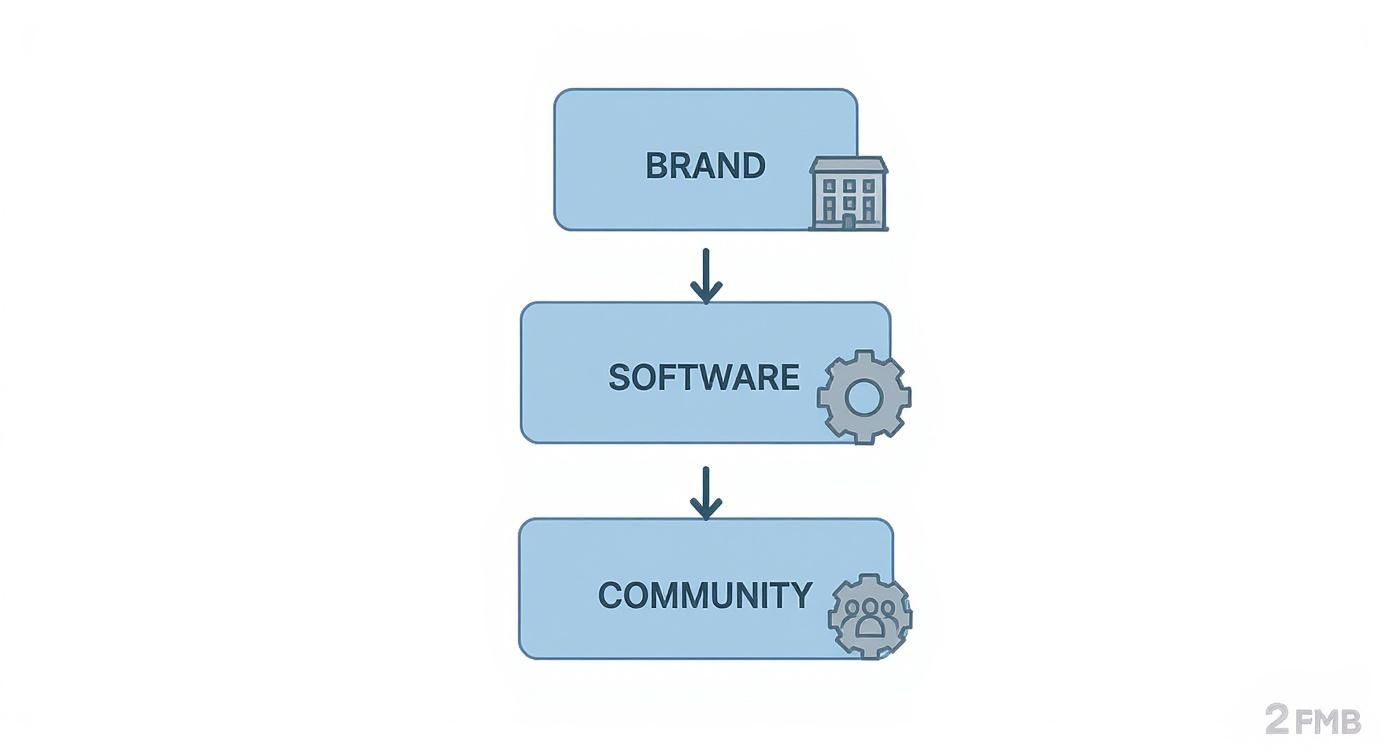
The software is the critical bridge. It connects what your brand wants to achieve with the experience your members actually have.
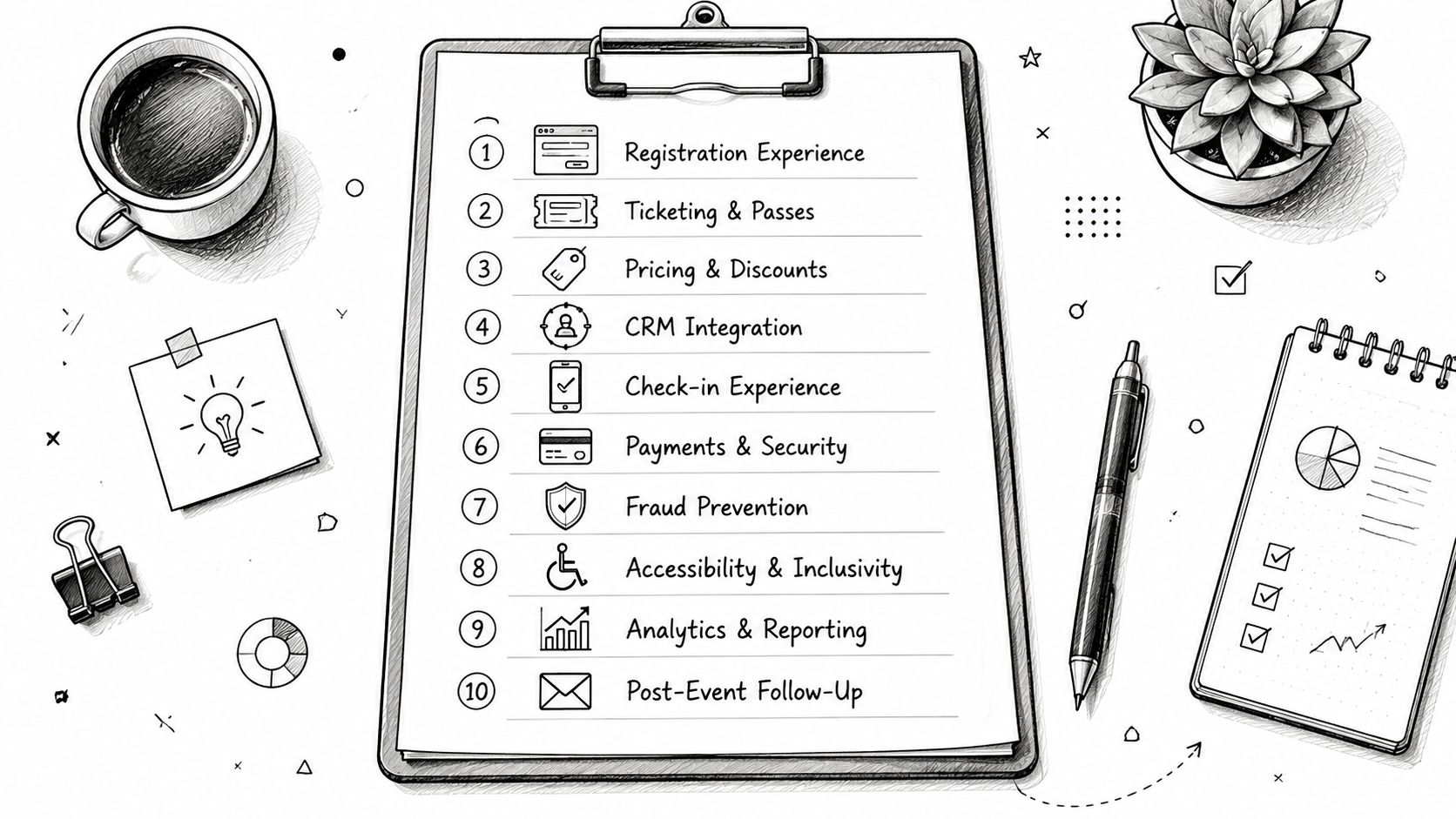
To help you get started, here's a quick look at the "must-have" features you should be looking for when evaluating different platforms. These are the foundational tools that separate a nice-to-have from a need-to-have.
Having this checklist in hand gives you a solid framework for comparing options and ensuring you get a platform that can truly grow with you.
At the end of the day, a community lives or dies by its level of interaction. Modern software needs to do more than just provide a space for discussion; it needs to actively encourage people to jump in and make participation a genuinely rewarding experience. These tools are the machinery that powers those all-important connections.
These features aren't just separate add-ons; they work together to create a vibrant, dynamic environment. We dive deeper into this in our guide on tools for community engagement.
While member engagement gets all the glory, strong admin tools are what make it all possible. These are the behind-the-scenes features that empower your team to manage, scale, and protect your community.
A well-managed community feels effortless to its members. That seamless experience is the direct result of powerful, intuitive administrative controls working in the background.
Make sure any platform you consider has these functions:
A modern community platform should never be an island. Its true power is unlocked when it talks to the other business systems you already rely on, turning member chatter into valuable business intelligence.
Integrations are what transform your community from a simple communication channel into the central hub of your entire customer ecosystem. It’s why the community management system market was valued at USD 2.24 billion and is projected to hit USD 3.71 billion by 2032. The cloud deployment segment is grabbing over 61% of that market, largely because cloud-based platforms are just better at this kind of connectivity.
For example, connecting your community to your CRM gives you a 360-degree view of a member—from their support tickets to their forum posts—all in one place. Integrating with your marketing platform lets you create campaigns based on community activity, like sending a special offer to your most engaged users. These connections turn conversations into data that can drive strategy across your entire organization.
Let's move past the features list for a moment. The real magic of community management software is in the concrete results it delivers for your business. This isn't just another subscription on your expense sheet; it's an investment that can fundamentally change how you connect with your audience and generate a serious return.
A vibrant, well-managed community becomes a growth engine that touches nearly every part of your organization. It elevates your brand from just a product or service provider to the heart of an active ecosystem. This shift opens up entirely new ways to create value that simply weren't possible before.

One of the first and most measurable wins from a community platform is a drop in operational costs, particularly in customer support. When you give customers a place to help one another, you're building a self-sustaining support network that scales beautifully.
Think about it: a user has a common question. Instead of filing a support ticket and waiting, they pop it into the community forum. Within minutes, another experienced member—one of your super fans—jumps in with the perfect answer. That single interaction solved the problem without ever hitting your support team's inbox.
This peer-to-peer support model creates a powerful ripple effect:
A great community creates a powerful sense of belonging that turns one-time buyers into lifelong champions for your brand. In a crowded market, that emotional bond is your single greatest advantage. People might show up for your product, but they'll stay for the community.
This loyalty isn't just a warm, fuzzy feeling—it translates directly to your bottom line. When customers feel like they're part of something bigger, their relationship with your brand deepens. They're more likely to forgive a minor hiccup, more excited about your next product launch, and far more willing to tell their friends about you.
A community transforms your customer base from a collection of individual accounts into a network of interconnected advocates. This network effect is the ultimate driver of long-term, sustainable growth.
This deep-seated loyalty is the bedrock of many successful recurring revenue business models, as it slashes churn and dramatically increases customer lifetime value. For a platform like GroupOS, fostering this sense of belonging isn't an accident; it's a core design principle to make sure members feel invested for the long haul.
Your community is the best R&D lab you could ever ask for. It’s a direct, unfiltered pipeline to the people who actually use your products every single day. This is where you'll find raw, honest feedback, brilliant new ideas, and early warnings about things that aren't working.
Instead of spending a fortune on formal market research or stuffy focus groups, community managers can just listen. A single thread in a forum can uncover an unmet need or spark an idea for a feature your internal team would never have thought of.
For instance, a software company might see users sharing clever workarounds for a clunky process. That’s not a complaint—it’s a gold-plated feature request. By building that solution directly into the product, the company is responding directly to a proven customer need, all but guaranteeing the new feature will be a hit.
The entire online community and social business software market reflects this reality. It was valued at USD 9.81 billion and is projected to explode to USD 43.26 billion by 2033, a clear sign that businesses are waking up to the power of these feedback loops.
Picking the right community management software can feel like an impossible task. With so many options, where do you even begin? The key is to take a step back and start with a structured approach, which turns an overwhelming process into an empowering one.
Believe it or not, the most important first step has nothing to do with fancy features or scheduling demos. It’s all about getting crystal clear on your primary objective.
Before you look at a single platform, ask yourself this: What is the number one thing we need this community to do? Is the main goal to slash support tickets? Generate qualified leads? Drive product innovation with user feedback? Or is it all about boosting member retention? Your answer is your North Star—it will guide every single decision from here on out.
Think about it. A platform designed for customer support will likely have a fantastic knowledge base and slick Q&A forums. On the other hand, one built for lead generation will probably offer deeper CRM integrations and tools to spot potential customers based on their activity.
Once you’ve locked in that core objective, you can start translating it into a checklist of non-negotiable features. This isn’t about finding a platform that does everything under the sun. It’s about finding the one that does what you truly need exceptionally well.
A great way to organize this is to bucket your needs into three key areas:
As you build this list, it’s worth comparing some of the best knowledge management software picks. Many of these tools overlap with community platforms, especially when it comes to creating searchable, valuable resource libraries for your members.
It’s a classic mistake: choosing a platform that fits your budget today but can't handle your growth tomorrow. Scalability is non-negotiable. You need to ask potential vendors how their platform and pricing handle growth. What happens if your community doubles in size? Will your costs explode? Can their servers handle a massive traffic spike during a big virtual event?
And don’t just look at the sticker price. You have to consider the Total Cost of Ownership (TCO), which includes all the hidden fees that can bite you later.
A platform that seems cheaper upfront can easily become the more expensive option once you add everything up. This is why a solution like GroupOS focuses on an all-in-one model—it helps minimize surprise costs and gives you a clear, predictable path for growth.
Demos are your chance to cut through the marketing fluff and see how the platform really works. Don’t just sit back and let the salesperson run the show. Come armed with a list of specific, scenario-based questions that tie directly back to your primary objective.
For example, instead of asking a generic question like, "Do you have an events feature?" get specific. Try this instead: "Can you walk me through how a member would register for a multi-day virtual conference with different ticket tiers and then access a session recording afterward?" The difference in the answer you get will be night and day.
A vendor should be a partner in your community's success, not just a product on a shelf. The quality of their answers—and their willingness to understand your specific needs—is often as important as the software itself.
Focus your questions on the day-to-day, practical application of features. Understanding these nuances is critical, especially if your vision includes building out a dedicated community app for your members. Choosing the right software is a major strategic decision that will shape your organization for years to come. Take your time, do your homework, and trust your methodical process.
Picking the right community management software is a huge step, but let's be honest—it's just the beginning. A powerful platform is like a brand-new, top-of-the-line kitchen. You have all the potential in the world, but the real magic only happens when you follow a good recipe. For your community, a thoughtful launch plan is that recipe. It’s what turns an empty space into a vibrant, self-sustaining hub from day one.
I've seen it time and again: rushing the launch is the number one reason new communities fizzle out. A methodical approach isn't just a nice-to-have; it's essential. The whole process really boils down to three distinct phases: Pre-Launch, Launch, and Post-Launch. Each stage has its own focus and a critical set of tasks.

Think of this as setting the stage before the first guests arrive for a party. An empty community feels intimidating and awkward. Your goal here is to make it feel lived-in and welcoming from the moment someone first clicks the link. This prep work sets the tone for everything that follows.
This phase is all about building the initial framework that encourages people to stick around and participate.
Okay, your foundation is solid. Now it’s time to open the doors. The launch phase is all about generating buzz and making sure that first experience for new members is as smooth and welcoming as possible. You only get one chance to make a great first impression.
Your promotion strategy here is absolutely key. Announce the new community everywhere you can—your email newsletter, social media channels, your main website. But don't just announce it; explain the value. Why should they join? What's in it for them that they can't get from just following you on Twitter?
The goal of a launch isn't just to rack up sign-ups; it's to spark that first wave of genuine member-to-member interactions. A warm, personal welcome can be the difference between someone who logs in once and someone who becomes a core contributor for years.
A stellar onboarding experience is non-negotiable. Use the features in your community management software to set up an automated welcome message or email sequence. This should guide new members through the most important areas of the platform. Nudge them to complete their profile, pop into an introductions thread, and maybe join their first discussion.
Your work isn't done after you flip the switch to "live." In many ways, it's just getting started. The post-launch phase is a continuous cycle of monitoring, engaging, and adapting. This is where you shift from building the house to making it a home.
The first few weeks are absolutely critical for building momentum. Your team needs to be highly visible—replying to posts, asking thoughtful questions, and actively connecting members with one another. This hands-on engagement shows everyone that this community is a real priority.
From there, you’ll want to settle into a sustainable rhythm for long-term growth:
For platforms like GroupOS, these three phases are baked right into the onboarding experience, giving you the tools and support to not only launch successfully but to build momentum that lasts.
When you decide to bring in a community platform, you're doing more than just buying software. You're plugging your brand into a major global shift in how businesses and their audiences actually connect. The data is clear: building a dedicated digital space for your people isn't just a nice idea anymore—it's a worldwide business imperative.
This isn't some niche trend, either. The market for these platforms is growing at an incredible pace, which tells you that organizations everywhere are waking up to their value. It's a signal that the future of customer relationships won't be built on transactions, but on real connections and shared experiences.
The numbers really paint a picture of just how fast this is happening. The global online community management software market is already valued at a massive USD 5.52 billion. That’s a serious worldwide investment in tools that create direct, meaningful engagement.
Of course, adoption looks a little different depending on where you are in the world, which creates a fascinating global snapshot:
These stats tell a simple truth: no matter where you do business, community is a proven global strategy. You can discover more insights about the online community market to see exactly how these trends are playing out.
Choosing to invest in community management software means you are positioning your organization for future growth in an increasingly connected world. It's about building a more resilient, customer-focused brand that can thrive no matter how the market changes.
This global momentum changes how you should think about your investment. You aren't just buying a tool; you're stepping into a modern way of doing business that puts connection first. Platforms like GroupOS provide the foundation for this shift, giving organizations of any size the power to build the kind of dedicated digital space that is rapidly becoming the new standard for brand excellence.
Jumping into the world of community management software can definitely bring up a few questions. Let's tackle some of the most common ones to help you get a clearer picture and make the right call for your organization.
This is a big one, and the difference is huge. It's like comparing a custom-built headquarters for your brand to a rented booth at a crowded trade show. Sure, a social media group is a convenient place to gather, but you're ultimately playing in someone else's sandbox.
With dedicated community management software, you gain control and capabilities you simply can't get on a platform you don't own:
Bottom line: social media is fantastic for casting a wide net and reaching a broad audience. A dedicated community platform is for building deep, lasting relationships with the people who matter most to your mission.
There's no single sticker price, as costs can vary quite a bit. The final number almost always depends on the size of your community and the features you need. Most providers, though, stick to a few common pricing models.
Here are the structures you'll run into most often:
You can generally expect to invest anywhere from a few hundred to several thousand dollars per month. It all comes down to the platform's power and your organization's scale.
Proving the value of your community software is all about measuring its return on investment (ROI). The trick is to look past simple vanity metrics like "likes" and connect community activity to real business results that impact your bottom line.
A successful community doesn't just create conversations; it creates measurable business value. The right KPIs will clearly show how your investment in engagement is paying off across the entire organization.
To get a handle on your ROI, start tracking these key performance indicators (KPIs):
Armed with answers to these core questions, you can move forward in your search for the right GroupOS solution with confidence. Ready to see how an all-in-one platform can reshape your organization's engagement strategy? Explore GroupOS today.