December 13, 2025
In 2025, a thriving community is the backbone of any successful professional association, event series, or membership business. The digital tools you use can either accelerate growth or create frustrating bottlenecks. Fragmented systems for ticketing, content, and communication often lead to disjointed member experiences and overwhelm your administrative team. The right platform, however, unifies these functions into a seamless, branded hub that boosts engagement and drives revenue.
This comprehensive guide cuts through the noise. We've meticulously analyzed the top 12 best online community platforms, evaluating them specifically for organizations that run events and manage complex memberships. We move beyond generic feature lists to provide a practical analysis of each tool's strengths, weaknesses, ideal use cases, and pricing structure. Our goal is to empower you to make an informed decision and select a platform that truly serves as your digital headquarters.
Beyond fostering connections, these platforms are instrumental in collecting direct input from your most engaged members. By creating dedicated spaces for discussion and Q&A, you can establish powerful feedback loops, a critical strategy for unlocking growth with feedback from users.
This article will help you:
Each entry includes screenshots and direct links to help you explore further. Let's dive in and find the perfect online community platform to build a community that lasts.
GroupOS stands out as one of the best online community platforms for professional organizations that need to unify event management, member engagement, and revenue generation. It replaces a fragmented toolkit with a single, powerful system, delivering a fully branded experience across dedicated iOS, Android, and web apps. This all-in-one approach is its core strength, allowing associations and event organizers to manage ticketing, memberships, content, and communication from one central hub.
The platform excels at creating a seamless journey from event attendee to engaged community member. Organizers can sell complex tickets with custom checkout forms and VIP add-ons, then use integrated communication tools like private channels and group chats to keep the conversation going long after the event ends. This model is ideal for transforming one-off conferences into year-round, monetized communities.

GroupOS is particularly effective for organizations where events and sponsorships are key revenue drivers. Its sponsor and exhibitor tools are a major differentiator, providing custom partner profiles, rotating banner ads, and product showcases directly within the community app. This gives sponsors tangible ROI through lead generation and direct engagement, a feature many simpler platforms lack.
For membership businesses, the platform supports flexible subscription plans and tracks member engagement, providing valuable data to improve retention. The ability to integrate with existing channels like Slack or Facebook Groups allows a phased transition, meeting members where they are while consolidating data on the backend.
GroupOS is built for results, with a clear focus on monetization and administrative efficiency. Its white-labeled nature ensures the organization’s brand remains front and center, building equity and member loyalty. The combination of a drag-and-drop page builder, over 350 SaaS connectors, and a managed migration process makes implementation highly streamlined for a platform of this depth.
While pricing isn't public (requiring a demo), this reflects its tailored, enterprise-grade approach. It is best suited for established organizations ready to invest in a comprehensive solution that can measurably boost revenue, engagement, and operational efficiency. The platform reports significant client results, including a 20% rise in attendee engagement and a 30% cut in administrative workload.
Website: https://groupos.com
Circle is a modern, all-in-one community platform designed for creators, brands, and membership businesses seeking a polished, white-label environment. It excels at integrating diverse content types, including discussions, courses, events, and live streams, into a single, cohesive user experience. This integration makes it one of the best online community platforms for organizations that want to offer a multi-faceted value proposition without juggling separate tools.
The platform's structure is built around "Spaces," which are customizable channels for different activities. This modular approach allows community managers to create dedicated areas for specific discussion topics, cohort-based courses, or exclusive member events, keeping the community organized and easy to navigate.
Circle is particularly effective for membership businesses and professional associations that monetize their community through paid tiers. The native payment tools, which include subscriptions, coupons, and paywalls, are straightforward to implement. An event organizer could use Circle to host pre-conference networking, manage session live streams, and maintain engagement with attendees post-event, all under their own custom domain and branding.
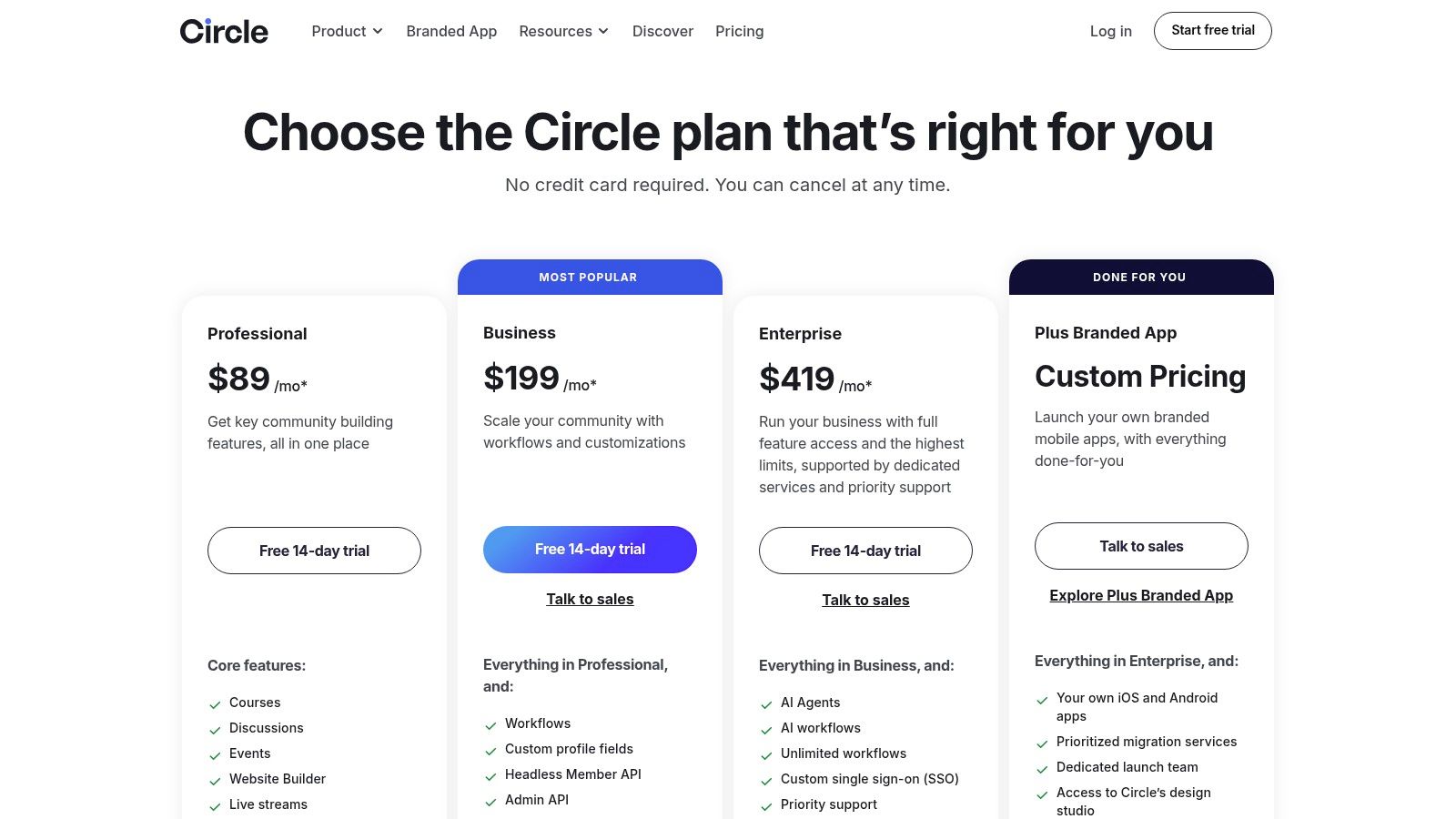
Circle's pricing is tiered, starting with the Professional Plan at $99/month, which includes most core features for up to 10,000 members. Higher tiers like Business ($219/month) and Enterprise ($399/month) add advanced features like workflows (automation), API access, and dedicated support.
Find out more at: https://circle.so
Mighty Networks is an all-in-one community and course-building platform known for its robust native mobile app experience and AI-driven setup features. It’s designed for creators and brands who want to bring their community, content, courses, and events together under one roof, with a strong emphasis on mobile-first engagement. This makes it one of the best online community platforms for organizations prioritizing accessibility and interaction on the go.
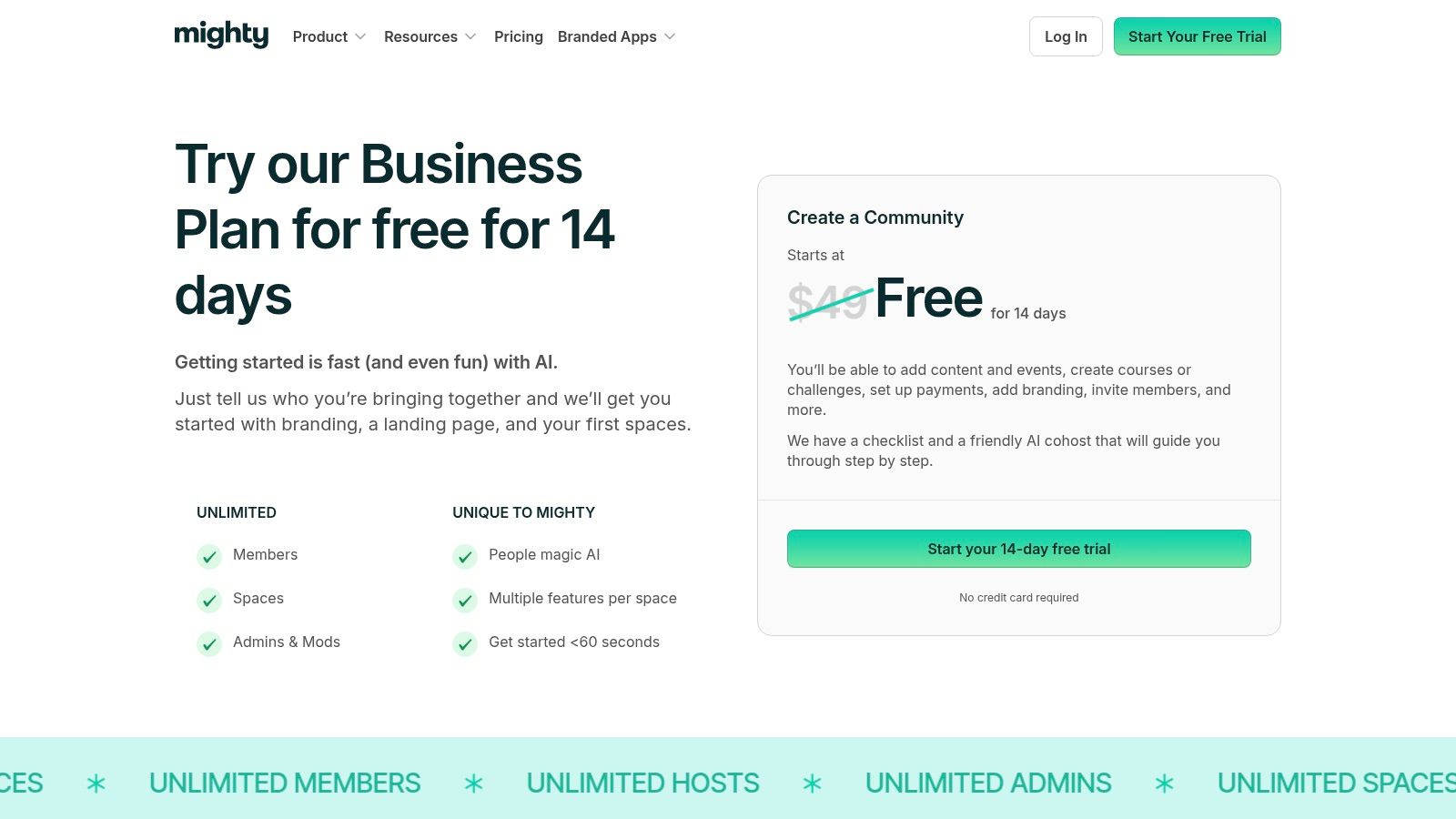
The platform empowers hosts to build vibrant communities using features like member profiles, group chat, live events, and structured courses. Its "Mighty Co-Host™" AI engine helps accelerate the setup process by generating a landing page, brand identity, and initial community structure based on a few prompts, significantly lowering the barrier to launch.
Mighty Networks is ideal for course creators, coaches, and brands that want to foster a learning environment alongside a community space. For instance, a professional association could launch a branded mobile app (available on higher tiers) to offer members exclusive access to certification courses, live-streamed workshops, and peer-to-peer networking groups. The ability to manage payments in hundreds of currencies also makes it suitable for global membership businesses. For a deeper analysis of its capabilities, you can find a comprehensive Mighty Networks vs GroupOS comparison.
Pricing begins with the Community Plan at $41/month, offering core community features with unlimited members and spaces. The Business Plan ($119/month) adds courses, live streams, and analytics, while the Mighty Pro plan offers fully white-labeled mobile apps on iOS and Android. Transaction fees apply on the lower-tier plans.
Find out more at: https://www.mightynetworks.com/pricing?utm_source=openai
Discourse is a powerful, open-source discussion platform that modernizes the traditional forum experience. It is renowned for its intelligent features like trust levels, which reward positive community participation, and a robust Q&A format, making it ideal for technical support and knowledge-sharing communities. Its dual-offering model, providing both free self-hosting and official paid hosting, makes it one of the most flexible online community platforms available.
The platform is designed for deep, asynchronous conversations, automatically turning links into rich embeds and preventing necroposting on old topics. Its extensive ecosystem of plugins and themes allows for significant customization, enabling organizations to tailor the platform to their specific needs.
Discourse excels for brands and professional associations building a long-term knowledge base or a technical support hub. A software company could use it to power its official user forum, leveraging the Q&A features for support tickets and the trust system to identify super-users for a community champion program. Implementing the self-hosted version requires technical expertise, while the hosted plans offer a turnkey solution managed by the creators. For those comparing options, it's wise to explore different community management software to see how Discourse fits into the broader landscape.
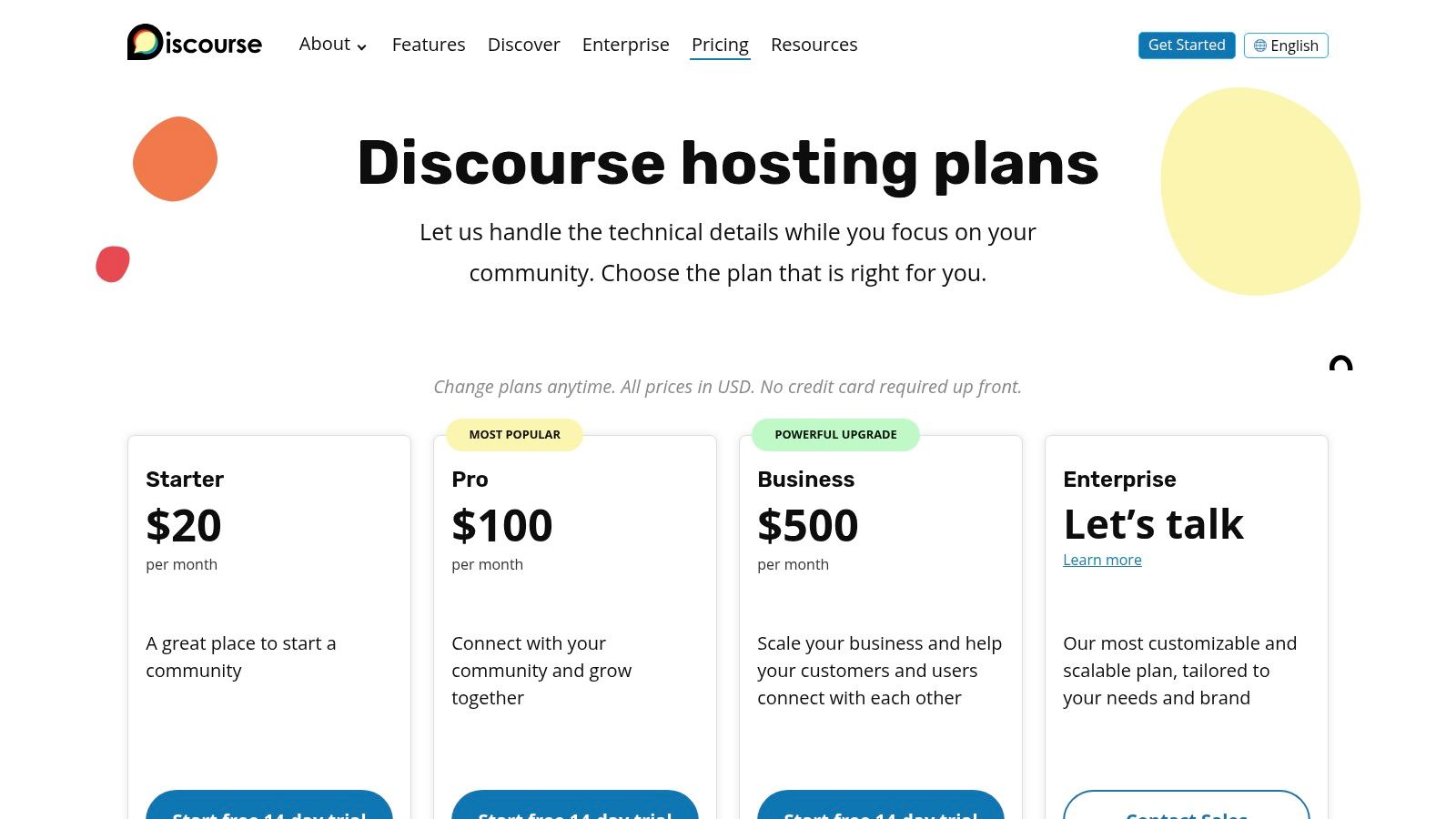
Discourse offers a free, open-source version for self-hosting. Officially hosted plans start with the Standard Plan at $100/month, which is suitable for most small to medium communities. The Business Plan at $300/month adds more plugins and higher capacity, while Enterprise plans offer custom pricing for SSO, dedicated infrastructure, and priority support.
Find out more at: https://discourse.org/pricing?utm_source=openai
Bettermode, formerly known as Tribe, is a highly flexible and widget-based community platform designed for customer communities and brand ecosystems. Its strength lies in modular customization, allowing organizations to build a community that perfectly mirrors their brand identity and integrates smoothly with existing business tools. This makes it one of the best online community platforms for companies focused on customer support, product feedback, and user-generated content.
The platform utilizes a system of "Spaces" and customizable blocks, giving administrators granular control over the layout and user experience. This approach enables the creation of specialized hubs for Q&A forums, knowledge bases, or ideation portals, all within a single, unified community environment.
Bettermode is ideal for software companies and SaaS businesses that want to build a self-service support community and gather product insights. Its integrations with tools like Zendesk, HubSpot, and Salesforce allow for a seamless flow of data between the community and core business systems. A product manager could use Bettermode to create a dedicated space for beta testers to report bugs and suggest features, directly connecting user feedback to the product development lifecycle.
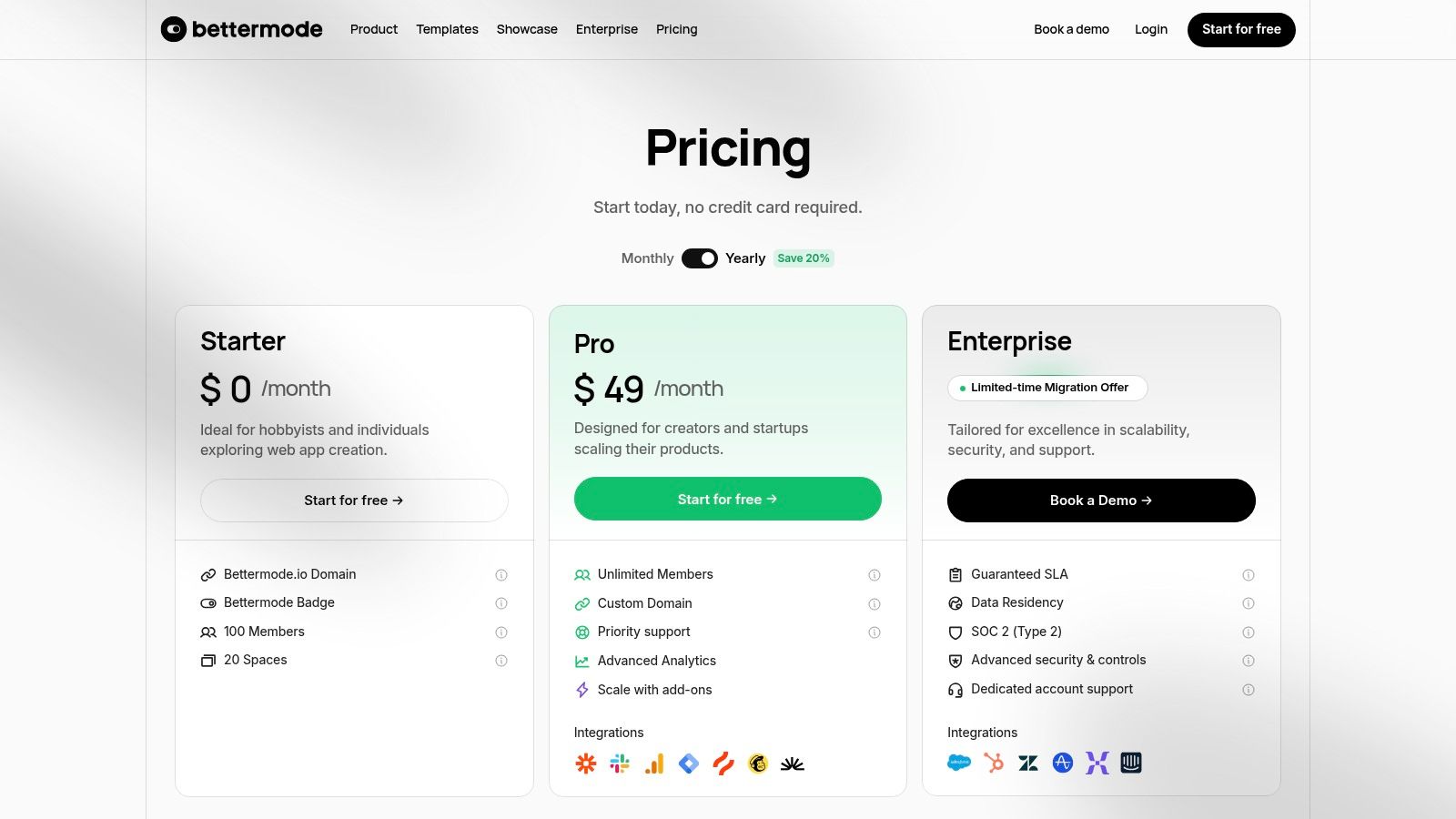
Bettermode offers a free Starter Plan and an accessible Pro Plan at $599/month, which uniquely includes unlimited members. However, key functionalities like SSO/OAuth, API access, and webhooks are available as paid add-ons to this tier, allowing for a more a la carte approach. Enterprise-level plans offer advanced security and data residency options.
Find out more at: https://bettermode.com/pricing?utm_source=openai
Higher Logic Vanilla is a mature, enterprise-grade community platform engineered for B2B and B2C organizations focused on customer support, product feedback, and user engagement. It excels at deflecting support tickets by integrating a robust knowledge base with Q&A forums, where AI can suggest answers from existing content. This deep focus on support automation and feedback collection makes it one of the best online community platforms for software companies and large brands aiming to reduce support costs.
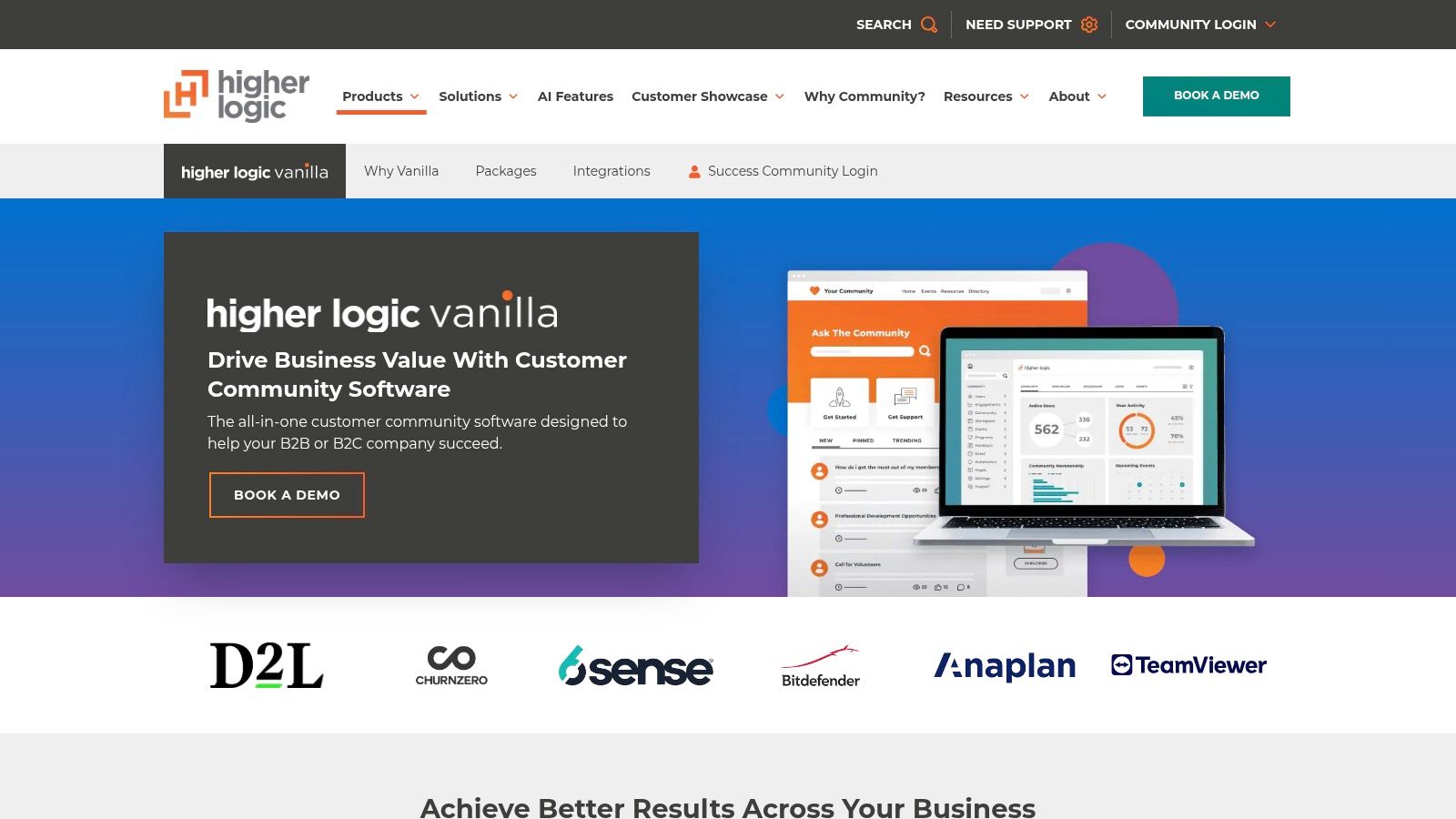
The platform’s power lies in its deep integrations and automation capabilities. With native connections to Salesforce, Zendesk, Jira, and Productboard, it acts as a central hub for customer voice, feeding insights directly into CRM and product development workflows.
Higher Logic Vanilla is ideal for large technology companies that need to scale their customer self-service capabilities. A software firm could use its federated search to allow users to find answers across forums, documentation, and help articles simultaneously. The platform’s automation rules can be configured to escalate unresolved questions, tag discussions based on sentiment analysis, and assign tasks to support agents, creating a highly efficient moderation and support ecosystem.
Pricing is customized based on specific needs and scale, requiring a direct sales consultation. There are no public pricing tiers, which is typical for enterprise-focused solutions. Its features are geared towards security, integration, and advanced analytics.
Find out more at: https://www.higherlogic.com/vanilla/?utm_source=openai
Gainsight Customer Communities is an enterprise-grade solution designed to integrate community engagement directly into a broader customer success strategy. Acquired from inSided, the platform is now part of Gainsight's CustomerOS, connecting peer-to-peer support, knowledge base self-service, and product feedback loops. This makes it one of the best online community platforms for B2B companies that view community not as a standalone channel, but as a critical component of customer health, retention, and product adoption.
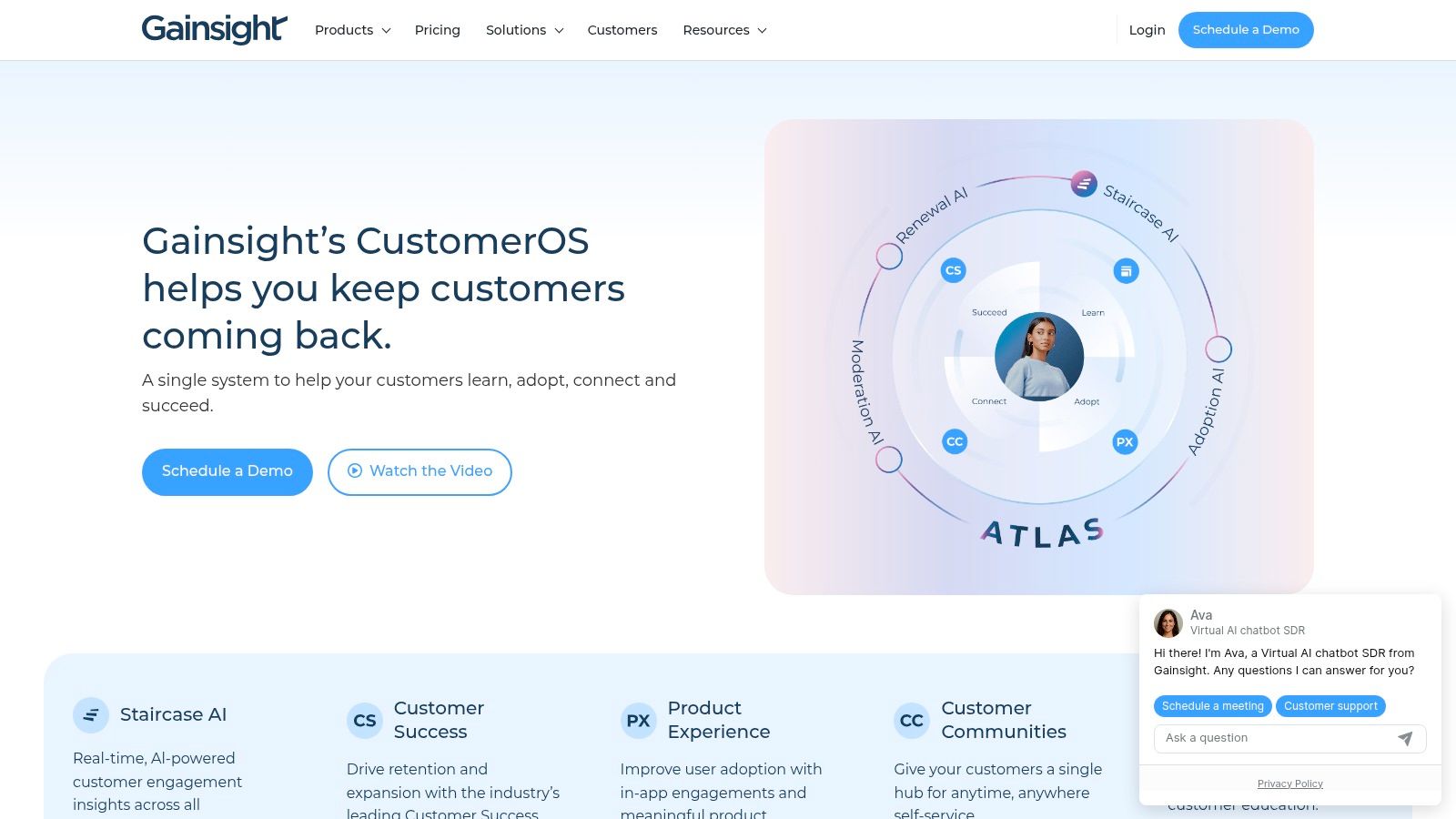
The platform enables businesses to create branded hubs where customers can answer each other's questions, access resources, and provide direct feedback on product roadmaps. Its core strength lies in its ability to unify community activity data with other customer success metrics, providing a holistic view of account health and engagement.
Gainsight is ideal for large SaaS and technology companies looking to scale their customer success and support functions. For example, a software company could use the platform to deflect support tickets by encouraging users to find answers from peers and in the knowledge base. It also allows product managers to source and validate ideas directly from their most engaged users, integrating that feedback seamlessly into development workflows within the Gainsight ecosystem.
Gainsight's pricing is available by request and involves an enterprise-level sales process. The community platform is often bundled as part of the larger CustomerOS, with pricing typically based on admin seat tiers and overall usage.
Find out more at: https://www.gainsight.com/platform/?utm_source=openai
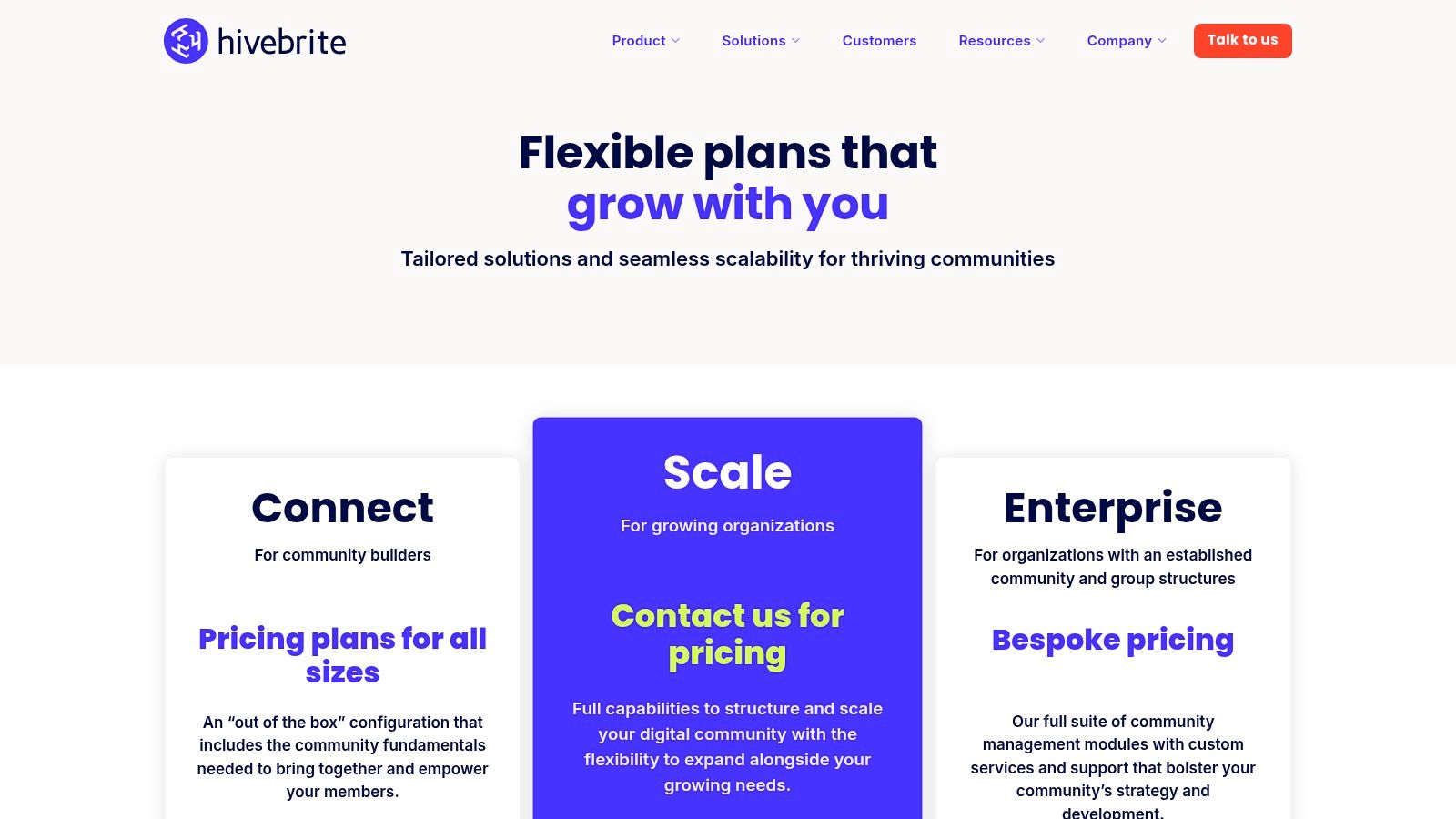
Hivebrite is a comprehensive community management platform engineered for large-scale networks like alumni associations, nonprofits, and enterprise organizations. It provides a robust, white-label solution focused on connecting members and managing complex operational needs. The platform excels at offering a diverse toolkit that includes membership management, events, fundraising, career services, and mentorship programs, making it one of the best online community platforms for institutions requiring an all-in-one engagement hub.
Its architecture supports extensive customization, allowing organizations to create branded portals and dedicated mobile apps. Admins can build custom pages, manage granular permissions for different user segments, and structure the community with various groups and sub-communities, ensuring a tailored experience for every member.
Hivebrite is ideal for educational institutions managing an alumni network or professional associations with intricate membership structures. An association could use its native tools to manage tiered membership renewals, host a global conference with ticketed registration, and facilitate a mentorship program connecting senior and junior members. The integrated user directory and map provide powerful networking capabilities, allowing members to find and connect with peers based on location, industry, or expertise.
Hivebrite's pricing is quote-based and tailored to the specific needs and scale of the organization, typically involving an implementation fee and annual subscription. The platform is sold in packages that bundle features for different use cases, such as memberships, events, and career development.
Find out more at: https://hivebrite.io/pricing
Khoros Communities is a long-standing, enterprise-grade platform built for large-scale customer support and brand engagement. It excels in structured environments like forums, Q&A sections, and knowledge bases where governance, moderation, and scalability are critical. Its architecture, including the newer Aurora framework, is designed to handle the complex needs of Fortune 500 companies, making it one of the best online community platforms for organizations requiring robust security and deep integration capabilities.
The platform provides advanced tools for moderation, gamification, and analytics, allowing community managers to foster engagement while maintaining strict control over the user experience. Khoros is structured for organizations that view their community as a core strategic asset for customer retention and deflection of support tickets.
Khoros is best suited for large enterprises that need to build a public-facing customer community to reduce support costs and gather product feedback. Its developer-friendly extensibility and API-first approach (including GraphQL) allow for deep integration with existing enterprise systems like CRM and support ticketing software. A global software company could use Khoros to create a centralized hub where users can find answers, submit feature requests, and interact with product experts, all while tracking engagement analytics to inform their product roadmap.
Khoros pricing is customized for enterprise clients and available only through direct sales consultation. Implementation often involves a significant professional services engagement due to the complexity and scale of deployments.
Find out more at: https://community.khoros.com/
Skool is a creator-focused community and course platform that prioritizes simplicity and engagement through gamification. It combines community discussions, learning modules, and event calendars into a single, streamlined interface. Its minimalist approach makes it one of the best online community platforms for coaches, influencers, and membership businesses who want an easy-to-manage space without overwhelming features.
The platform's core strength lies in its gamified elements, such as leaderboards and "leveling up," which incentivize member participation and content consumption. This design encourages a highly active and self-sustaining community environment, where members are motivated to contribute and help one another.
Skool is ideal for cohort-based courses and paid membership groups where the primary goal is to foster interaction and track member progress. Its straightforward setup allows a business owner to launch a paid community in minutes. For example, a marketing coach could use Skool to host a private mastermind group, delivering course content, hosting Q&A calls via the calendar, and using the leaderboard to reward the most engaged members, all within a single subscription fee.
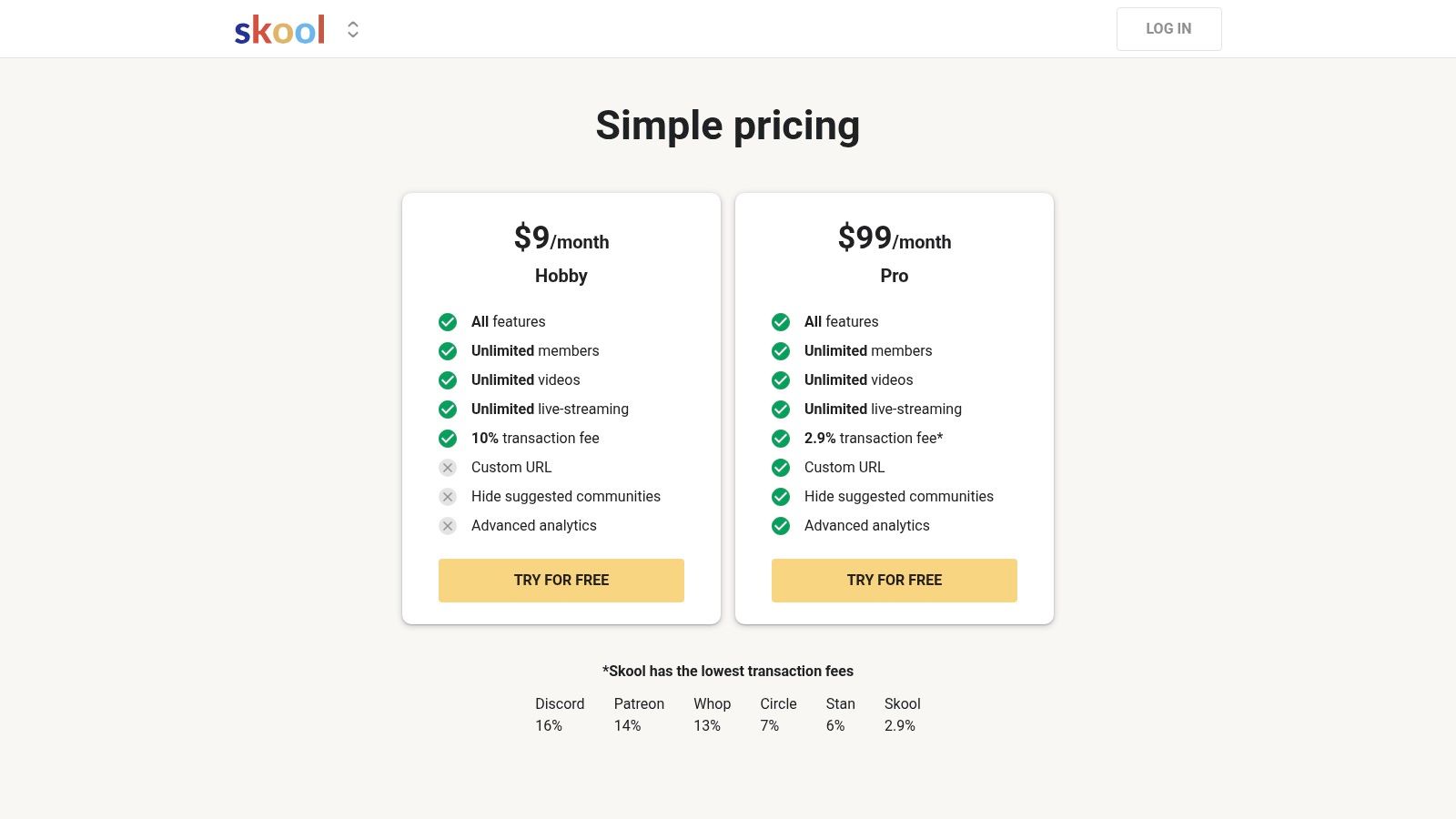
Skool offers a simple pricing model: a single plan at $99/month. This plan includes one group, unlimited courses, and unlimited members, with a low 2.9% transaction fee for memberships. There's no complex tiering, making it predictable and accessible for creators at any scale.
Find out more at: https://www.skool.com/pricing?utm_source=openai
Kajabi is a comprehensive, all-in-one platform built for creators and entrepreneurs to package their knowledge into digital products. While not a dedicated community tool, its integrated Communities module makes it one of the best online community platforms for users who sell courses, coaching, or newsletters and want to add an engagement layer without using a separate service. The platform consolidates a website, marketing funnels, email automation, and payments into a single ecosystem.
The primary value of Kajabi's community feature is its seamless connection to the rest of the product suite. You can easily grant or revoke community access based on a member's purchase of a course or subscription, creating a powerful incentive for premium-tier offerings. The community itself supports live meetups, challenges, and rich media posts.
Kajabi is ideal for course creators or coaches who view community as a value-add to their primary digital products rather than the core offering itself. For instance, a business coach could sell a flagship course and bundle it with exclusive access to a members-only community for ongoing support and networking. Its strength lies in being one of the more powerful all-in-one membership site platforms, where the community supports the main product. The built-in CRM and email automation tools allow for sophisticated member onboarding and engagement campaigns.
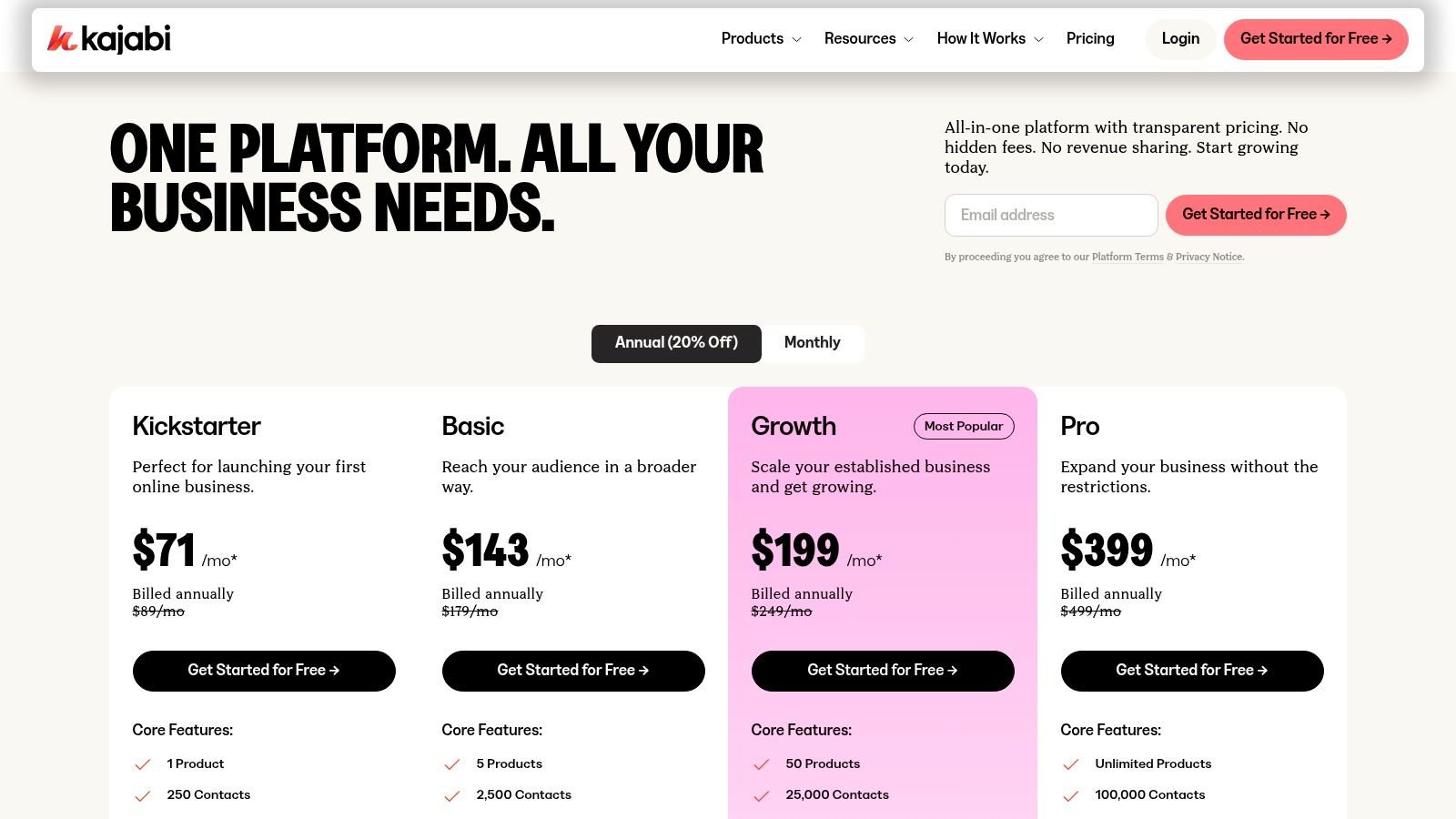
Kajabi's pricing reflects its all-in-one nature, starting with the Basic plan at $149/month, which supports one community and a limited number of products and contacts. The Growth plan ($199/month) is the most popular, offering increased limits and advanced features. All plans include unlimited landing pages and marketing emails.
Find out more at: https://kajabi.com/pricing?utm_source=openai
Discord is a massively popular real-time communication platform known for its robust text, voice, and video channels. Originally built for gamers, its powerful, free-to-start model has made it a favorite for chat-centric communities and as a supplementary engagement layer for brands and professional groups looking for one of the best online community platforms for instant interaction. It excels at creating a dynamic, always-on social space where members can connect fluidly.
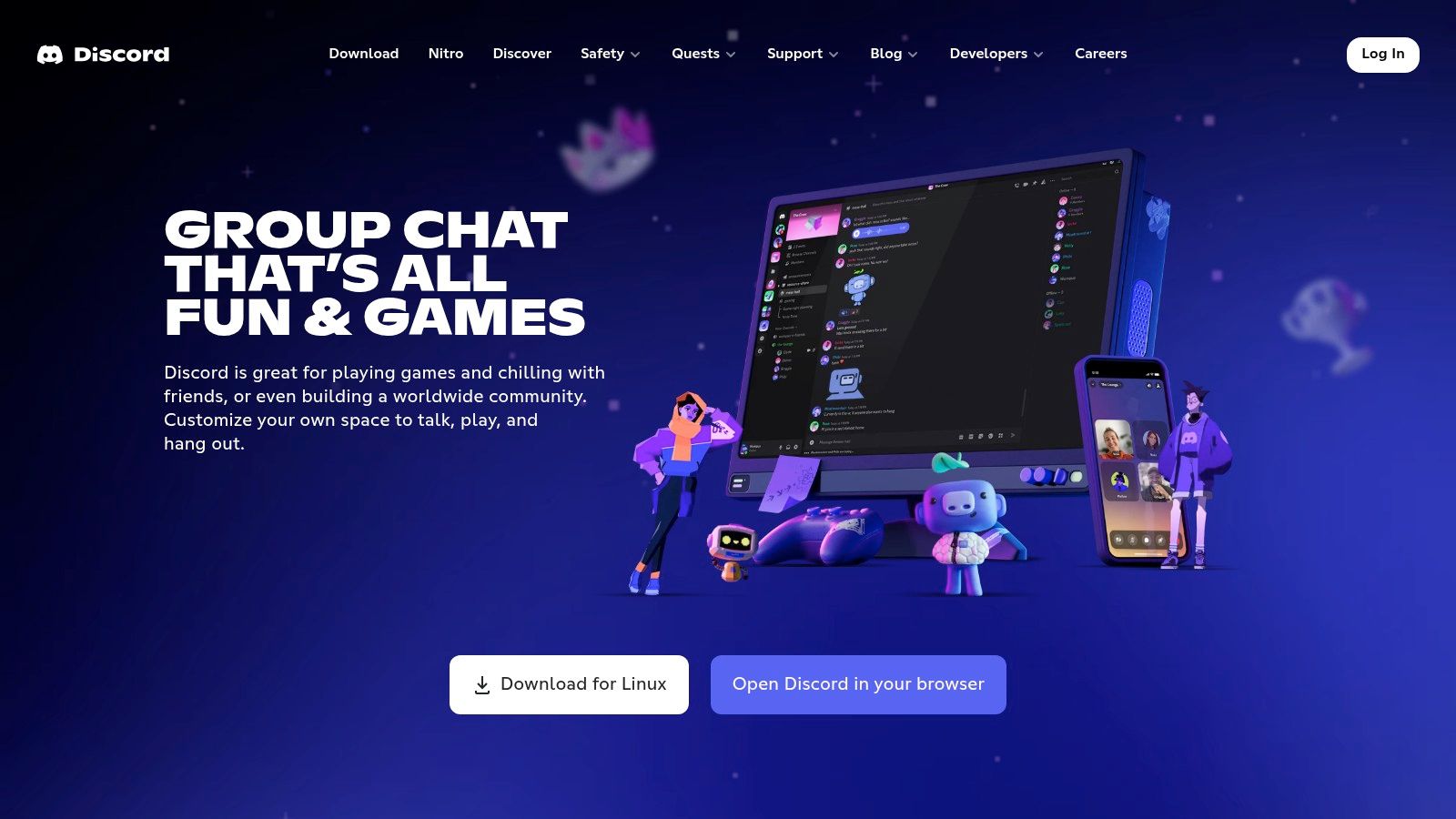
The platform is organized into "Servers," which contain various text and voice "Channels." Community managers can assign granular roles and permissions, creating public, private, or tiered-access areas within a single server. This structure is highly effective for managing different conversation topics, member groups, and events simultaneously.
Discord is ideal for organizations that prioritize real-time engagement over a static, content-first approach. A professional association could use it to host live Q&A sessions in a voice channel, create topic-specific text channels for ongoing discussions, and use bots for event reminders. Because it's a synchronous tool, it complements traditional web forums or member portals rather than directly replacing them. For those seeking different features, you can explore various alternatives to Discord.
Starting a server on Discord is completely free and includes core features like unlimited channels, roles, and moderation tools. Paid Nitro plans (for individual users) unlock perks like higher upload limits, custom emojis, and HD video streaming.
Find out more at: https://discord.com
We’ve navigated the complex landscape of the best online community platforms, from the developer-centric power of Discourse to the course-creator focus of Kajabi and Skool. Each tool offers a unique approach to fostering connection and engagement. Your final decision shouldn't be about finding a platform with the longest feature list, but about identifying the one that acts as a true strategic partner, directly aligning with your organization's most critical objectives.
The journey to select the right platform begins with a clear, honest assessment of your core needs. Are you building a simple discussion forum, or are you creating a comprehensive ecosystem for a professional association or event-driven business? The distinction is crucial. While platforms like Circle and Mighty Networks excel at creating vibrant social spaces, their capabilities often stop short of addressing the complex operational needs of membership organizations and conference organizers.
Before you sign a contract, step back and evaluate your choice against these fundamental strategic pillars. A platform might have an appealing interface, but if it fails on these points, it will become a roadblock to growth rather than an engine for it.
Ultimately, your community platform is the digital home for your members. It's where they connect, learn, and derive value from their affiliation with your organization. This makes the platform a critical component in your overall retention strategy. A seamless, intuitive, and value-packed platform experience directly contributes to mastering customer lifecycle management, guiding members from their initial onboarding to becoming passionate advocates for your brand. A clunky, disconnected platform does the opposite, creating friction and churn.
For professional associations, event organizers, and membership businesses, the choice becomes clear. You need more than a forum; you need a centralized command center. This is precisely the problem GroupOS was designed to solve. It addresses the specific pain points of managing events, memberships, and sponsor relationships within a single, cohesive ecosystem. Instead of piecing together disparate tools for ticketing, member databases, and community discussions, GroupOS unifies them into one powerful, white-labeled mobile and web application. It’s built not just to host a community, but to build a profitable and scalable business around it.
Ready to stop juggling tools and start building a unified, revenue-generating community? GroupOS provides the all-in-one platform designed specifically for professional associations and event organizers. See how you can streamline operations, enhance member engagement, and unlock new revenue streams by scheduling a demo of GroupOS today.