February 13, 2026
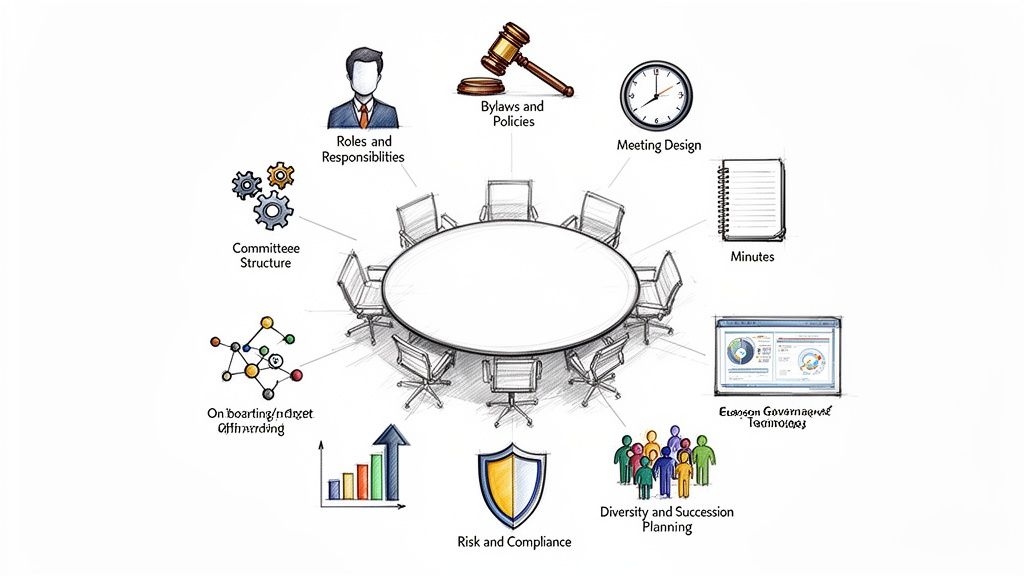
For member-based organizations, effective governance isn't just about compliance; it's the engine for growth, engagement, and long-term success. Weak governance leads to disengaged members, stagnant events, and a board adrift in ambiguity. Strong governance, however, creates a strategic, accountable, and forward-thinking leadership team capable of navigating complex challenges and capitalizing on new opportunities. This guide offers more than just a theoretical checklist; it provides a comprehensive roundup of 10 essential board governance best practices tailored specifically for modern professional associations.
From defining clear roles and structuring high-impact committees to leveraging technology for smarter decisions, these actionable insights will help you build a framework that empowers your board to lead with confidence. A critical aspect of modern oversight involves establishing robust frameworks for managing organizational data, underscoring the importance of understanding information governance as a core board responsibility. We will explore how to manage this and other key areas effectively.
This listicle moves beyond generic advice to provide a practical blueprint for excellence. You will learn how to:
We'll also explore how each practice can be amplified using integrated platforms, transforming abstract principles into tangible results. By implementing these strategies, your organization can foster a culture of accountability and drive unprecedented value for your members, ensuring a resilient and prosperous future.
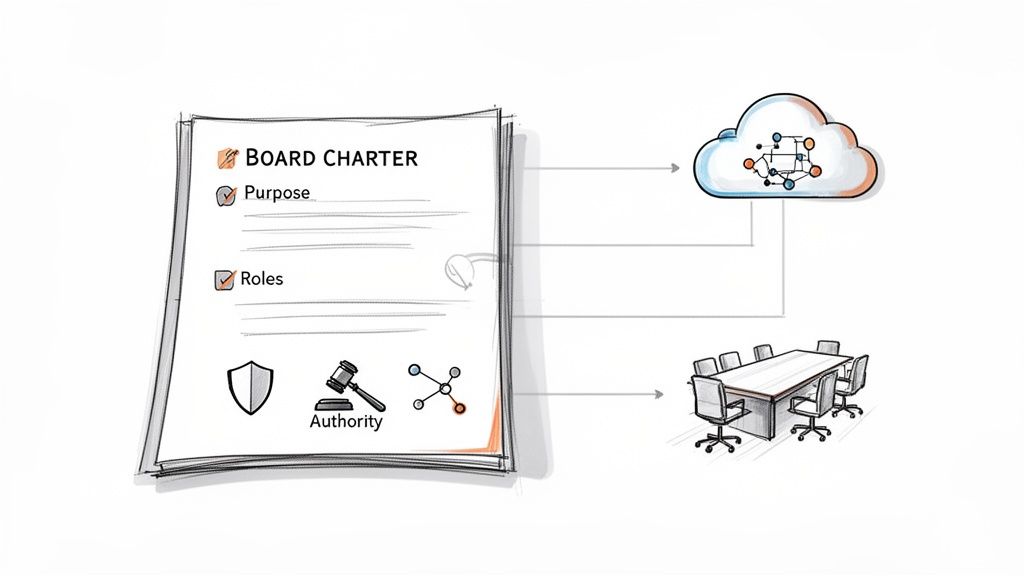
A clear board charter is the constitutional bedrock for effective board governance. It’s a formal document that meticulously outlines the board's purpose, authority, responsibilities, and operational procedures. For member-based organizations, this document moves beyond abstract principles to define the board's role in stewarding the organization's mission and its tangible assets, including its digital infrastructure.
This foundational practice prevents role ambiguity and provides a clear framework for decision-making, ensuring every action aligns with strategic objectives. It transforms governance from a reactive exercise into a proactive strategy.
A comprehensive charter acts as the single source of truth for board operations. It should explicitly detail:
For instance, a professional association’s charter might specify that the board must approve any new platform investment over $10,000 but delegates the day-to-day community moderation policies to a specific committee.
To make your charter a living document, follow these board governance best practices:
A board is only as effective as the individuals who comprise it. Strategic board composition moves beyond filling seats to intentionally curating a diverse group of members whose collective backgrounds, skills, and perspectives enhance decision-making and drive innovation. This board governance best practice is critical for member-based organizations, where a representative board can better understand and serve the needs of a multifaceted community.
A diverse board prevents groupthink and introduces varied viewpoints that lead to more robust strategic discussions. For an organization leveraging a comprehensive community platform, this means including directors with expertise in technology, digital engagement, and data analysis alongside traditional leadership skills. This holistic composition ensures the board can provide effective oversight for all aspects of the organization’s operations, both online and off.
A deliberate composition strategy focuses on building a well-rounded team. It should be based on a clear understanding of the skills needed to achieve strategic goals.
For example, an industry group could balance its board with C-suite executives, mid-career professionals, and even active frontline members who bring practical, on-the-ground insights into the member experience.
To build and maintain a high-performing, diverse board, integrate these practices:
A well-defined committee structure is the engine room of effective board governance, transforming broad strategic directives into focused, actionable work. By delegating specific responsibilities to smaller, expert groups, the board can operate more efficiently, delve deeper into critical issues, and ensure nothing falls through the cracks. This structure prevents board meetings from becoming mired in operational details and empowers directors to focus on high-level oversight.
This best practice moves governance from a monolithic, top-down process to a distributed, highly effective model. It establishes clear lines of ownership, ensuring that key areas like finance, technology, and member engagement receive dedicated attention from knowledgeable board members.
Each committee should operate under its own clear charter, a document that mirrors the board charter in its purpose but is tailored to the committee's specific domain. These charters are crucial for preventing scope creep and ensuring alignment.
For example, a Membership Committee’s charter would task it with reviewing member engagement analytics within GroupOS quarterly and proposing initiatives to improve member-to-member interaction.
To maximize the impact of your committees, integrate these board governance best practices:
Effective governance isn't a "set it and forget it" activity; it requires continuous improvement fueled by honest self-reflection. Regular board and committee evaluation is a systematic process for assessing performance, identifying weaknesses, and fostering a culture of accountability. For member-based organizations, this extends beyond traditional fiduciary duties to evaluate the board's effectiveness in overseeing community engagement, membership growth, and technology optimization.
This practice transforms the board from a static body into a dynamic, learning entity. By systematically reviewing its own performance, the board can proactively address challenges, refine its processes, and ensure its contributions add maximum value to the organization's mission and its members' experience.
A robust evaluation process goes beyond a simple checklist. It should provide a 360-degree view of the board's health and effectiveness, covering:
For example, a trade organization might conduct peer reviews of directors' contributions, specifically asking how each member has guided the strategy for its online professional community.
To ensure your evaluations are more than a bureaucratic exercise, integrate these board governance best practices:
Transparency is the currency of trust in member-based organizations. Establishing robust, open communication practices ensures that board members, management, and general members receive timely and accurate information about organizational performance, strategic decisions, and community health. This practice moves beyond simply sharing data; it’s about creating a culture of openness that builds confidence and alignment.

This foundational practice demystifies board activities and prevents the information silos that can lead to member disengagement. By proactively sharing insights on everything from financial health to platform utilization, the board reinforces its role as a responsible steward of the organization’s mission and resources.
An effective communication strategy involves sharing a consistent mix of qualitative and quantitative information. Your transparency reports and communications should include:
For instance, a professional association might publish a quarterly digital dashboard showing trends in new member sign-ups, popular discussion topics within the community, and feedback scores from recent virtual events.
To embed transparency into your governance model, consider these board governance best practices:
A proactive risk management and compliance framework is a board’s essential defense against financial, operational, and reputational threats. It involves systematically identifying, assessing, and mitigating potential risks, from cybersecurity breaches to regulatory non-compliance. For member-based organizations, this extends to safeguarding sensitive member data, ensuring privacy, and protecting digital assets.
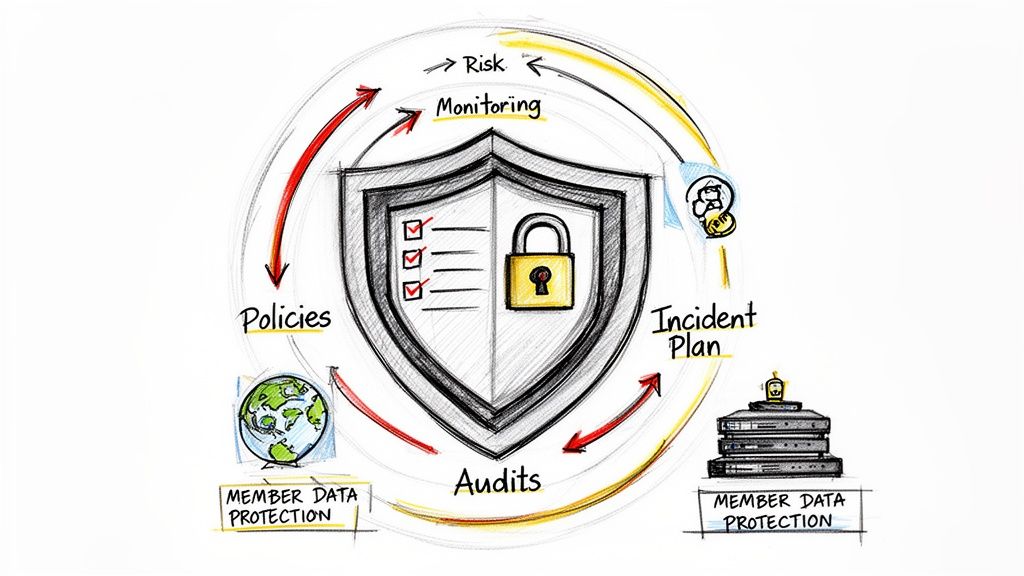
This practice moves governance beyond mere oversight into strategic foresight. It ensures the organization is not just reacting to crises but is actively building resilience against them, protecting its mission and its members' trust.
A comprehensive framework provides a structured approach to managing uncertainty. It should clearly define:
For example, a trade association’s framework might require an annual third-party cybersecurity audit of its community platform and mandate end-to-end encryption for all member communications. In developing a robust framework, associations can also benefit from exploring advanced AI legal software to streamline compliance monitoring and policy management.
To integrate this crucial board governance best practice, focus on these steps:
Effective board governance moves beyond operational oversight to actively shape the organization's future. Strategic planning is the process by which the board sets a multi-year vision, while performance monitoring ensures the organization stays on track to achieve it. This practice establishes a clear roadmap, empowering management to execute a unified strategy.
This forward-looking approach ensures that board decisions are not made in a vacuum but are instead deliberate steps toward long-term goals. It provides a framework for allocating resources, prioritizing initiatives, and measuring success in a consistent and objective manner.
A robust strategic plan translates high-level vision into measurable outcomes. It should clearly define:
For example, a trade organization might set a three-year strategic goal to increase member engagement by 25%, with KPIs including a 15% rise in platform login frequency and a 10% increase in event registrations through the platform.
To connect strategy with execution, follow these board governance best practices:
Effective conflict of interest management is essential for maintaining organizational integrity and member trust. It involves establishing clear policies and procedures to identify, disclose, and manage potential conflicts that could compromise impartial decision-making by board members, management, and key staff. For member-based organizations, this practice is a cornerstone of ethical leadership.
This foundational practice protects the organization from biased decisions, legal challenges, and reputational damage. It ensures that all actions, particularly those involving financial transactions or vendor selections, are made solely in the best interest of the organization and its members, reinforcing the principles of fair board governance best practices.
A robust conflict of interest policy should be a clear, unambiguous guide for all board members and key personnel. It must detail:
For instance, a professional association’s policy must require a board member to disclose if their company is a major event sponsor and recuse themselves from any vote on sponsorship packages.
To embed strong conflict management into your board’s culture, follow these practical steps:
Effective governance isn't innate; it's developed. A comprehensive onboarding and ongoing education program is a cornerstone of high-performing boards, transforming willing volunteers into strategic leaders. This process ensures every board member, regardless of their background, possesses the necessary knowledge and skills to govern effectively, from financial oversight to platform technology management.
Strong onboarding accelerates a new member's productivity, reducing the learning curve and empowering them to contribute meaningfully from their first meeting. This commitment to development is a critical element of modern board governance best practices, ensuring the board evolves alongside the organization.
A structured program should equip directors with both foundational knowledge and role-specific skills. It should clearly outline:
For example, a trade association might create a specific GroupOS training module for board members focused on interpreting event attendance data and community engagement metrics to inform strategic decisions.
To build a robust and impactful development program, consider these steps:
Effective governance is a two-way street. A board that operates in a vacuum, without systematically engaging its members and stakeholders, risks strategic misalignment and member attrition. Establishing formal processes for gathering, analyzing, and acting on feedback is a cornerstone of modern, responsive leadership. This practice ensures that board decisions are grounded in the real-world needs and expectations of the people the organization serves.
For member-based organizations, this feedback loop is vital for validating strategy, improving services, and fostering a sense of ownership. It transforms the board’s role from a directive body to a representative one, directly accountable to its constituency and demonstrating that member voices shape the organization's future.
A structured feedback system moves beyond occasional suggestion boxes to create a continuous dialogue. It should be designed to inform everything from high-level strategy to specific operational improvements.
For example, a trade group might create a Sponsor Advisory Council to provide direct input on event strategy, while also using quarterly surveys to measure member satisfaction with its online community.
To make feedback a central part of your board governance best practices, integrate these actions:
Navigating the landscape of modern association management requires more than just a dedicated board; it demands a strategic, agile, and transparent governance framework. Throughout this guide, we've explored the ten pillars that form the foundation of effective board governance best practices. From establishing a rock-solid board charter and diversifying board composition to implementing rigorous evaluation processes and fostering open communication, each practice serves as a critical component in a larger system designed for resilience and growth.
The journey from understanding these principles to seeing them drive tangible performance is an ongoing commitment. It's about transforming a static list of rules into a dynamic, living culture of accountability and strategic foresight. Think of your governance model not as a restrictive cage, but as the strong skeleton that allows your organization to move with purpose, strength, and flexibility. When your board operates with clear roles, manages conflicts proactively, and actively engages with member feedback, it elevates itself from a mere administrative body to a powerful engine for strategic advancement.
The core takeaway is that these best practices are deeply interconnected. A robust onboarding program (Practice #9) is only effective if you have a diverse and well-structured board to welcome new members into (Practice #2). A comprehensive risk management framework (Practice #6) gains its power from transparent communication channels (Practice #5) that allow issues to be raised without fear of reprisal.
Ultimately, mastering board governance best practices is about creating a virtuous cycle:
This cycle doesn't happen by accident. It is the direct result of intentional design, consistent effort, and the adoption of tools that streamline complexity and enhance collaboration.
Implementing sweeping changes can feel daunting, but the path to governance excellence begins with a single, deliberate step. Don't try to overhaul everything at once. Instead, use the insights from this article to catalyze a focused, manageable plan for improvement.
Here are your immediate next steps:
By adopting this incremental yet strategic approach, you transform the abstract concept of "good governance" into a concrete action plan. You build momentum, demonstrate progress, and cultivate a culture of continuous improvement that will serve your members and secure your association's future. The goal is not a one-time fix, but the cultivation of a resilient, strategic, and high-performing board culture.
Ready to streamline your board operations and implement these best practices with ease? GroupOS provides an all-in-one platform designed for modern associations, helping you manage committees, centralize documents, and enhance board communication effortlessly. Discover how the right technology can transform your governance strategy by exploring GroupOS today.